Talk to Mr. Saroj
- Home
- Destination
- Nepal Trekking
- Everest Region
- Everest View Trek
- Everest Base Camp Trek 14 Days
- Short Everest Base Camp Trek
- Luxury Everest Base Camp Trek
- Everest Base Camp Helicopter Trek – 12 Days
- Everest Base Camp and Gokyo Lakes Trek
- Everest Helicopter Tour in Nepal
- Gokyo Lakes Trek 12 Days
- Everest Three High Passes Trek
- Pikey Peak Trek – 10 Days
- Ama Dablam Base Camp trek – 9 Days
- Everest Region
- Annapurna Region
- Dhampus Sarangkot Trek
- Short Poon Hill Trek 3 Days
- Ghorepani Poon Hill Trek 4 Days
- Ghorepani Poon Hill Trek – 8 Days
- Mohare Danda Trek – 9 Days
- Annapurna Base Camp Heli Trek
- Short Annapurna Base Camp Trek- 6 Days
- Annapurna North Base Camp Trek– 9 Days
- Short Mardi Himal Trek
- Annapurna Base Camp Trek – 10 Days
- Mardi Himal Trek – 10 Days
- Annapurna Base Camp Trek Via poon Hill
- Ghorepani Poon Hill with Mardi Himal Trek
- Annapurna Base Camp and Mardi Himal Trek
- Short Annapurna Circuit Trek
- Annapurna Circuit Trek with Tilicho Lake
- Khopra Ridge Trek
- Kori Himal Trek -10 Days
- Nar Phu Valley Trek with Kang La and Thorong La Pass- 17 Days
- Ghorepani Poon Hill Yoga Trek
- Annapurna Base Camp Trek
- Mardi Himal Yoga Trek
- Annapurna Region
- Travel Info
- Company
- Contact
 Plan Your Trip
Bookings open for the 2026-2027 season! Start planning your dream journey.
Annapurna Base Camp Trek

Price starts from
US$ 807
For group of minimum 3 Pax
Group Discount Price
-
1 personUS$ 850
-
2 -
5 personUS$ 807
-
6 -
10 personUS$ 765
-
11 -
15 personUS$ 722
-
16 over
9999
US$ 680
US$ 850
Need Help?

Managing Director
Saroj (+977-9806627713)

Duration
14 Days

Trip Difficulty
Moderate

Max Altitude
4,130m / 13,550ft

Activity
Trekking, Sightseeing

Destination
Nepal

Group Size
2-20 People

Accommodation
Hotel, Lodge

Meals
Breakfast, Lunch & Dinner

Transportation
Tourist Bus
Highlights of Annapurna Base Camp Trek
- Sunrise views from Poon Hill (3,210 m / 10,531 ft)
- Walking through rhododendron, oak and bamboo forests
- Visiting traditional mountain villages such as Ghorepani, Tadapani and Chomrong
- Hiking in Annapurna Sanctuary and Modi Khola valley
- Reaching Machhapuchhre Base Camp (3,700 m / 12,139 ft)
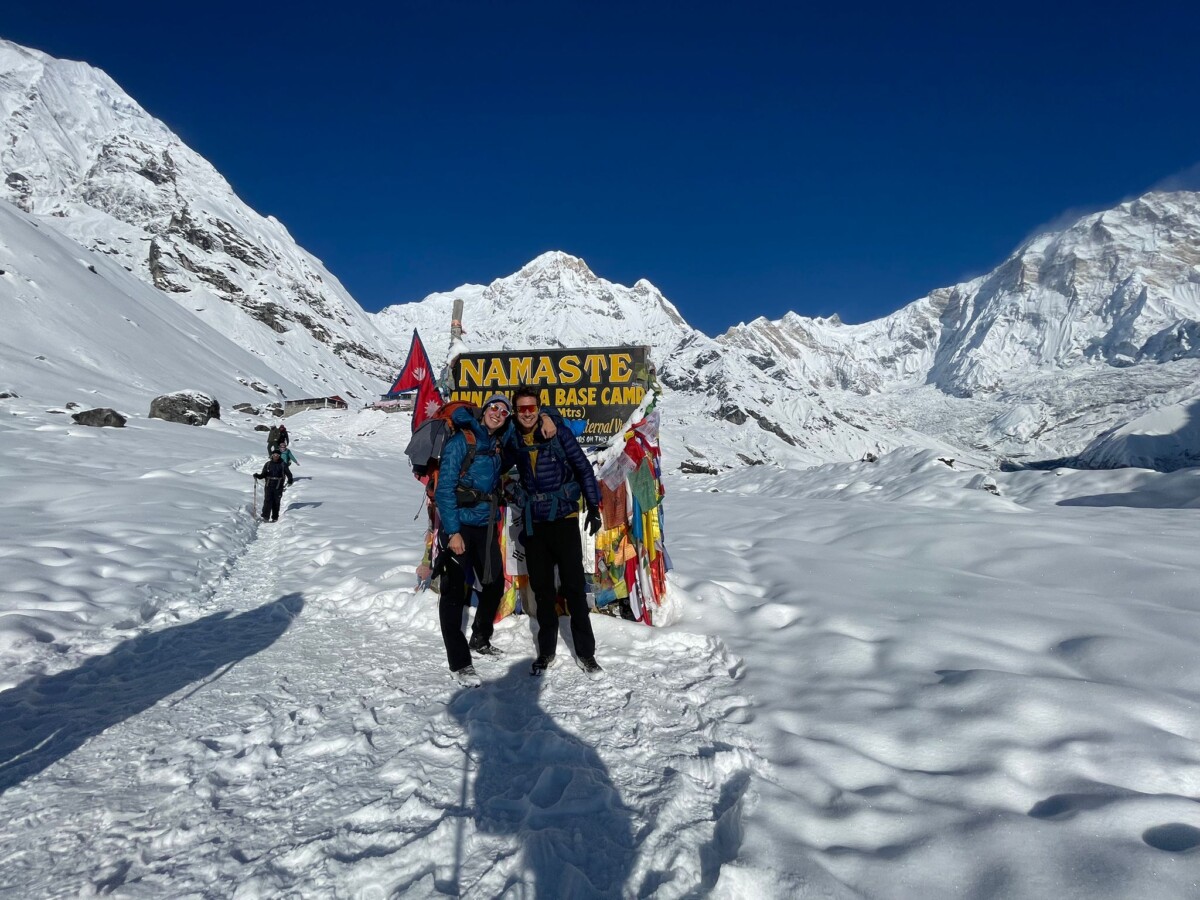
- Standing at Annapurna Base Camp (4,130 m / 13,549 ft)
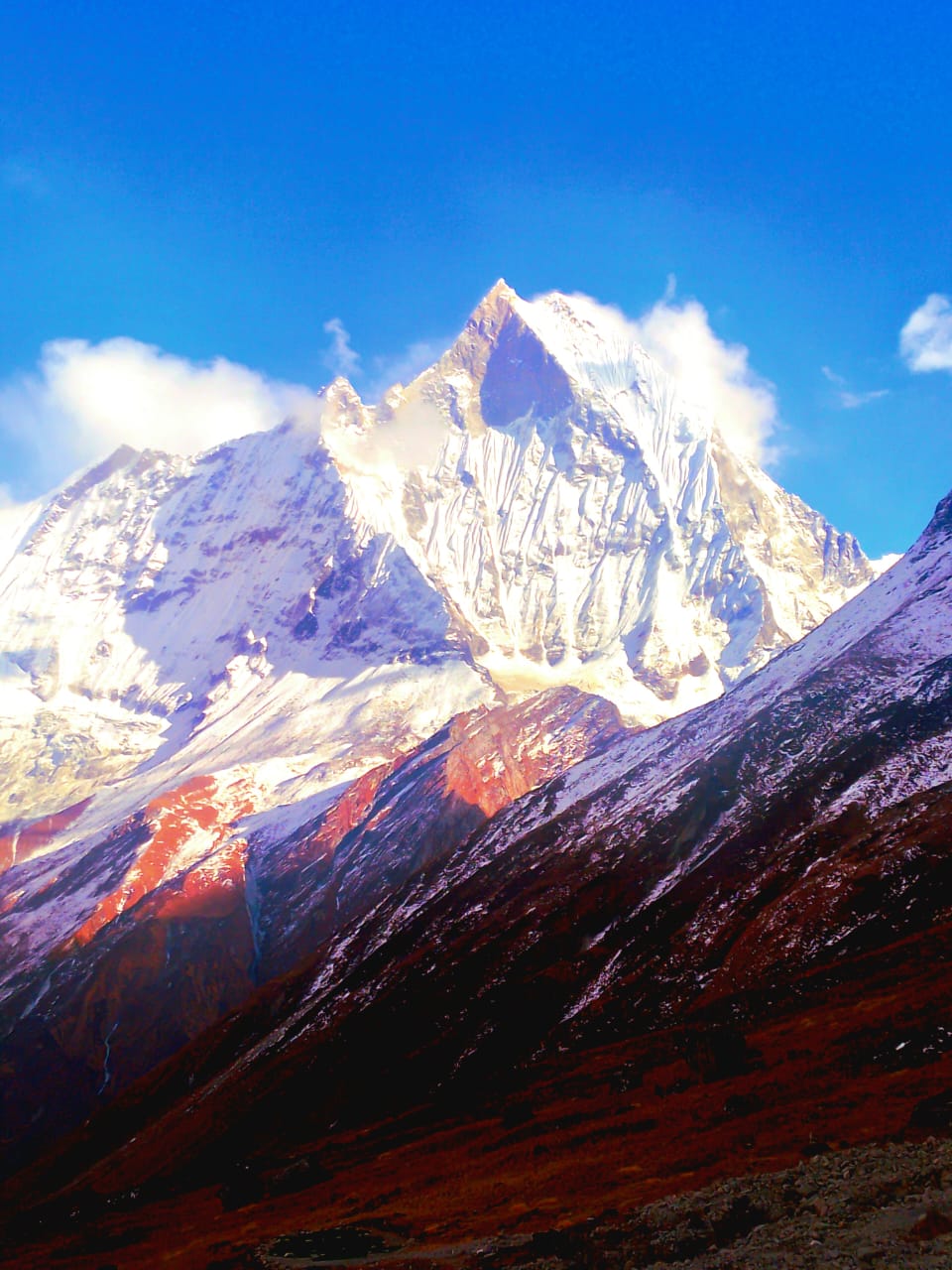
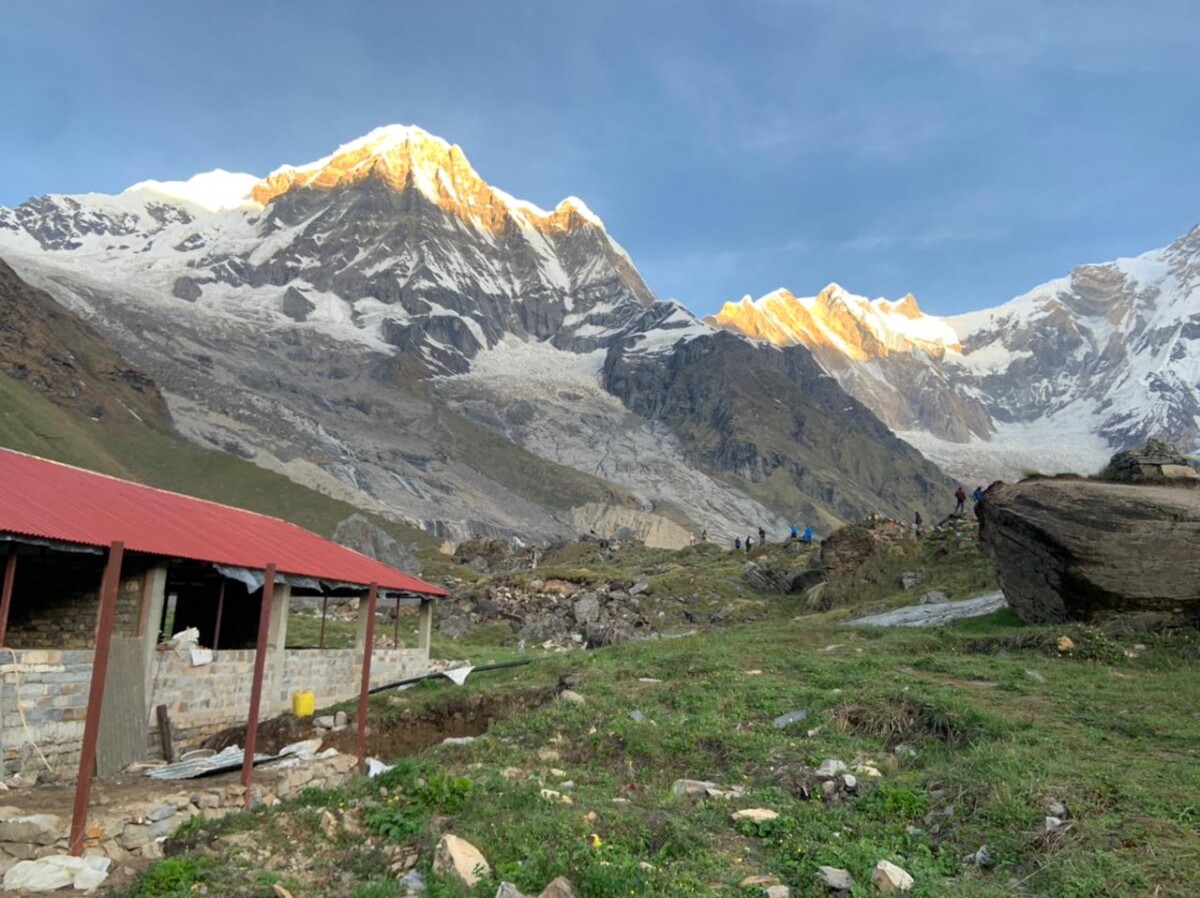
- Mountain views of Annapurna, Machhapuchhre, Hiunchuli and other mountains are also close by and can be enjoyed.
- Soaking up local Gurung culture and the way of life in a mountain village.To absorb Gurung culture and mountain village life.
- Lying at the natural hot springs, near Jhinu Danda
- The hike is also a part of beautiful road trips from Kathmandu to Pokhara.
Trip Overview of Annapurna Base Camp Trek
The Annapurna Base Camp Trek takes you through the varied landscapes of the Annapurna region, from lower hill villages and terraced farmland to forests and high mountain valleys. This trek leads through the traditional villages of Ulleri, Ghorepani, Tadapani, Chomrong and Sinuwa and eventually to the Annapurna Base Camp (4,130 m / 13,549 ft).
This journey starts with a trip from Kathmandu to Pokhara and then a quick hike to Hille and the beginning of the trek. The path steadily climbs through rhododendron forests and along mountain villages. An early morning visit to Poon Hill (3,210 m / 10,531 ft) gives the opportunity to see a sunrise before the trek goes further into the Annapurna Sanctuary.
Annapurna Base Camp Trek involves walking on different kinds of terrain for several days. This part, from Deurali to the base of Machhapuchhre and then Annapurna Base Camp, will take you closer to the surrounding peaks of the Himalayas. From the base camp, the trail heads down the same mountain valley to Sinuwa and Jhinu Danda.
The Annapurna Base Camp trek also has enough time for the visitors to enjoy the local village life, mountain lodges, forest trails and natural hot springs around Jhinu Danda. The route is a suitable trek for those with a moderate level of fitness, thanks to its gradual incline, picturesque views and established trails.
All the services that were agreed upon, including transportation, accommodation, meals, permits and trekking support, are arranged by Glory Adventure so that you can concentrate on the journey.
Why Annapurna Base Camp Trek?
The Annapurna Base Camp Trek is great for those who wish to explore the Nepalese mountain scenery without engaging in a technical hike. This is a forest path, terraced hillside, traditional villages, the Annapurna Sanctuary and then Annapurna Base Camp (4,130 m / 13,549 ft).
There is also a sunrise hike at Poon Hill (3,210 m / 10,531 ft), which provides an additional mountain viewpoint along the route. The trek is a balanced experience for trekkers in a reasonably good state of fitness, with varied landscapes, local village life, an easy and manageable trek and basic teahouse accommodation.
Trekking route overview
Annapurna Base Camp Trek starts from Kathmandu and drives to Pokhara city, drives to Hille city and then hikes to Ulleri. It then passes through Ghorepani and from here, you walk up to Poon Hill (3210 m / 10531 ft) and then on to Tadapani and Chomrong.
From Chomrong, the trail goes into the Modi Khola valley, passing through Dovan and Deurali, before reaching Machhapuchhre Base Camp (3,700 m / 12,139 ft) and Annapurna Base Camp (4,130 m / 13,549 ft). The return trip takes you along the valley back to Sinuwa and Jhinu Danda, after which you are picked up in the same vehicle to Pokhara and then another tourist bus to Kathmandu.
Itinerary of Annapurna Base Camp Trek
Day 01: Arrival in Kathmandu and Transfer to Hotel
Once in Kathmandu (1,400 m / 4,593 ft), you will be picked up at the airport by our representative. We will help you with your bags and bring you to your Hotel in the City.
The rest of the day after the journey is free. If it’s a comfortable time of day, you can walk around the local area or visit some of the shops. You will also get the chance to meet the trekking group and get a briefing on the Annapurna Base Camp trek.
Accommodation will be in a Kathmandu hotel for the night. There are no plans to trek today, as you can recover from your flight and get ready for the trek to come.

Activity & Duration
30 mins drive to hotel
Highest Altitude
1400m / 4,593ft (Kathmandu)
Meals
Breakfast
Accommodation
Three Star Hote ln KathmanduDay 02: Kathmandu to Pokhara by Tourist Bus
Today you are travelling from Kathmandu to Pokhara (822 m / 2,696 ft) by tourist bus. After breakfast, you will be moved to the tourist bus station and take the tourist bus to Pokhara city, heading towards the west.
The road winds through the varied scenery of the middle country of Nepal, as you pass through hills, rivers, villages, farmland and roadside settlements. It typically takes the whole day, depending on road and traffic conditions.
Once you arrive in Pokhara, you will check into your hotel and will have the night to rest. If you arrive during the day, there is an opportunity to briefly walk around the Lakeside area.
Activity & Duration
Drive to pokhara by tourist bus 7/8 HrsHighest Altitude
1400m / 4,593ft (Kathmandu)Meals
BreakfastAccommodation
Three Star Hotel In PokharaDay 03: Drive from Pokhara to Hille and Trek to Ulleri
Following breakfast, you will travel by taxi from Pokhara to Hille.The trekking area starts from Hille (1,430 m / 4,692 ft).
The footpath slowly heads towards Tikhedhunga, then starts uphill towards Ulleri. As you head toward Ulleri, the climb is going to get steeper and there are stone steps on the trail. Small towns and woodlands are passed and elevation increases.
Ulleri is located at approximately 1,960 m / 6,430 ft. Once you have arrived at the village, you will be greeted at your lodge and will be able to sleep for the night.
Activity & Duration
Drive To birethati and trek to ulleri 4/5 HrsHighest Altitude
1960m / 6,430ft (Ulleri)Meals
BreakfastAccommodation
Tea HouseDay 04: Trek from Ulleri to Ghorepani
The journey heads from Ulleri towards Ghorepani. The trail is steeped in rhododendron and oak forest and features a number of stone steps and forest paths.
As the land rises, the landscape around you opens up. There are a number of small villages along the trail for stopping for a rest before finally reaching Ghorepani. Much of the walk is uphill; a steady pace is helpful.
Ghorepani is located at (2,880 m / 9,448 ft). Once you have arrived, you will be in your lodge and given time to rest. The village is also the location for the early morning walk to Poon Hill the next morning.
Activity & Duration
Trek to Ghorepani 4/5 HrsHighest Altitude
2874m / 9,429ft (Ghorepani)Meals
Breakfast, Lunch and DinnerAccommodation
Tea HouseDay 05: Trek from Ghorepani to Poon Hill and Tadapani
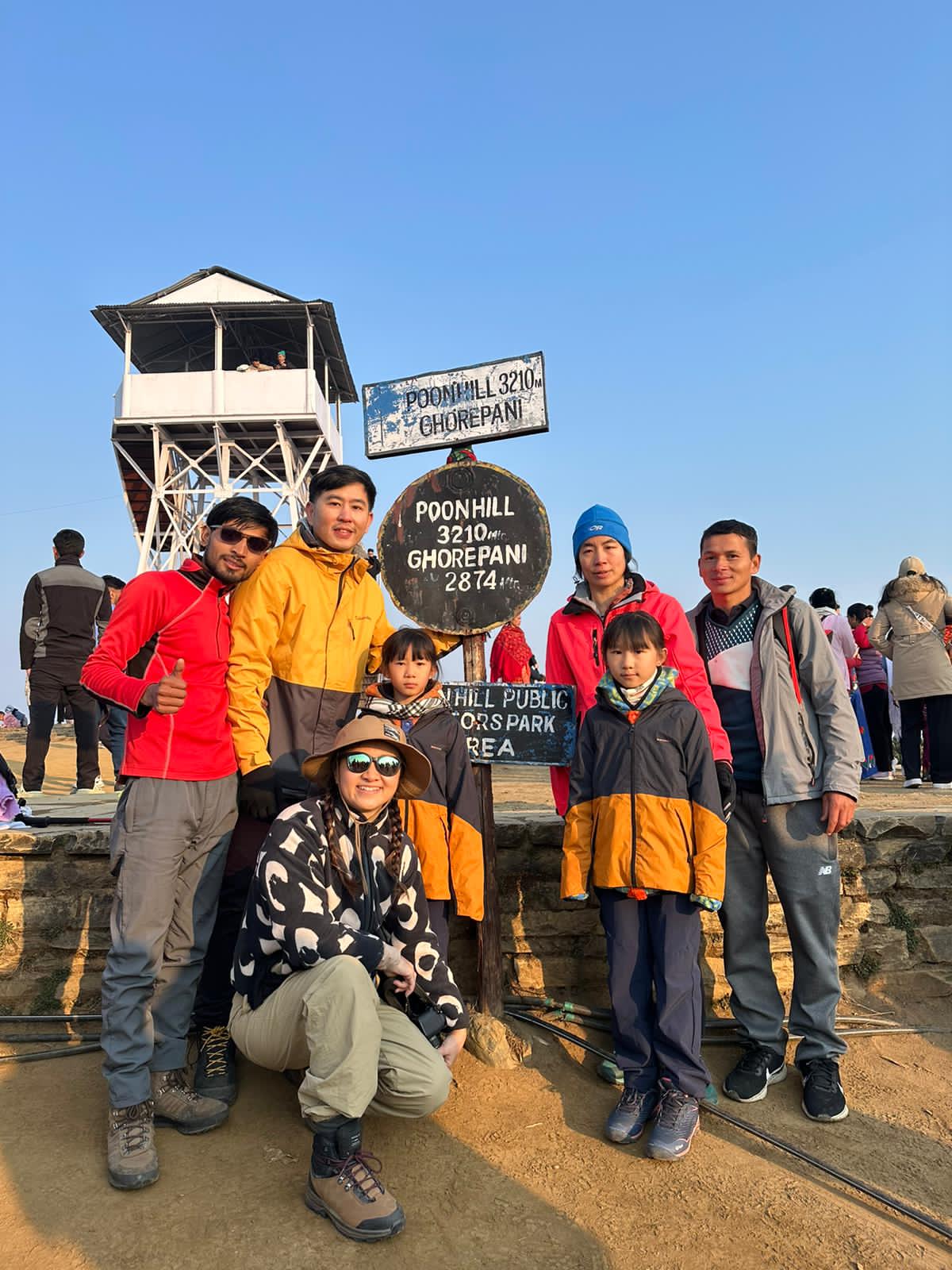
Today’s hike to Poon Hill will be early because of the early start time. The viewpoint is at 3,210 m/10,531 ft, accessible by a steep uphill track from Ghorepani. A clear day from the viewpoint will reveal many peaks of the Himalayas.
You will go to Poon Hill, then back to Ghorepani for breakfast. The path then heads towards Tadapani through the woods. The trail has a few ups and downs as it runs through the rhododendron forest and through small mountain communities.
Tadapani is located at (2,630 m / 8,628 ft). Overnight stay at a local lodge and rest after walking for the day.
Activity & Duration
Hoke to morning sunrise poon hill and trek to tada pani 5/6 HrsHighest Altitude
3210m / 10,531ft (Poon Hill)Meals
Breakfast, Lunch and DinnerAccommodation
Tea houseDay 06: Trek from Tadapani to Chomrong
Staff will then leave Tadapani and head towards Chomrong after breakfast. The trail traverses through the forest and then through a few uphill and downhill sections to arrive at the villages in Modi Khola valley.
The walk slowly approaches Annapurna Sanctuary. En route, the views of the mountains gradually shift as the forest gradually gives way to cultivated hillsides and scattered settlements.
Chomrong is situated at (2,165 m / 7,103 ft). It is a significant village along the Annapurna Base Camp trek and is a great place to stay for rest prior to entering the deeper mountain valley.
Once you arrive at Chomrong, you will stay at your lodge and be able to unwind for the rest of the day.
Activity & Duration
Trekking, 4 to 5 hoursHighest Altitude
2630m / 8,629ft (Tadapani)Meals
Breakfast, Lunch and DinnerAccommodation
Tea HouseDay 07: Trek from Chomrong to Dovan
From Chomrong, it is a trek towards Dovan. The trail starts downhill with stone steps and then crosses the Chhomrong Khola. The trail then ascends to the villages and forests on the path to the Annapurna Sanctuary.
The pathway will pass through thick forest and the route will be along the Modi Khola valley. Along this part, bamboo, rhododendron and other mountain vegetation can be seen.
Dovan is located at approximately 2,600 m / 8,530 ft. The village is a stopover between Chomrong and Deurali. Once you arrive, you will be accommodated in your lodge and get a chance to rest.
As the elevation rises, it becomes crucial to walk at a pleasant pace and to drink sufficient water during the walk.
Activity & Duration
Trekking, 5 to 6 hoursHighest Altitude
2600m / 8,530ft (Dovan)Meals
Breakfast, Lunch and DinnerAccommodation
Tea HouseDay 08: Trek from Dovan to Deurali
The trail today goes further into the Annapurna Sanctuary. From Dovan, you will pass through trekking areas when walking along the Modi Khola valley towards Deurali, where the elevation rises gradually.
The trail winds through regions of the Himalaya and Hinku, then onward to Deurali. The valley is shallower and the surrounding mountains rise more as the valley narrows.
Deurali is located at (3,230 m / 10,597 ft). As well, the elevated location requires you to take a slow and comfortable walk. Once you enter the lodge, you can take a break and get ready for the next day of trekking to Annapurna Base Camp.
Activity & Duration
Trekking, 3 to 4 hoursHighest Altitude
3230m / 10,597ft (Deurali)Meals
Breakfast, Lunch and DinnerAccommodation
Tea HouseDay 09: Trek from Deurali to Annapurna Base Camp via Machhapuchhre Base Camp
You will trek to Annapurna Base Camp today. Following Deurali, the trail enters the upper Modi Khola valley to Machhapuchhre Base Camp (3,700 m / 12,139 ft).
From here, the path goes on to Annapurna Base Camp (4,130 m / 13,549 ft) through the open mountain sanctuary. As you go higher above the tree line, the surrounding landscape becomes more exposed.
Once you have arrived at the base camp, you will have plenty of opportunity to enjoy the surroundings of the mountains and the surrounding area before you arrive at your lodge.
Activity & Duration
Trekking to Annapurna Base Camp, 5 to 6 hoursHighest Altitude
4130m / 13,550ft (Annapurna Base Camp)Meals
Breakfast, Lunch and DinnerAccommodation
Tea HouseDay 10: Trek from Annapurna Base Camp to Sinuwa
After breakfast, you start the trek back to Kathmandu from Annapurna Base Camp. The trail goes back through the Annapurna Sanctuary, passing through Machhapuchhre Base Camp and downhill to Deurali.
The Modi Khola then passes through forests and mountain villages. Most of today’s route is downhill, which can make it seem easier than the previous day, but it can be hard on the knees as well.
The route will then continue down the valley, leading up to Sinuwa (2,360 m / 7,742 ft). Once you reach the lodge, you can relax and recuperate from the stroll.
Activity & Duration
Trekking, 7 to 8 hoursHighest Altitude
4130m / 13,550ft (Annapurna Base Camp)Meals
Breakfast, Lunch and DinnerAccommodation
Tea HouseDay 11: Trek from Sinuwa to Jhinu Danda
The walk is from Sinuwa to Jhinu Danda. The route is along the low end of the Annapurna Sanctuary route, through forest and traditional mountain settlements.
The route will lead you downwards as it heads towards the Modi Khola valley. The landscape becomes greener and warmer as you lose altitude.
Jhinu Danda (1,780 m / 5,839 ft) is where you can stop at the lodge. If conditions and time allow, you can also visit the nearby natural hot springs, which are located downhill from the main settlement. There are extra steps to take when going to and from the springs.
Activity & Duration
Trekking and optional hot spring visit, 4 to 5 hoursHighest Altitude
2360m / 7,743ft (Sinuwa)Meals
Breakfast, Lunch and DinnerAccommodation
Tea HouseDay 12: Drive from Jhinu Danda to Pokhara by Shared Vehicle
Following breakfast, you’ll head back to Pokhara from Jhinu Danda via shared vehicle. The road to the car will take you up the hill from the trekking area to Pokhara. The time taken to travel the route may vary due to road conditions and some areas may be uneven or steep.
Once you arrive in Pokhara, you will go to the hotel and have the rest of the day free. This is a chance to rest after the trek and appreciate sometime around Lakeside.
Activity & Duration
Shared vehicle journey, 3 to 4 hoursHighest Altitude
822m / 2,697ft (Pokhara)Meals
BreakfastAccommodation
Three Star Hotel In PokharaDay 13: Pokhara to Kathmandu by Tourist Deluxe Bus
Today you will take a tourist deluxe bus from Pokhara to Kathmandu. Then it is time for breakfast and the trip takes off on the Prithvi Highway.
The path passes the hilly areas and the valley of the rivers between Pokhara and Kathmandu. The travel time depends on traffic conditions, the road conditions and the number of stops. The trip will typically take the whole day.
Once you’ve reached the capital city, you’ll be picked up by the hotel but will have the rest of your day free to rest or head out to explore the local area if you have the time.
This is the last day of travel before you leave or continue on your trip.
Activity & Duration
Tourist deluxe bus journey, 7 to 9 hoursHighest Altitude
1400m / 4,593ft (Kathmandu)Meals
BreakfastAccommodation
Thrre Star Hotel In kathmanduDay 14: Final Departure or Onward Journey
Today you’ll reach the end of your journey to Annapurna Base Camp. Our team will make arrangements for your airport transfer to your international flight, depending on your flight schedule.
For onward travel to other destinations in Nepal or elsewhere, you can follow the onward travel plan from Kathmandu (1,400 m / 4,593 ft).
It is important to allow sufficient time for your airport transfer and check-in as per your flight schedule. Our staff will help you with the transfer to the airport and will do their best to get you there in time.
Today, there will be no trekking; thus, the end of the itinerary.
Activity & Duration
Airport transfer and departure,30 minutes to 1 hourHighest Altitude
1400m / 4,593ft (Kathmandu)Meals
BreakfastAccommodation
-Includes / Excludes of Annapurna Base Camp Trek
What is included?
- Airport pickup:Our representative will pick you up and transfer you to your hotel by private vehicle as per your arrival date & time.
- Kathmandu Stay: 2 nights at a 3-star hotel in Kathmandu on a BB plan (1 night before and 1 night after the trek).
- Permits: ACAP permit, TIMS Card, and all necessary government VAT, service charges, and local taxes.
- Tourist bus: We will provide a tourist bus ticket from Kathmandu to Pokhara.
- Pokhara stay: 2 nights at a 3-star hotel in Pokhara on a BB plan (1 night before and 1 night after the trek).
- Taxi: Taxi to the trek start point (Hille) from Pokhara
- Accommodation: 9 nights of twin-sharing accommodation during the trek.
- Meals: 12 breakfasts, 10 lunches, and 9 dinners during the trek with a cup of hot drink.
- Drinking Water:unlimited normal water to refill in a water bottle (1L metal – not for hot water)
- Trekking Guide: Licensed, first-aid trained, English-speaking guide.
- Assistant Guide: Provided for groups larger than six people.
- Staff Wages & Allowances: Salaries, daily wages, food, and equipment for guides and staff.
- Trekking map:We will provide a trekking map of the Annapurna.
- Sleeping Bag: appropriate for -20 degree centigrade(if you don’t add porter, you have to carry yourself)
- Duffel bag:Size 70 to 80 L (if you take porter service) with rain covers
- First Aids:Your guide will carry a comprehensive first-aid medical kit.
- Emergency: Oximeter and Oxygen Can with Guide, Insurance for all Nepalese staff, and Assistance in arranging rescue operations in case of a medical emergency (travel insurance coverage required).
- Tourist bus: We will provide a tourist bus ticket from Pokhara to Kathmandu.
- Taxi: Taxi to Pokhara from the trek’s endpoint (Jhinu Danda)
- Benefits: Glory Adventure Company T-shirt, Sun hat, certificate of achievement after completing the trek.
- Storage facilities:Free luggage storage at Glory Adventure Store during the trek.
- Airport drop:Our representative will transfer you to the airport for your final departure (as per your departure date & time).
What is excluded?
- International Travel and Visa: International airfare (to and from Kathmandu) and Nepal visa fees(15 days: USD 30, 30 days: USD 50, 90 days: USD 125).
- Accommodation and meals: Meals and extra night accommodation in Kathmandu and Pokhara.
- Travel Insurance (Mandatory): You must purchase travel and medical insurance yourself, which should cover trek, tour, or expedition.Recommended Travel Insurance for Nepal Tripbased on what our previous clients have.
- Porter Services: Porter to carry luggage (Optional: USD 220 per porter, carrying up to 25 kg).
- Personal Expenses: Hot showers, extra meals, Wi-Fi, battery charging, upgraded accommodations during the trek, and drinks (alcoholic, soft drinks, coffee, bottled water, etc.).
- Personal Gear: Clothing, trekking gear, bags, personal medical kit, and Toiletries (soap, shampoo, tissue paper, toothpaste, etc.). Recommended packing list for the Annapurna Base Camp Trek.
- Special Permits and Fees: Fees for special filming, drones, and camera permits.
- Gratuities: Tips for guides, porters, and staff (expected but not mandatory).
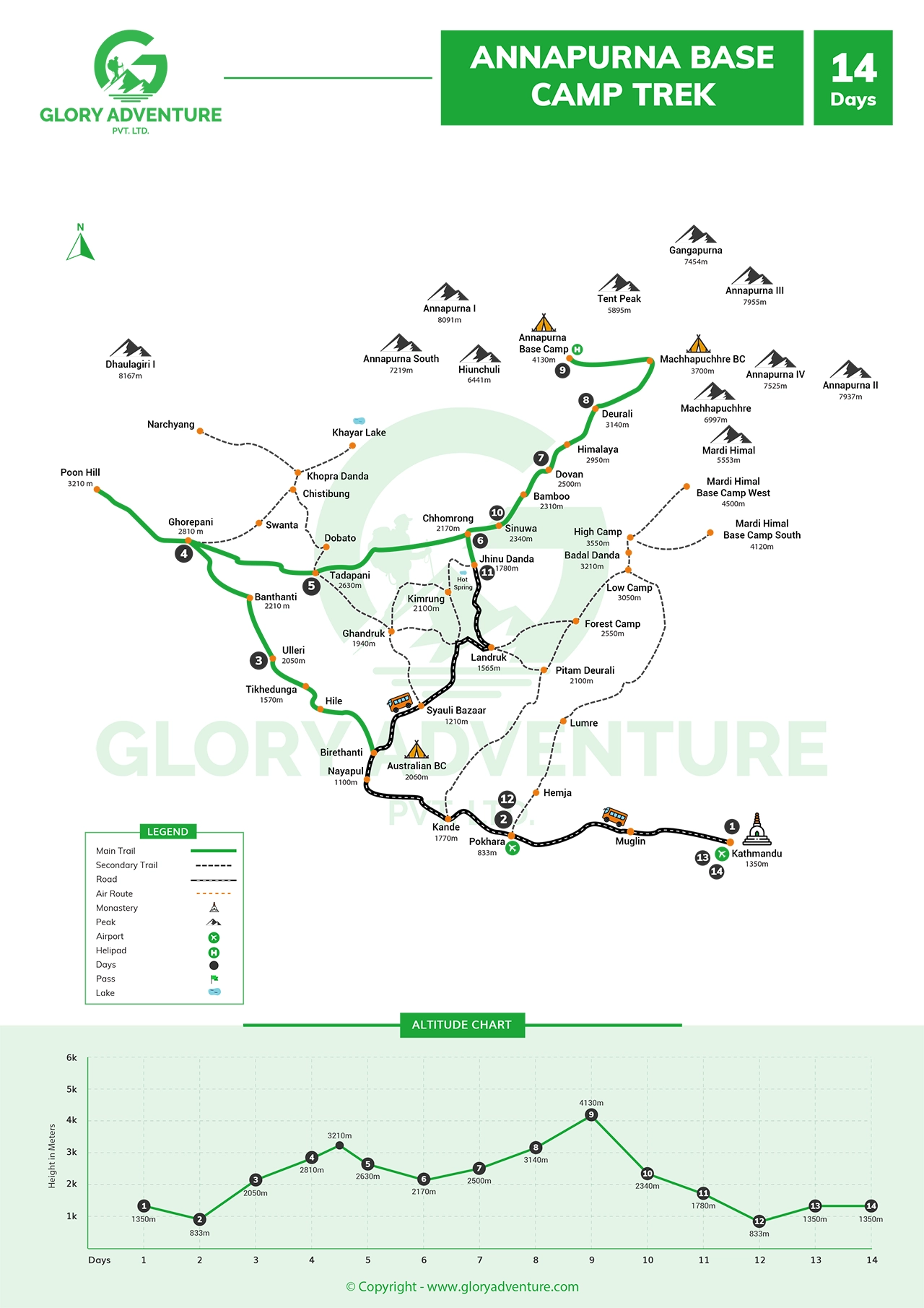
Route Map & Altitude Chart
Essential Information of Annapurna Base Camp Trek
Weather and the Best Season
The Annapurna Base Camp Trek can be done in various seasons, but mainly spring and autumn are the optimal seasons for trekking. The weather varies at different heights, so it can be much colder at the top of the mountain in the morning and evening.
| Month | Weather and Trekking Conditions |
| January | Cold and often snowy at higher elevations. Clear mornings are possible. |
| February | Cold conditions continue, with snow possible around higher sections. |
| March | Spring begins. Days become warmer and mountain views are usually good. |
| April | Warm, relatively stable weather with good visibility and rhododendron flowers. |
| May | Generally warm, although clouds and rain may increase toward the end of the month. |
| June | Monsoon begins, bringing frequent rain, clouds and muddy trails. |
| July | Wet conditions, slippery trails and limited mountain visibility are common. |
| August | Continued monsoon rainfall with cloudy conditions on many days. |
| September | Rain gradually decreases and trekking conditions improve. |
| October | Usually clear and dry, with comfortable daytime temperatures. |
| November | Cool, dry weather and generally clear mountain views. |
| December | Cold conditions, especially at higher elevations, with possible snowfall. |
The months of March to May and September to November are very popular for Annapurna Base Camp treks. With some preparation, it’s also possible to trek during the winter season, but monsoon trekking requires more flexibility.
Difficulty and Altitude Sickness
The Annapurna Base Camp Trek is considered a moderate to difficult trek. Technical climbing skills are not required, but there are days when the walk is long, the steps are stony, the climb is steep and repeated ascents and descents are required.
The altitude will be significant when you arrive at Annapurna Base Camp (4,130 m / 13,549 ft). Trekkers can suffer from altitude sickness even if they are physically healthy. Symptoms range from headache, nausea, dizziness, tiredness and sleep disturbances.
Important points:
- Take a stroll and don’t rush.
- Drink plenty of fluids all day long.
- Give your body a chance to acclimatise when going up in elevation.
- If symptoms are observed, notify your guide right away.
- If symptoms become severe, do not proceed to a higher level.
- The best way to deal with worsening altitude sickness is to go down.
Accommodation During the Trek
The Base Camp of Annapurna is mostly accommodated in local teahouses and lodges on the trek route. Mountain accommodation is a simple type designed for trekkers. The rooms are mostly double-bedded, though in certain seasons room configurations are subject to change.
Sharing of bathrooms is possible, especially in areas of mountain elevation. Hot showers are sometimes available for a fee at some lodging. Generally, blankets will be provided, but be sure to bring your own sleeping bag if you’re going higher and higher, as nights can get chilly.
On the Annapurna Base Camp Trek itinerary, accommodation is available in places such as Ulleri, Ghorepani, Tadapani, Chomrong, Dovan, Deurali and Annapurna Base Camp.
Buildings get simpler the higher they are. There may be additional charges for WiFi, electricity and hot water. Glory Adventure can book your accommodation within the agreed package.
Food and Drinking Water
The Annapurna Base Camp Trek has teahouses and lodges where food is available. The menu is typically comprised of familiar Nepali dishes and simple international ones. Typical options include dal bhat, noodles, rice, pasta, soup, potatoes, eggs, bread and vegetables.
Dal bhat is a convenient option as it includes rice, dal (lentils) and vegetables. There are many vegetarian options and at higher elevations the food selections may be a bit more limited.
Drinking water can be obtained from bottles or treated water from water sources. Use of a reusable bottle and water purification tablets or a filter or other suitable water treatment method can decrease plastic waste.
Hot tea or coffee is also sold at most lodges, though the higher up you go, the higher the price.
Insurance, Visa and Permits for the Trip
It is highly recommended to take a travel insurance policy to undertake the Annapurna Base Camp trek. Your policy should include the highest point you will reach in your trek, emergency medical treatment and evacuation as needed.
Nepal tourist visa is required for most of the foreign nationals, except for those who are eligible for a visa exemption, to travel to Nepal. Please refer to the latest visa requirements before travelling, as this may vary depending on nationality.
Trekking permits are also necessary for trekking. You must apply for an Annapurna Conservation Area Permit to enter the conservation area. Depending on the current trekking rules and the way the trek is organized, the use of a TIMS card may be required.
If you need help with the permit requirements in your package, Glory Adventure can help! Bring extra copies of your passport, insurance information and key travel documents on the journey.
Training, Fitness Level & Mental Preparation
Proper preparation means an easier and more enjoyable Annapurna Base Camp trek. Walking for a few hours a day, both up and down, should feel comfortable for a couple of days.
Physical preparation:
- Go for a walk several weeks ahead of the trek.
- Add some walking to your exercise routine—both uphill and downhill.
- Strengthen the legs through squats, step-ups and lunges.
- Include regular aerobic activity (walking, biking).
- Walk through the backpack that you will use for the hike.
Mental preparation:
- Expect to encounter varying conditions of weather and trails.
- A few physically challenging days are to be expected.
- Avoid walking too fast.
- Be ready to make adjustments to plans if weather or trail conditions change.
For the Annapurna Base Camp Trek, the following amount of walking, rest and acclimatization time should be provided in a realistic Annapurna Base Camp Trek Package.
Risk Factors on the Trek
There are risks associated with mountain trekking and they must be known before embarking on your trip. The Annapurna route has paved trails and established settlements, but conditions may vary due to weather, altitude, rainfall, or maintenance of the trails.
Common risk factors are:
- High altitude sickness.
- Rough/slippery trails in the rain or snow.
- Stone steps that can be tiring on the knees.
- Heavy rains causing landslides or trail interruption.
- Low temperatures in higher altitude areas.
- Dehydration and exhaustion.
- Few health care resources in rural areas.
- Changing weather conditions.
Take care not to take undue risks and follow your guide’s instructions. In the event of local conditions, some sections may become unsafe and your Annapurna Base Camp Trek will be modified accordingly.
Health & Safety
Personal hygiene, food, rest and water are key to staying healthy on the trail. Use safe water and bring a water bottle to drink water regularly during the day.
Get well-balanced meals and stay away from “unhygienic” foods and beverages. Hand sanitizer may be helpful when hand washing is not available.
Safety points:
- Please advise your guide of any health issues before beginning.
- Bring your personal important medications.
- Be sure to have emergency phone numbers handy.
- Avoid overexposure to strong sunlight at higher elevations.
- Use appropriate footwear with a good grip.
- Have warm clothes on hand because temps can change rapidly.
- Never turn a blind eye to symptoms of altitude sickness.
- Obey trail and safety rules.
In case of difficulties, there is support on hand to coordinate practical help on the trek with the help of Glory Adventure.
Transportation
The journey begins and ends with road transport, so transportation becomes an important part of this journey. There are tourist buses between Kathmandu and Pokhara provided in the tour itinerary.
After arriving in Pokhara, you ride a taxi towards Hille and then you walk the portion of the trail to Ulleri. Upon completion of the trekking trail, you journey back to Pokhara on a shared vehicle from Jhinu Danda.
Tourist Deluxe Bus is arranging the return trip from Pokhara to Kathmandu. Traffic, road conditions, weather and planned stoppages can lead to varying travel times on the road.
Therefore, your Annapurna Base Camp Trek is a blend of the road trip and several days of mountain trekking. Glory Adventure is able to arrange the transfer services as per the package and the schedule agreed upon.
Your Extra Expenses
Your package includes only the services as detailed in the inclusions, but some extra cash for your personal needs on the trip is advisable.
Other potential costs may be:
- Snacks and drinks in between meals.
- Water from a bottle or from a treatment facility.
- If available, hot showers.
- Mobile data or WiFi charges.
- Battery charging.
- Personal toiletries.
- Laundry services.
- Guidance to guides, porters and other staff.
- Gifts and shopping.
- Any expenses incurred during an emergency that are not covered by your insurance.
- Extra lodging and/or transportation due to unexpected delay.
The costs will differ from one village to another and services provided at higher altitudes might be more costly. Bring some Nepalese rupees as cash, as card payment services are not available in remote trekking areas and neither are there any ATMs.
Language & Communication
Nepali is the main language spoken along the Annapurna trekking route. The English language is also widely spoken by those involved in tourism-related activities in hotels, lodges, restaurants, trekking firms and tourism firms.
The trek does not require any Nepali-speaking skills. When communicating with accommodation providers, transport operators and local communities, your guide will be able to assist you.
Although it might be easy to pick up a handful of Nepali words, it’s a sweet way to communicate with the locals. Greeting/Thank you words like “Namaste” and “Dhanyabad” are easy to remember.
In remote areas, mobile coverage and internet access can be unreliable, making it more difficult to communicate during the Annapurna Base Camp Trek. If communication is necessary, your guide will be able to help.
Mobile Network, Internet & Charging Facilities
While most of the Annapurna route has a mobile signal, some remote areas may not provide coverage. Also, coverage will vary depending on network provider and local topography.
Most of the lodges have internet access, but the speed is lower than in Kathmandu or Pokhara. Internet access may be an extra cost at some lodging establishments.
Many lodges have electricity, though the power may be limited and not be available for use by many trekkers simultaneously.
Useful tips:
- Carry a power bank.
- Take extra batteries if using a camera.
- Set phone to power-saving mode.
- Before you depart from the cities, download as many maps and documents as possible.
- Use mobile internet but don’t rely on it exclusively.
A portable charging solution can come in very handy in the higher portions of the hike.
Don’ts on This Trip
Environmental protection and good relationships with local communities are promoted and supported through responsible trekking.
Please avoid:
- Never litter on the trail
- Refrain from injuring plants and wildlife
- Do not disturb local religious sites.
- Do not trespass on any private property.
- When appropriate, do not take pictures of individuals without their permission.
- Do not waste water.
- Never disregard or disregard your guide’s safety instructions.
- Never walk alone without notifying your trekking team.
- If you have severe symptoms of altitude sickness, do not go on with the climb.
- Never litter around the teahouse/rubbish around the camping site.
By adhering to these basic rules, the Annapurna Base Camp Trek itinerary becomes safer and more responsible for the visitors and local communities.
Cultural Festivals on the Trail
The people of the Annapurna region have a variety of cultural practices. During the trek, you can expect to see local celebrations, religious ceremonies, or seasonal festivals.
Important festivals in Nepal include Dashain and Tihar. In the villages along the Annapurna route, signs of Buddhism and Hinduism are also seen. Festivals may be observed on local dates and times, which can vary from year to year.
St. Francis Xavier Missionaries, shrines, traditional houses, monasteries and prayer flags may be encountered along the way. Visitors should respectfully watch ceremonies and abide by local customs.
You may see prayer flags, shrines, monasteries, traditional houses and other cultural features along the trail. When planning your trip, you can look ahead and adjust your travel timetables.
Tips for First-Time Nepal Visitors
With a bit of planning, traveling in Nepal is easy. Those who are traveling for the first time should allow themselves enough time for road trips, as they can be affected by traffic and mountain roads.
Useful tips:
- Secure passport and other important paperwork.
- Bring a bit of Nepalese currency for remote areas.
- Drink treated or safe water.
- Be sure to wear multiple layers, as there are temperature variations with elevation.
- Begin walking at a relaxed speed.
- Remember and respect religious sites and customs.
- Have a trekking permit document on hand.
- Do not use mobile internet as your only means of communication.
- Take a mini first aid kit and medication.
- Be flexible with the weather and traffic.
These can make the logistics of a first-time trek to Annapurna Base Camp easier and offer support if it changes.
Packing List
The Annapurna Base Camp Trek package is easier to handle if you pack properly. There are significant differences between the lower villages and the higher mountain areas; layered clothing is useful.
Essential items include:
- Boots that are comfortable for walking on trails and provide good traction.
- Lightweight backpacking pants and shirts
- Warm up with a fleece or insulated jacket
- Waterproof jacket and trousers
- Thermal base layers
- Wear a warm hat, gloves and additional socks.
- A sleeping bag appropriate for cold mountain nights
- Sunglasses, sun cream and lip balm
- Reusable water bottles
- Headlamp (with extra batteries)
- Personal medicines and basic first aid supplies
- Trekking poles (optional)
- Pack in a backpack and bring a rain jacket.
- Toiletries and a speedy-drying towel.
- Power bank
- Passport, permits, insurance information and some money
Don’t bring anything extra, as you will be on foot for several days and want to keep your pack as lightweight as possible.
Daily Trekking Schedule
The Annapurna Base Camp Trek is a typical day of hiking, which begins with breakfast at the lodge. This will vary by day depending on the distance of the walk, the weather and intended destination.
There are lots of walking hours on most days with frequent short breaks. You will typically stop in a teahouse or restaurant for lunch while you are on the way, so you can get a break before traveling further.
The tempo must be slow but not too slow. Your guide can alter the pace of the walk based on fitness, conditions of the trail and elevation.
The overnight lodge is usually reached in the afternoon, with time to rest, drink tea, take a shower (if available) and discover the local village.
On longer days, such as the walk from Deurali to Annapurna Base Camp, an earlier start may be necessary. Daily activities may vary depending on weather and trail conditions.
Tipping Guide
It is considered good practice in the Nepal trekking business to tip the guides, porters and other staff as a form of appreciation. It isn’t a set fee for the government and depends on the quality of service, length of trek and group size.
There are several general things to keep in mind:
- Tipping is voluntary.
- Quality advice may be provided at the end of the hike.
- Group members can add together to contribute.
- Provide specific suggestions to the appropriate staff, if feasible.
- Take the guide and the porter jobs apart.
- When possible, use Nepalese rupees.
Your trekking company will be able to provide you with up-to-date local information.
The right number of people can depend on the services offered and the size of the trek group for the Annapurna Base Camp trek. If necessary, Glory Adventure can give general advice prior to the trek.
ATM and Money Availability
It’s best to plan out most of your cash ahead of the higher sections of the trek. ATMs are found in big cities like Kathmandu and Pokhara, but become scarce in the trekking region.
Larger villages may have small banking services or cash withdrawal services but should not rely on them. Withdrawals may be difficult due to technical problems, network issues, or shortage of cash.
Bring a sufficient amount of Nepalese currency for the individual expenses on the trek. There’s a chance of running out of money to pay for drinks, snacks, hot showers, charging, tips and other services not covered by your package.
Store cash in a secure and waterproof location. It’s also beneficial to split up cash in various safe places if one wallet or pouch is lost.
Hot Springs at Jhinu Danda
Jhinu Danda is famous for its natural Hot Springs located at the end of the trekking route. The village is located at (1,780 m / 5,839 ft) and the hot springs can be reached by walking down the hill from the village.
There are several steps in the walk to the springs and it will take extra time. Once at the riverside area, the trekkers can enjoy the natural hot spring pools in the area.
After a few days of hiking, the water can be a great way to unwind. If you are going, take appropriate clothing, a towel and waterproof cover for your belongings.
This visit is voluntary and depends on your schedule, the weather and personal taste. Your guide can be able to suggest you about the present trail conditions and the best time to take the brief tour from Jhinu Danda.
Annapurna Base Camp Trek Vs. Other Treks in Annapurna Region
The Annapurna Base Camp Trek differs from the others in terms of length, highest peak, landscape and commitment.
| Trek | Approx. Duration | Highest Point | Main Character | Difficulty |
| Annapurna Base Camp Trek | 14 days* | (4,130 m / 13,549 ft) | Base camp, mountain sanctuary, villages and forests | Moderate to challenging |
| Ghorepani Poon Hill Trek | 5 to 7 days | (3,210 m / 10,531 ft) | Poon Hill sunrise, villages and forests | Easy to moderate |
| Mardi Himal Trek | 5 to 8 days | Around (4,500 m / 14,764 ft) | Ridge walking and mountain viewpoints | Moderate to challenging |
| Annapurna Circuit Trek | 12 to 20 days | Thorong La (5,416 m / 17,769 ft) | Long mountain circuit and diverse landscapes | Challenging |
| Khopra Danda Trek | 7 to 10 days | Around (3,660 m / 12,008 ft) | Quiet trails and mountain viewpoints | Moderate |
Duration refers to the itinerary provided here, including travel days.
The Annapurna Base Camp Trek route is ideal for those who wish to trek to a base camp in the Himalayas and visit the villages, forests and Annapurna Sanctuary within a relatively small trek.
Frequently Asked Question (FAQ’s)
Yes, beginners can join the trek and have a reasonable fitness level when they get up there and have prepared adequately and are accompanied by a good trekking team.
Being there at least one day before you leave is helpful in getting to sleep, preparing your trip and dealing with any last-minute travel issues.
Yes, daily plans will be adjusted if the weather or trail conditions, transportation, or safety concerns require changes.
There is no requirement for a porter, but if you do use one, you will have a reduction in your personal load for the longer track portions.
Stone steps, forest paths and possibly wet areas may be traversed with waterproof trekking boots that provide ankle support and grip.
Hot showers are available at many of the teahouses for a small charge, but are less elaborate and dependable at higher elevations.
Vegetarian food is available in most teahouses and if particular dietary needs are discussed prior to departure, they will be prepared.
Only pack what you need and make your trekking bag as small as possible, particularly if you will be carrying it yourself.
The hike can be done at any point in the monsoon but may need to be more flexible due to rain, muddy trails, cloudiness and transportation delays.
Routes may be altered due to traffic, weather, or road conditions; on transportation days, it is important to be flexible with travel plans.
Trip Reviews on Annapurna Base Camp Trek

Price starts from
US$ 807
For group of minimum 3 Pax
US$ 850
Need Help?
Managing Director
Saroj (+977-9806627713)
Related Trips

Saroj Sunar
Travel Consultant
Looking for a Private Trip?
Say Hello to Your Travel Consultant
Planning your next getaway? Our travel specialists are ready to design a fully customized package tailored to your interests. If you need help or have any questions, feel free to connect with us—we’re here to guide you from start to finish.
Price starts
US$ 807
✖
Free Trip Planner
Talk to
Mr. Saroj Sunar