Talk to Mr. Saroj
- Home
- Destination
- Nepal Trekking
- Everest Region
- Everest View Trek
- Everest Base Camp Trek 14 Days
- Short Everest Base Camp Trek
- Luxury Everest Base Camp Trek
- Everest Base Camp Helicopter Trek – 12 Days
- Everest Base Camp and Gokyo Lakes Trek
- Everest Helicopter Tour in Nepal
- Gokyo Lakes Trek 12 Days
- Everest Three High Passes Trek
- Pikey Peak Trek – 10 Days
- Ama Dablam Base Camp trek – 9 Days
- Everest Region
- Annapurna Region
- Dhampus Sarangkot Trek
- Short Poon Hill Trek 3 Days
- Ghorepani Poon Hill Trek 4 Days
- Ghorepani Poon Hill Trek – 8 Days
- Mohare Danda Trek – 9 Days
- Annapurna Base Camp Heli Trek
- Short Annapurna Base Camp Trek- 6 Days
- Annapurna North Base Camp Trek– 9 Days
- Short Mardi Himal Trek
- Annapurna Base Camp Trek – 10 Days
- Mardi Himal Trek – 10 Days
- Annapurna Base Camp Trek Via poon Hill
- Ghorepani Poon Hill with Mardi Himal Trek
- Annapurna Base Camp and Mardi Himal Trek
- Short Annapurna Circuit Trek
- Annapurna Circuit Trek with Tilicho Lake
- Khopra Ridge Trek
- Kori Himal Trek -10 Days
- Nar Phu Valley Trek with Kang La and Thorong La Pass- 17 Days
- Ghorepani Poon Hill Yoga Trek
- Annapurna Base Camp Trek
- Annapurna Region
- Travel Info
- Company
- Contact
 Plan Your Trip
Bookings open for the 2026-2027 season! Start planning your dream journey.
Kailash Mansarovar Yatra

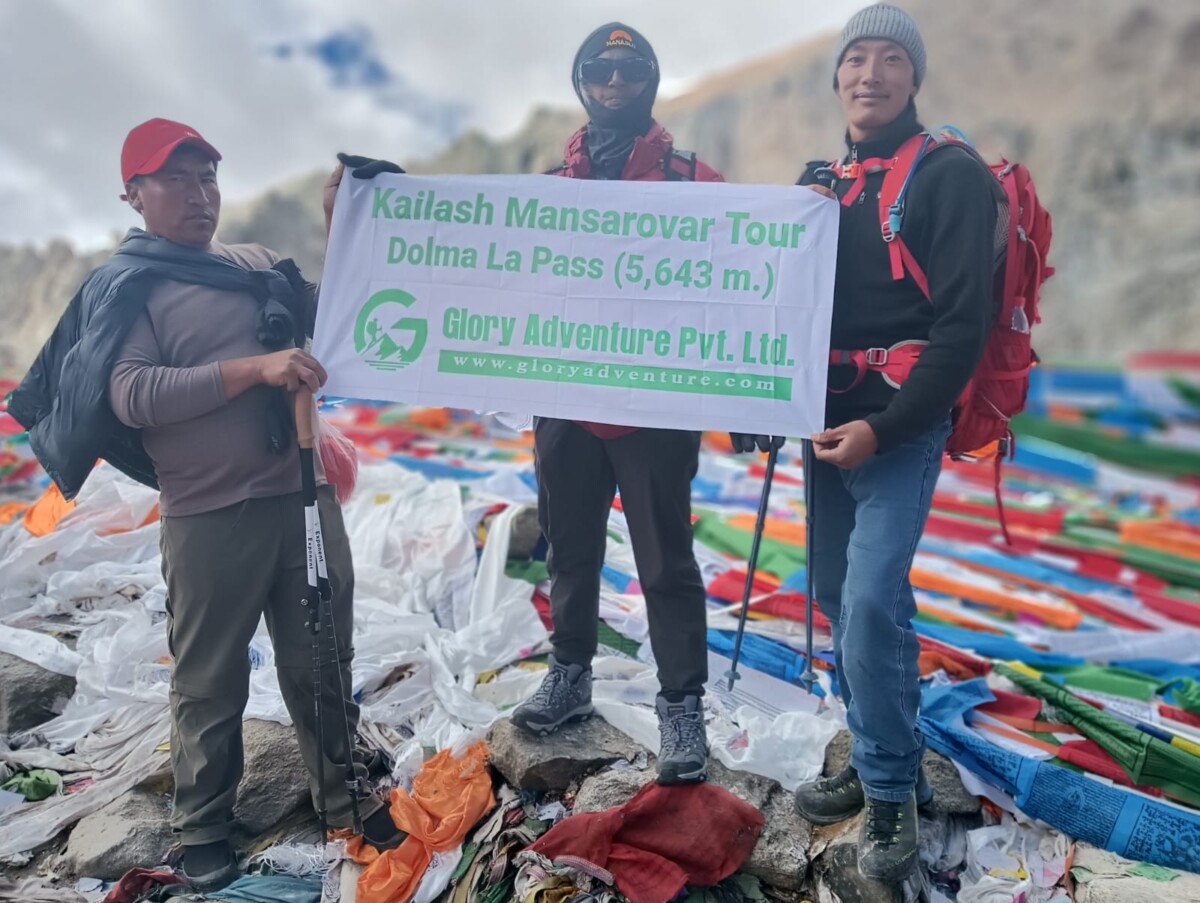
Group picture with company broad
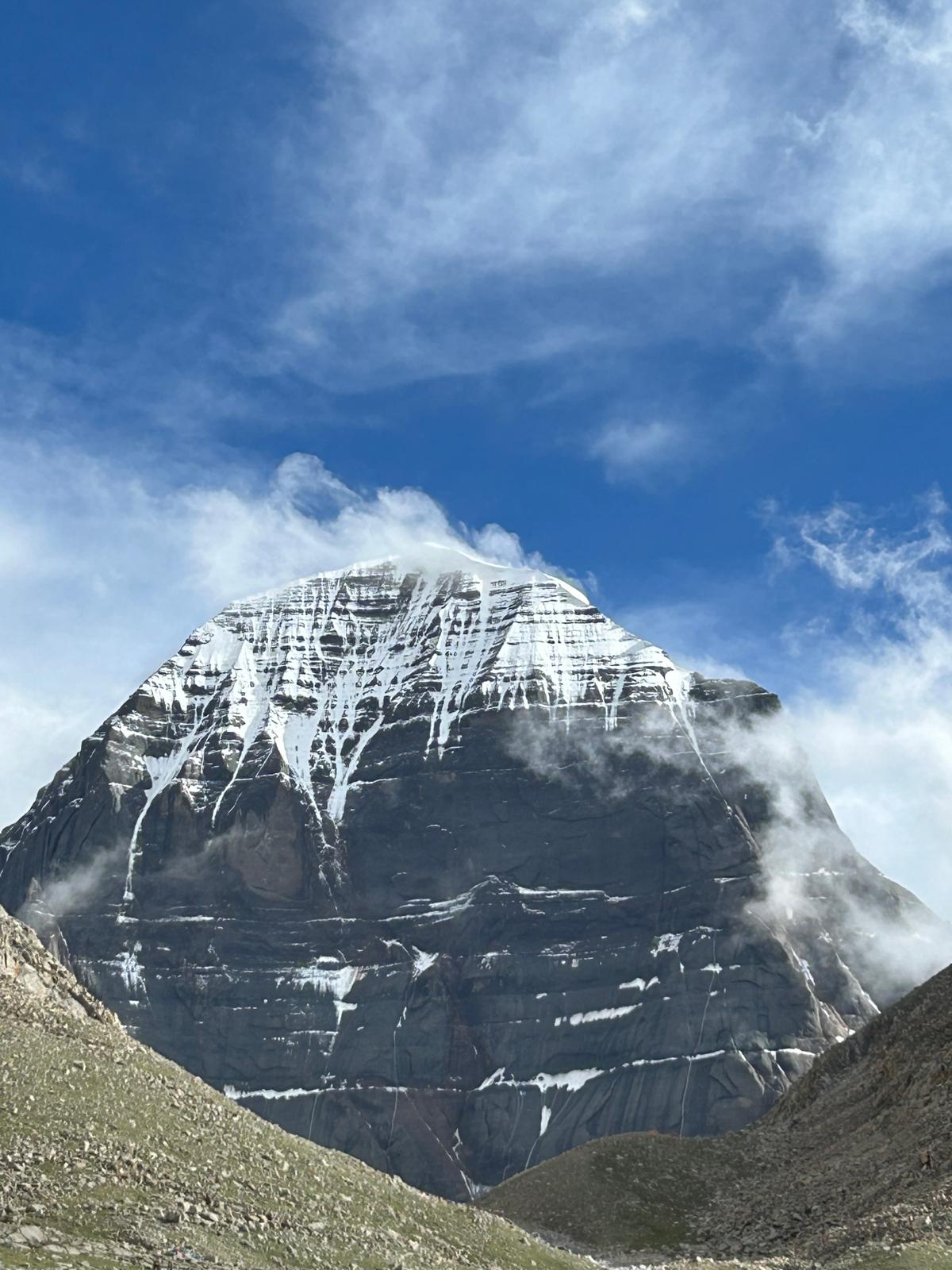
Kailash Mansarovar picture
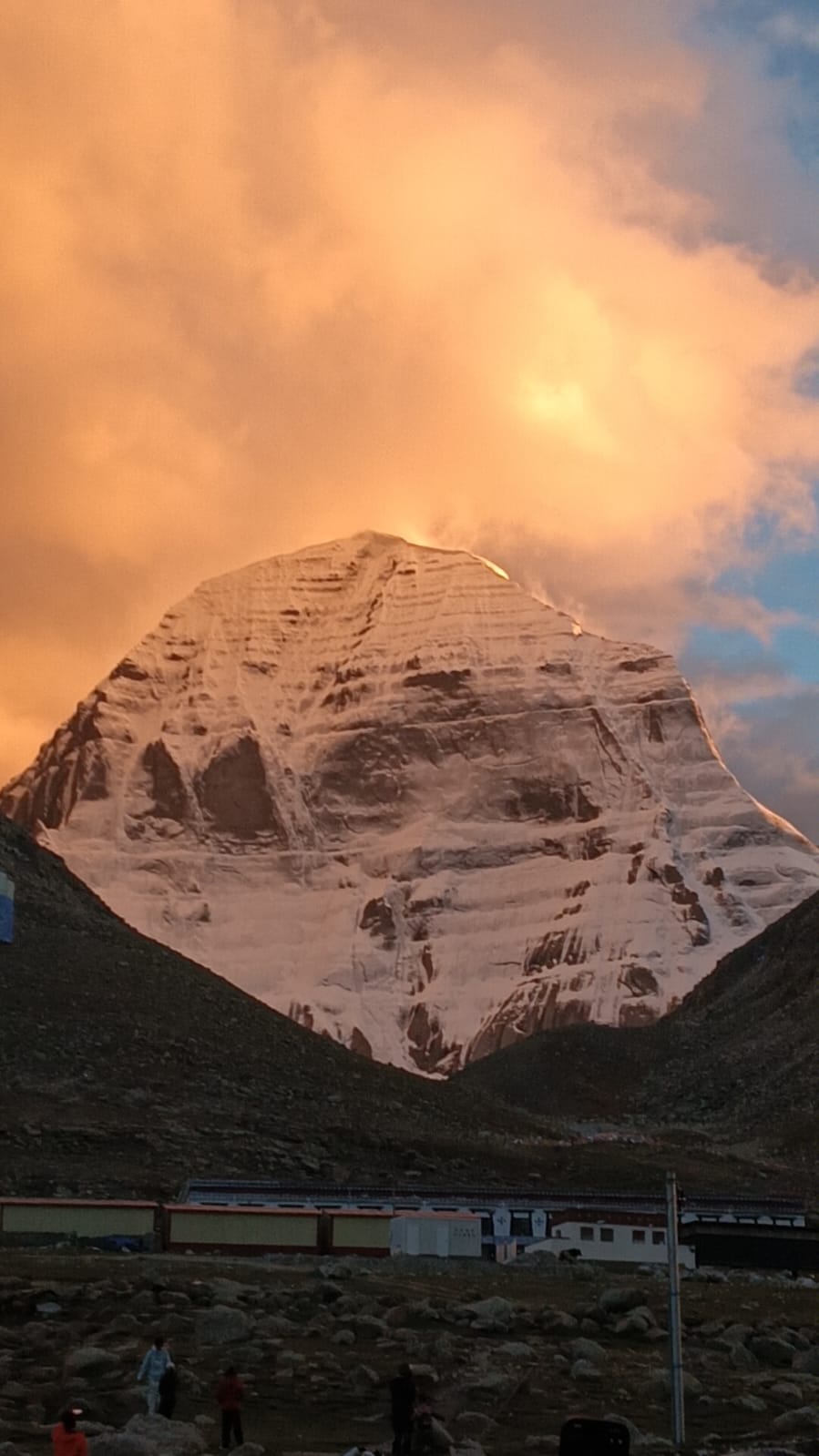
sunrise on the of mountain
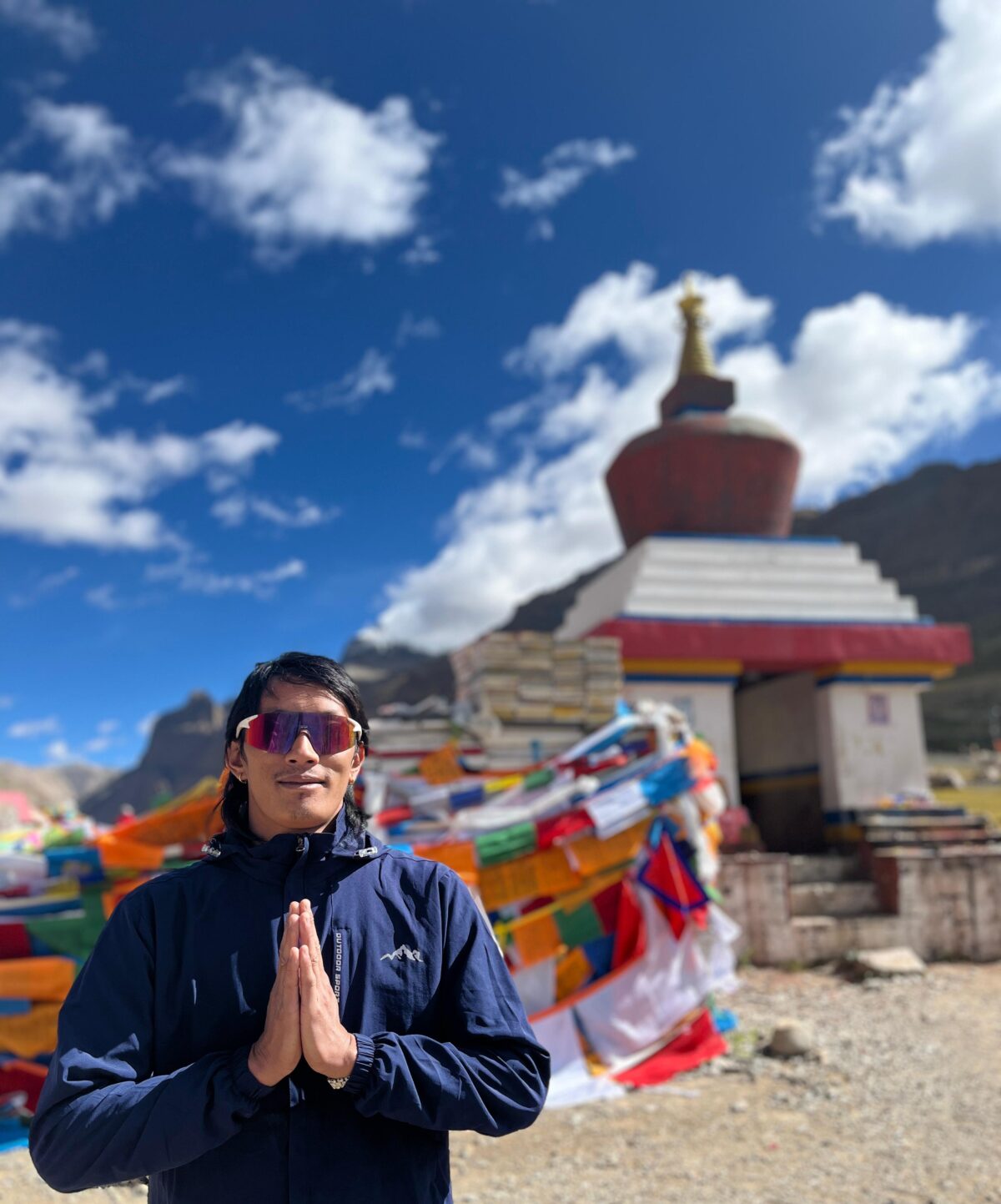
Gumba picture
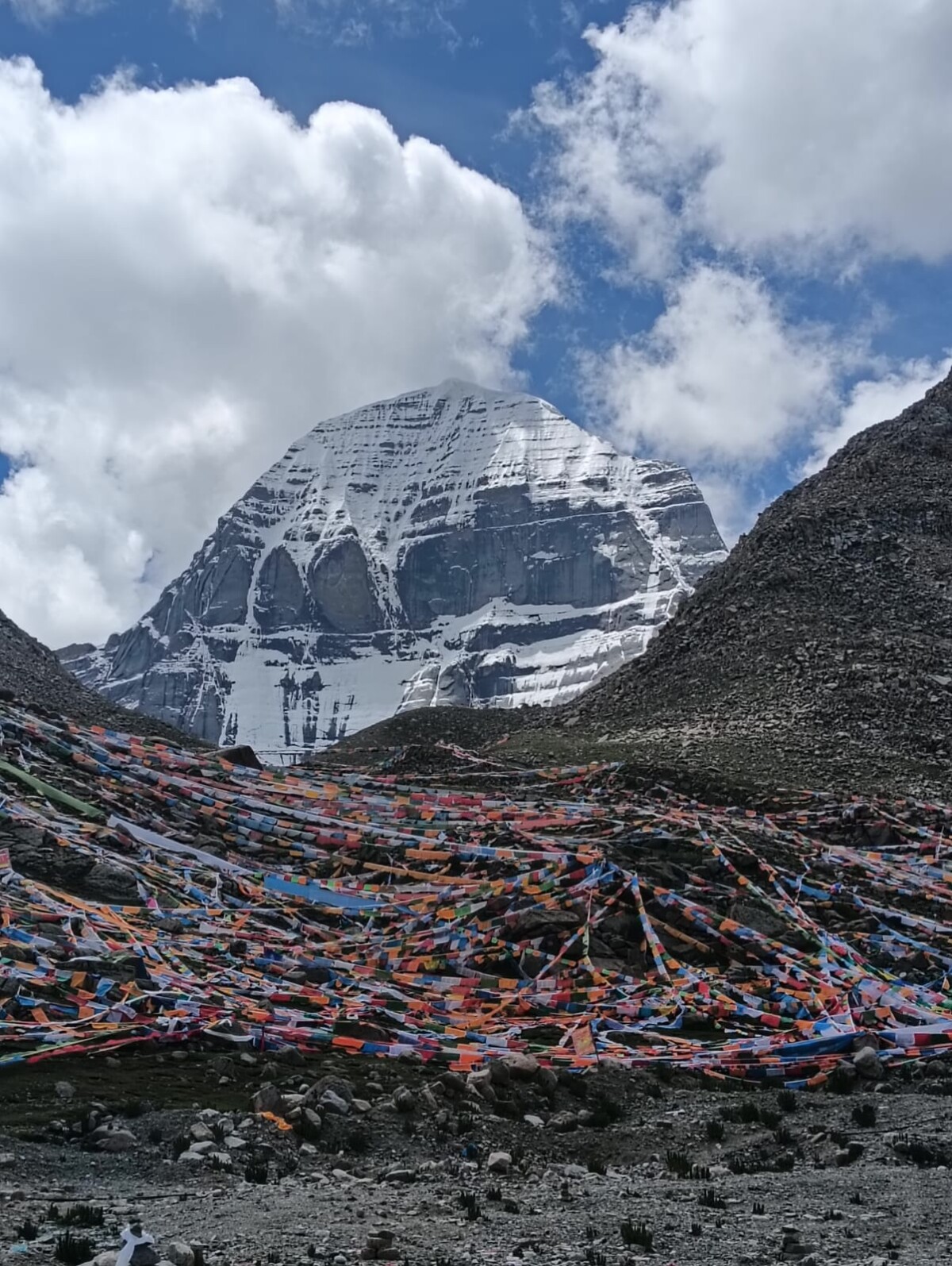
Kailash Mansarovar Yatra
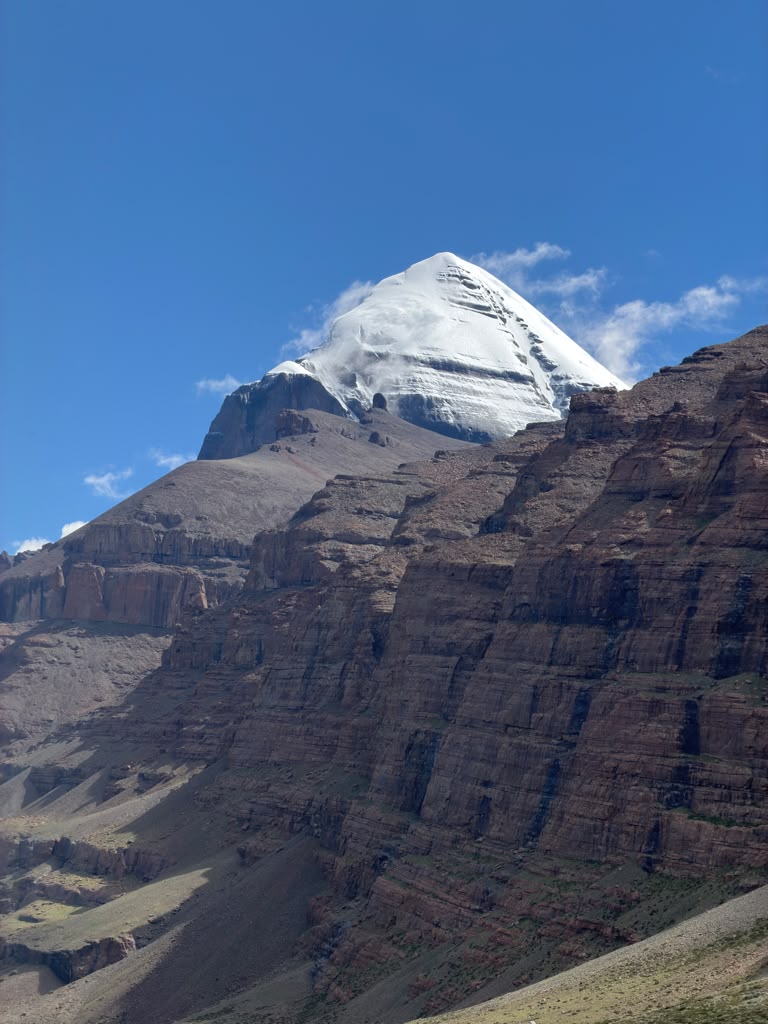
Kailash Mansarovar Yatra
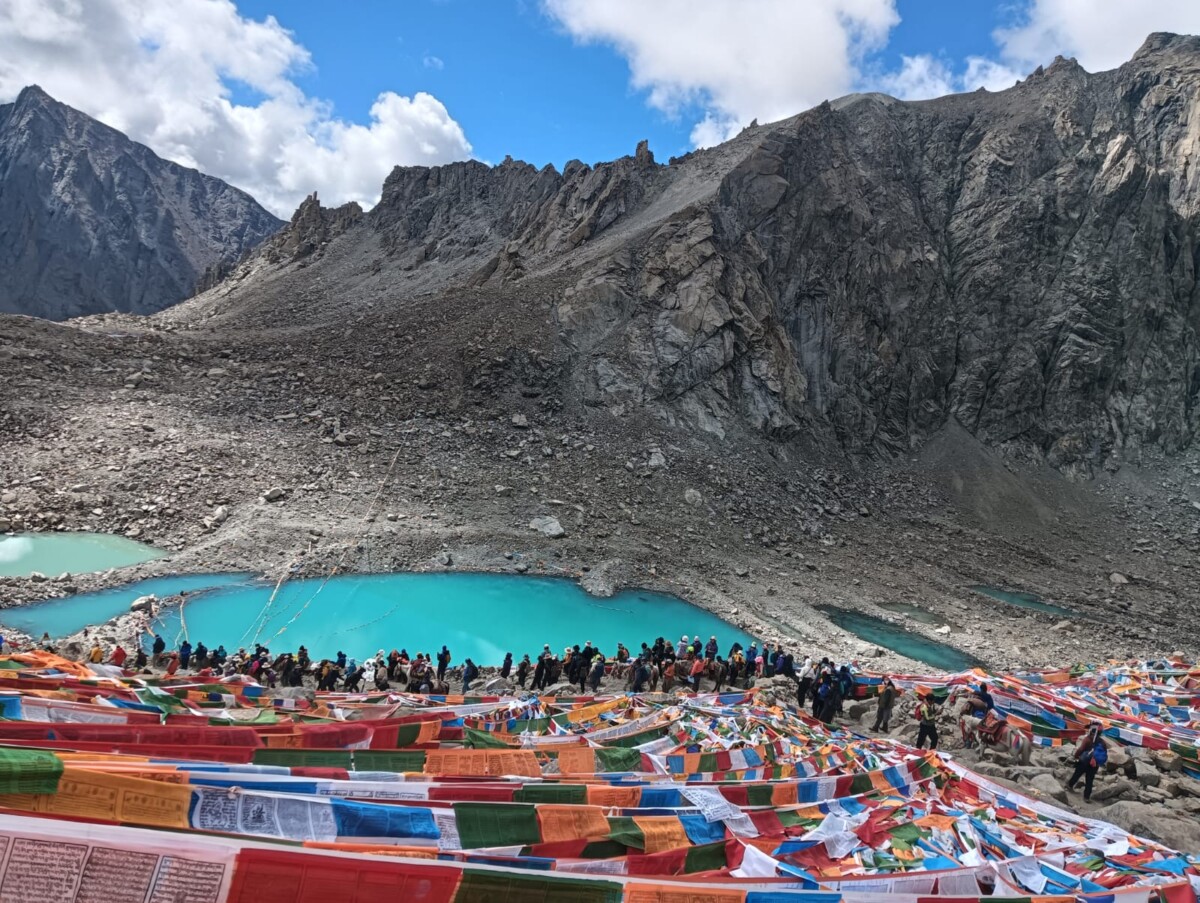
Kailash Mansarovar Yatra
Need Help?

Managing Director
Saroj (+977-9806627713)

Duration
14 Days

Trip Difficulty
Moderate

Max Altitude
5,630m / 18,471ft

Activity
Trekking & Sightseeing

Destination
Tibet

Group Size
1-20 People

Accommodation
Hotel, Lodge, Guest House

Meals
Breakfast, Lunch, Dinner

Transportation
Tourist Bus, Jeep
Highlights of Kailash Mansarovar Yatra
- Witness the holy three-day Kailash Parikrama, the holy abode of Lord Shiva.
- Visit the pure lake Mansarovar and follow sacred practices on its crystal-clear water.
- Pass the dramatic Dolva-La Pass, which is the highest and most spiritual point of the journey.
- Experience the incredible Himalayas, expansive Tibet and high altitude untouched views.
- Travel comfortably with an overland that is fully supported, with the route going through Nepal and Tibet.
- Visit some of the oldest monasteries and experience the Tibetan culture up to date.
- Have expert guidance, good acclimatization and complete logistic support to complete a safe journey.
Trip Overview of Kailash Mansarovar Yatra
The Kailash Mansarovar Yatra is one of the most sacred and significant pilgrimages in the world, attracting spiritual seekers from diverse religions and cultures. It is not a journey to some distant mountain, but also a great spiritual experience, a touching of the heart and mind, the soul.
The Kailash Mansarovar Yatra will bring you to the divinely worshipped Mount Kailash and the serene lake Mansarovar, both situated on the high Tibetan Plateau. Several centuries back, pilgrims were convinced that the Kailash Mansarovar Yatra cleans their sins in the past, brings inner peace, and opens the door to spiritual awakening.
This 14-day trip is a planned movement starting in Kathmandu, the city that has old temples and high spiritual power. Before moving to the Himalayas, the pilgrims are given time to prepare both psychologically and physically as they pay visits to the key sacred places that have a relation to Lord Shiva and to the Buddhist religion.
The Kailash Mansarovar Yatra takes off across the vast expanses of beautiful mountain ranges and into Tibet, where the path is broad and silent and very spiritual. As the trip progresses, the tourists are gradually brought into the life of the high-altitude, and the body gets used to it, as the mind gets accustomed to the serene and uncomplicated nature of the environment.
The Kailash Mansarovar Yatra is centred on the sacred parikrama or circumambulation around Mount Kailash. Circumambulation around this sacred mountain is viewed as a very devout thing to do. Everything is accompanied by prayers, thoughts, and faith when pilgrims of various nations walk side by side with one goal.
The path takes through the most ancient monasteries, prayer flags, which are hung in the wind, and great natural features, which have been respected for thousands of years. Close to it, there is Lake Mansarovar, which contributes to the spiritual beauty of the trip and provides an effective location to pray and have moments of spiritual contemplation.
Glory Adventure has been managing the Kailash Mansarovar Yatra carefully and with expertise, such that the pilgrims need not be troubled with the organisation of the trip to Kailash Mansarovar. Since travel arrangements are included along with lodging and directions, it is all created with the aim of enjoying a safe and fulfilling experience.
Not a pilgrimage alone, the Kailash Mansarovar Yatra is also a life-altering event that is likely to make the travellers forget the day-to-day life and get back in touch with faith, nature, and their inner self.
Itinerary of Kailash Mansarovar Yatra
Day 01: Arrival in Kathmandu – Beginning of the Kailash Mansarovar Yatra
Your Kailash Mansarovar Yatra starts when you arrive in Kathmandu, which is the capital of Nepal, at an altitude of 1,320 meters (4,330 feet). When you arrive at Tribhuvan International Airport, you will immediately be greeted by a representative of Glory Adventures and transferred to your hotel, which is only 20 minutes away. After the check-in, you have the time to relax, and the days that you will spend are going to be significant both spiritually and physically.
Kathmandu is a living, cultural and worshipping city. It is important to mention that the spiritual atmosphere can be felt in the air even on the first day of the Kailash Mansarovar Yatra. Towards evening, we will conduct a brief orientation session during which you will be enlightened on the overall itinerary of the Kailash Mansarovar Yatra, the rules, health tips, and what to expect during the journey. This meeting will make you feel confident and well prepared.
When you are feeling active, you can go on a stroll around the local streets and those of Thamel in particular, which is full of shops and cafes to offer you a warm welcome. The day is concluded with a classic Nepali welcome dinner, wherein you have an opportunity to interact with other pilgrims. In Kathmandu, you have a good sleep, and it is a preparation for the holy trip.

Activity & Duration
Drive To Thamel Hotel 30 Min
Highest Altitude
1320m / 4,331ft (Kathmandu)
Meals
-
Accommodation
Three Star Hotel In KathmanduDay 02: Kathmandu Sightseeing – Spiritual Preparation for the Kailash Mansarovar Yatra
The second day of the Kailash Mansarovar Yatra is spent on spiritual sightseeing in Kathmandu Valley. You then start a guided journey of the most holy and ancient religious places in Nepal after having breakfast. The day is significant as it is an opportunity to prepare your soul and mind before you go to the high Himalayas and Tibet.
The first one is Pashupatinath Temple, which is one of the most sacred Hindu temples worldwide and is directly related to Lord Shiva, who is inseparably related to Mount Kailash. You can see old processes on the Bagmati River and experience a strong sense of piety.
Then the next place to see is Budhanilkantha, which houses the serene Sleeping Vishnu sculpture, which lies on a stone bed in a pond, a representation of serenity and harmony.
The sightseeing site is then followed by Boudhanath Stupa, which is the biggest Buddhist stupa in the world. Taking a stroll out in the stupa, watching the monks and pilgrims, turning the prayer wheels, and listening to mellow chants, gives one a relaxed and spiritual atmosphere.
These are the experiences that got the ideal setup of the Kailash Mansarovar Yatra. Upon coming back to the hotel, you can rest and pack up your equipment and then get ready to take the road trip.
Activity & Duration
Cultural tour (approx. 4–5 hours)Highest Altitude
1320m / 4,331ft (Kathmadnu)Meals
BreakfastAccommodation
Three Star Hotel In KathmanduDay 03: Drive from Kathmandu to Syabrubesi – Overland Journey Begins
On the third day, the Kailash Mansarovar Yatra starts officially on the overland journey. You leave Kathmandu after an early breakfast and head northwards to Syabrubesi, a small town near the Nepal-China border, at an elevation of about 1,450 meters (4,757 feet). It is approximately 150 kilometres and takes approximately 7 to 8 hours.
The landscape gradually transforms as you leave the crowded city. Through green hills and terraced farms, rivers and small villages, you pass on that demonstrate the simple country life of Nepal.
The route passes through the Trishuli River and then proceeds to the Rasuwa district. When one gets into Langtang National Park, the environment is more natural and serene. During clear days, one can view faraway mountains that are covered with snow, such as Ganesh Himal.
The road may be bumpy and circuitous, but the journey is pleasant due to the natural beauty. On the way, you have lunch and proceed to Syabrubesi.
In the late afternoon, you come and get into a local lodge. The new mountain air is refreshing. The evening is at liberty to rest or take a brief walk along the river. This day will take you more to Tibet and further into the Kailash Mansarovar Yatra.
Activity & Duration
150 km / 7–8 hoursHighest Altitude
1450m / 4,757ft (Syabrubesi)Meals
Breakfast, Lunch, DinnerAccommodation
LodgeDay 04: Cross the Border and Drive to Kerung – Entering Tibet
The fourth day is one milestone during the Kailash Mansarovar Yatra because you leave Nepal and enter Tibet. You can drive to the Nepal-China border, Rasuwagadhi, after an early breakfast. You complete the Nepal immigration formalities and cross the Friendship Bridge to Tibet. On the Chinese side, you are greeted by your Tibetan guide, who helps with the immigration and permit check.
After all the formalities are over, you get into a Tibetan vehicle and proceed with the journey to Kerung, also referred to as Kyirong. It is a short drive, two hours or so, and the road is smooth. Kerung is approximately 2800 (9186 feet) in altitude, rendering it a significant acclimatisation point during the Kailash Mansarovar Yatra.
When you are driving by, you can see a shift in the landscape; green valleys are replaced by a more open landscape with high altitudes. Once at Kerung, you are checked into a local hotel.
The remainder of the day is made easy, so as to allow your body to adapt to the altitude. It is recommended that you take lots of water and sleep. In your own free time, you should walk around the town and learn about Tibetan culture, prayer flags, and life.
Activity & Duration
Nepal Border to Kerung 40 km / 2 hoursHighest Altitude
2800m / 9,186ft (Kerung )Meals
Breakfast, Lunch, DinnerAccommodation
LodgeDay 05: Rest Day in Kerung – Acclimatisation and Local Exploration
The fifth day of the Kailash Mansarovar Yatra is a significant rest and acclimatisation day in Kerung, which is at an altitude of 2,900 meters (9,514 feet). The day is highly scheduled to allow your body to acclimatise to a rise in height before proceeding to higher areas in the Tibetan Plateau. With an appropriate acclimatisation day, the chance of altitude sickness is significantly minimized and the Kailash Mansarovar Yatra is a safer adventure.
Then, you have a stroll in Kerung, or Gyirong as it is alternatively called, after having taken a good breakfast. It is commonly referred to as the Valley of Happiness, as this town is green and pleasant compared to most other regions of Tibet. It is a great place to rest in, surrounded by hills, clean air, and a quiet environment.
On the walk, you see the Pakpa monastery, a historic Buddhist building which was constructed in the 7th century. The monastery is of good cultural significance and portrays popular Nepal-inspired architecture, which reminds pilgrims of a profound spiritual interrelationship between Nepal and Tibet.
After that, you can visit the local market, meet nice locals, and have a taste of basic Tibetan cuisine such as butter tea or noodle soup. The afternoons are reserved for rest. Your guide examines the health of all of you in the evening.
Activity & Duration
Short walks for acclimatisationHighest Altitude
2900m / 9,514ft (Kerung )Meals
Breakfast, Lunch, DinnerAccommodation
LodgeDay 06: Drive from Kerung to Saga – Journey Across the Tibetan Plateau
On the seventh day, the Kailash Mansarovar Yatra would be a scenic drive starting at Kerung up to Saga, which is 4,450 meters (14, 600 feet). It is a very long journey of 6-7 hours, yet one of the most picturesque days of the Mount Kailash tour. The scenery gradually transforms from green valleys to wide open plains as you turn Kerung into the past.
The road takes you right into the Tibetan Plateau, where the sky seems infinite, and the earth appears untravelled. On the route, you pass through mountain peaks, including Tong La with an altitude of approximately 5,100 meters (16,732 feet). The prayer flags are waving in the wind, and they bring with them the dreams of pilgrims. When the weather is clear, you can even see Mount Shishapangma, which is 8,013 metres (26,289 feet) tall, among the highest mountains in Tibet.
There is also a nomadic life as you see yaks and sheep wandering freely on the plain. On the other side of the Brahmaputra River, there is Saga, a bustling town in comparison with some of the previous destinations. The elevation is so high that you should take your time and sleep well.
Activity & Duration
230 km / 6–7 hoursHighest Altitude
4450m / 14,600ft (Saga)Meals
Breakfast, Lunch, DinnerAccommodation
LodgeDay 07: Drive from Saga to Lake Mansarovar – Reaching the Sacred Waters
One of the most interesting and touching days of the Kailash Mansarovar Yatra is day seven, when you go to Saga to the sacred Lake Mansarovar, which is located at 4,558 meters (14,954 feet). The journey is as long as 7-8 hours, yet the spiritual payoff upon accomplishments makes it all worth the time.
The ride will lead you through expansive and silent sceneries with minimal traffic and will leave you feeling very isolated and serene. At 5,216 meters (17,113 feet), you pass the high Mayum-La Pass, and many pilgrims come to pray. Here, you can very likely have the first distant view of Kailash Mountain at 6,714 meters (22,027 feet), which fills the heart with excitement and devotion.
You can see as you go down that it is beginning to open up to the blue waters of Lake Mansarovar, and in the background, you can see Mount Gurla Mandhata at 7,694 meters (25,243 feet). The lake is regarded as one of the sacred places on Earth.
Towards the end of the afternoon, you arrive at the lakeside and get into a very simple guesthouse. The sunset on the lake is very soothing to watch.
Activity & Duration
450 km / 7–8 hoursHighest Altitude
4558m / 14,954ft (Lake Mansarovar)Meals
Breakfast, Lunch, DinnerAccommodation
Guest HouseDay 08: Sunrise at Mansarovar, Holy Puja, and Drive to Darchen
The eight-day Kailash Mansarovar Yatra starts early with a serene sunrise in Lake Mansarovar. The cool morning colours are reflected in the pristine water, and they produce a very spiritual effect. A ritual bath or sprinkling of the holy water by pilgrims is a purification ritual among many. The water is only too icy cold, though the experience is very meaningful.
Upon the bath, a Puja or prayer festival is held on the shores of the lake. This is a moment that usually stands out as the emotional climax of the Kailash Mansarovar Yatra, and is enveloped in silence, mountains and prayer flags. Following prayers, you set off on a short journey to Darchen, which is the base town of Mount Kailash.
You can also pay a visit to Chiu Gompa, a small monastery that has beautiful scenery of the lake and Mount Kailash. It is not long before you reach Darchen, at 4,660 meters (15,289 feet).
Darchen is a small town that is small and yet active during the pilgrimage period. The remaining day is to rest and get prepared for the Kailash Parikrama trek. You shuffle up your equipment and prepare to take the holy walk.
Activity & Duration
35 km / 1 hourHighest Altitude
4660m / 15,289ft (Darchen)Meals
Breakfast, Lunch, DinnerAccommodation
Guest HouseDay 09: Kailash Kora Day 1 – Drive to Tarboche and Trek to Dirapuk
Day nine of the Kailash Mansarovar Yatra is a very special day because you will start with the holy Mount Kailash Parikrama. Following an early and light breakfast, you make a short drive to the beginning point of the Kora, which is Tarboche.
At this point, you go through Yam Dwar, which is also the Gate of Salvation, where pilgrims make their prayer before the circumambulation starts officially. You get the strongest spiritual impression as you enter the trail because of colourful prayer flags that fly in the wind.
The journey to Dirapuk starts with Tarboche. The distance covered on foot is approximately 12 kilometers and it takes a period of 5 to 6 hours. The path goes along the Lha Chu River and is not in a hurry, but the elevation will make it appear difficult.
As you pass by, there are nomads with their yaks, other pilgrims reciting prayers, and some of them are doing full-body prostration as a sign of faith. The atmosphere is rough and strong, which gives significance to each Kailash Mansarovar Yatra step.
In the afternoon, you arrive at Dirapuk 4,900 meters (16,076 feet). This location is the one that is directly facing the beautiful north face of Mount Kailash. The guesthouse is extremely simple, yet the sight of the holy mountain is unforgettable. It is a silent and thoughtful evening.
Activity & Duration
5 km (Yam Dwar); Trek: 12 km / 5–6 hoursHighest Altitude
4900m / 16,076ft (Dirapuk)Meals
Breakfast, Lunch, DinnerAccommodation
Guest HouseDay 10: Kailash Kora Day 2 – Dirapuk to Zuthulpuk via Dolma-La Pass
The most challenging and the most fulfilling day of the Kailash Mansarovar Yatra is day ten. You get up early in the morning before the sun rises and set out on the journey to cross the Dolma-La Pass. It is a steep and exhausting climb, and breathing is more difficult due to the thin air; walking slowly is highly significant. Nevertheless, the spiritual power on the path is extremely high, in spite of the physical difficulty.
With hours of continuous climbing, you then arrive at Dolma-La Pass with 5,630 meters (18,471 feet), the highest point of the whole journey. The prayer flags, offerings and deep feelings cover the pass. Pilgrims usually place some personal object here as a symbol of leaving behind the past loads. This is the point of the spiritual renaissance of the Kailash Mansarovar Yatra.
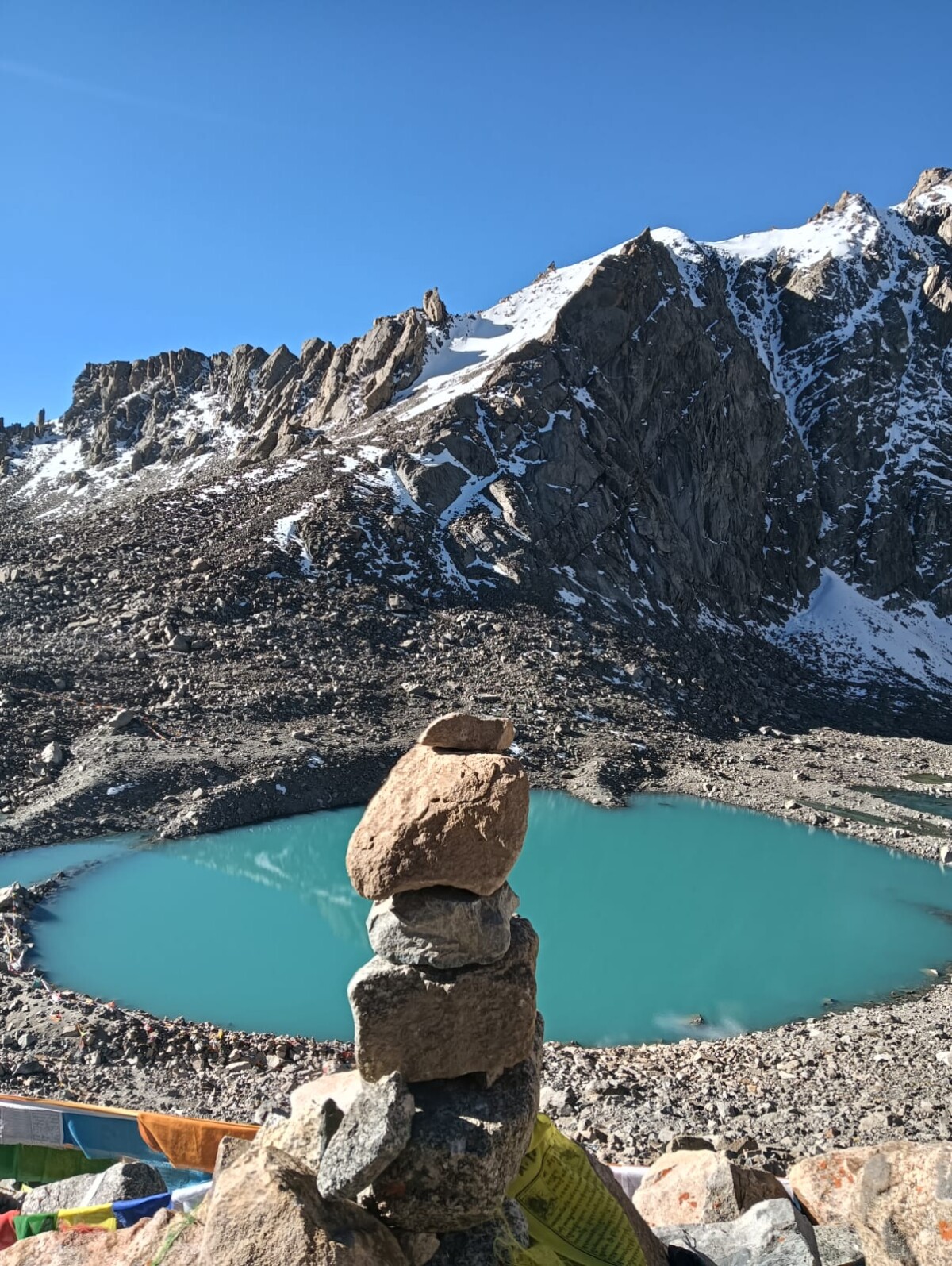
On the way down the pass, Gauri Kund, a blessed lake associated with Goddess Parvati, appears at approximately 5,600 meters (18,373 feet) on the way. The slope then leads down into a broad valley, and the breathing becomes slow and easy. It is 4,750 meters (15,584 ft) to Zuthulpuk by late afternoon. The region is called the cave of meditation of Milarepa, which is a place which can be visited.
Activity & Duration
22 km / 8–9 hoursHighest Altitude
5630m / 18,471ft (Zuthulpuk )Meals
Breakfast, Lunch, DinnerAccommodation
Guest HouseDay 11: Kailash Kora Day 3 – Finish Trek and Drive Back to Saga
The eleventh day is the eleventh day of a big achievement of the Kailash Mansarovar Yatra, the completion of the Mount Kailash Parikrama. The last and least difficult part of the trek starts after breakfast. The path is along the river through the colourful canyons and soft land formations, which makes the stroll serene and thought-provoking.
In about 2 -3 hours of walking, you come to Chongdo, and the Kora is officially completed. It is a touching experience for most pilgrims. Around the mountain Kailash, it is a difficult feat to complete the 52-kilometre circuit. Most of them are silent in their prayers, thankful, or celebrate in silence with others who are also travelling.
At Chongdo, you get into the bus and start the long journey back to Saga. En route, Lake Mansarovar is visited to give one a final glimpse of the holy waters and Mount Kailash in the far distance.
The road is expansive, but comfortable, and the lower altitude makes you feel better. You reach Saga in the evening, at 4,640 meters (15,223 feet). Upon arrival, have a warm meal and get a good sleep.
Activity & Duration
10 km / 2–3 hours; Drive: 450 km / 7–8 hoursHighest Altitude
4640m / 15,223ft (Saga)Meals
Breakfast, Lunch, DinnerAccommodation
LodgeDay 12: Drive from Saga to Kerung
The twelfth day of the Kailash Mansarovar Yatra is a back journey from Saga to Kerung. Then the scenic drive across the Tibetan Plateau starts after breakfast. The road cuts across open landscapes and dunes, rivers, and grazing yaks, the last opportunity of taking in Tibet.
As the vehicle drives down and down, you might find that your energy is improving as the levels of oxygen are enhanced. Travel is not as difficult as it used to be. Short pauses can be made along the route, and some of the viewpoints and access roads are taken to scale, or photographs are taken. The scenery is no longer new, and you look back and see how much you have changed physically and spiritually.
You are in Kerung at 2,800 meters in the afternoon (9,186 feet). Once you get to the hotel, you can rest, have a warm shower, or you can take a stroll in town. And this is your last night in Tibet. The meal is eaten with the people, and this is usually accompanied by narrations and gratitude for the trip.
Activity & Duration
230 km / 6 hoursHighest Altitude
2800m / 9,186ft (Kerung)Meals
Breakfast, Lunch, DinnerAccommodation
LodgeDay 13: Drive from Kerung Back to Kathmandu
The thirteenth day is the way back to Kathmandu after having visited Kerung, and this is the completion of the Kailash Mansarovar Yatra. You can take a drive to the border after having breakfast and perform the Chinese exit procedures. Going over the bridge of the border, you get into Nepal again at Rasuwagadhi, where Nepali personnel make you feel very welcome.
The road goes down to the border through the dramatic mountain roads along the Bhote Koski River. The landscape gradually turns from dry highland to green hills and villages. At noon, you settle down to have lunch in a nearby restaurant, where you have Nepali cuisine.
The road then takes you on smoother roads as you come near Kathmandu. By late afternoon or evening, you come back to the city 1,400 meters (4,593 feet). When the hotel is checked in, the farewell dinner will then be planned in order to celebrate the successful completion of the Kailash Mansarovar Yatra.
Activity & Duration
170 km (including border crossing) / 7–8 hoursHighest Altitude
1400m / 4,593ft (Kathmandu)Meals
Breakfast, Lunch, DinnerAccommodation
Three Star Hotel In KathmanduDay 14: Departure from Kathmandu
On day fourteen, your memorable Kailash Mansarovar Yatra comes to an end. You will have some free time after breakfast to either relax, pack or purchase last-minute souvenirs. You are then taken to the Tribhuvan International Airport at the time scheduled.
When you leave, you take with you the blessings of Kailash Mountain and Lake Mansarovar, as well as the recollections of a trip that is spiritually intense and transformative. End of the tour and safe travels.
Activity & Duration
Drop To Internatinal Airport 30 MinsHighest Altitude
1400m / 4,593ft (Kathmandu)Meals
BreakfastAccommodation
HomeIncludes / Excludes of Kailash Mansarovar Yatra
What is included?
- Kathmandu transfers by private vehicle, airport and arrival/departure services.
- Three days’ accommodation in Kathmandu, in a 3-star hotel on a twin-sharing basis with meals included according to the itinerary.
- Cultural sightseeing tour of Kathmandu Valley, such as Pashupatinath Temple, Boudhanath Stupa and Budhanilkantha with all the entrance fees.
- All the necessary Tibet travel permits and documentation.
- Lodging during the yatra in the hotels, guesthouses, and basic lodges on the route of Kailash Parikrama.
- Meals, which are vegetarian (breakfast, lunch and dinner) daily throughout the trip, with hot tea or coffee being served.
- Bottled water is provided in case of road journeys and trekking.
- A Tibetan English-speaking guide and a Nepali tour leader will provide total logistical and cultural support.
- Several support staff, such as cooks, kitchen aids, and porters/yaks of group equipment during the Kailash Parikrama.
- A first aid kit and emergency oxygen during the journey.
- Duffel bag and down jacket on loan to attend the yatra (should be returned after the trip).
- Emergency coordination and evacuation management assistance where necessary.
- Every formality on the border, state fees, service fees, and overhead expenses.
- Bookings of Lake Mansarovar holy bath, Puja and Mansarovar Parikrama by vehicle.
- A farewell dinner in Kathmandu upon the successful completion of the yatra.
- A certificate of completion of a Kailash Mansarovar Yatra as a souvenir
What is excluded?
- Nepal entry visa and Chinese Group Visa fees in Tibet; the fee is paid individually and varies depending on the nationality.
- Flight cost or travelling expenses to Kathmandu and back home.
- Compulsory travel insurance that is inclusive of high-altitude trekking, medical treatment, and emergency evacuation.
- Personal expenses include alcoholic drinks, soft drinks, laundry, phone calls, internet use, shopping and even souvenirs.
- Food, lodging and any extra costs incurred during early arrival, late departure, or staying other than what is presented in the itinerary.
- Tips and gifts to guides, drivers and support crew are both customary but optional.
- Personal trekking equipment and clothing, such as trekking boots, clothing, a backpack, rainwear, poles, a headlamp, or anything that may be rented.
- Horse or personal porter services on the Mount Kailash Parikrama.
- Real expenses of emergency evacuation, treatment, or further transportation, which should be claimed by the travel insurance.
- Additional hotel stay or transportation due to personal factors, sickness, delays, or premature reversion.
- The fines or expenses associated with leaving earlier, cancelling visas or varying costs after the tour commencement.
- Any government taxes, airline surcharges or other fees that have been added following booking.
- Any service not listed in the What’s Included section.
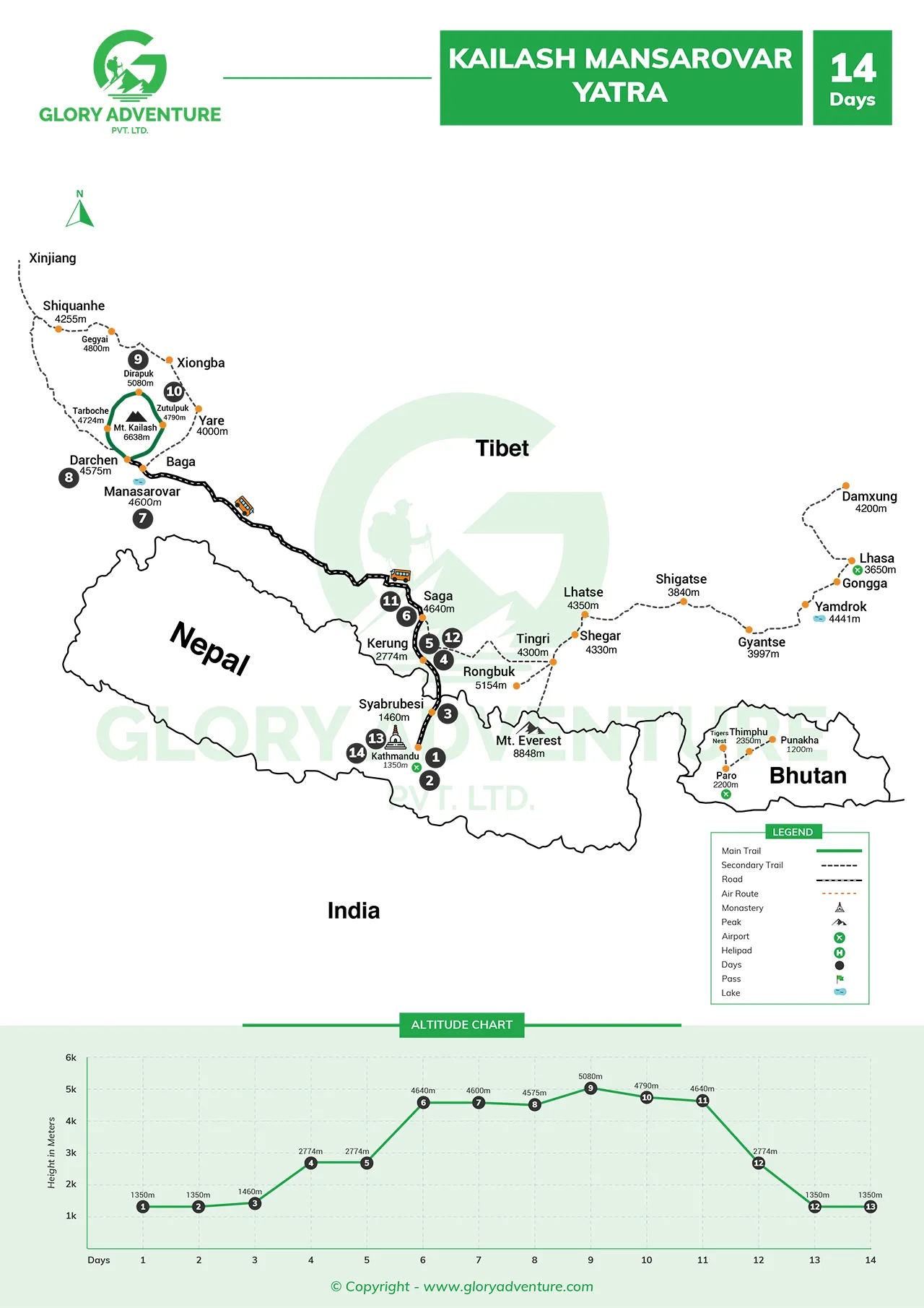
Route Map & Altitude Chart
Essential Information of Kailash Mansarovar Yatra
Best Season and Weather of Kailash Mansarovar Yatra.
The Kailash Mansarovar Yatra is a very high and remote mountain area, and this is why the selection of the right season is very crucial. The Kailash Mansarovar Yatra is best done during May and September when the weather is fairly stable and safe. The temperatures in Tibet are generally moderate during the days of these months, that is, between 10 °C and 20 °C, but go a lot lower at higher altitudes.
It is cold at night, particularly at such locations as Dirapuk and Zuthulpuk, where the cold can drop to below zero. Such camps are more than 4,800 meters (15,748 feet) above, and it is necessary to wear warm clothes.
May and June are particularly good months due to clear air and various festivals such as Saga Dawa and Buddha Purnima that give the Mount Kailash tour some spiritual essence. The months of July and August are warmer, but have to do with the monsoon season in Nepal. But western Tibet is in a rain-shadow region, and therefore, downpour is uncommon on the Kailash route. The month of September is cool, and the mountain views are very clear.
The Kailash Mansarovar Yatra is not suitable between October and April because it is extremely cold, there is a lot of snowfall, and the routes have been closed, especially the Dolma-La Pass, which is 5,600 meters (18,373 feet) above sea level.
Difficulty and Altitude Sickness on Kailash Mansarovar Yatra
It is not highly technical but rather high altitude, which makes the Kailash Mansarovar Yatra physically and mentally tough. The expedition goes to high altitudes of over 5,600 meters (18,373 feet), where the concentration of oxygen is significantly lower. Due to this fact, any person, irrespective of his/her age and fitness, may become a victim of altitude sickness. Inclusion of headache, nausea, dizziness and shortness of breath are common.
To minimise risks, the Kailash Mansarovar Yatra itinerary comprises gradual ascent and acclimatisation days, including a rest day in Kerung. It is extremely important to walk slowly, consume a lot of water, and avoid alcohol.
The hardest of all is the Dolma-La Pass crossing that involves trekking at a very high altitude in 8-9 hours. There is no climbing required, although the terrain is rocky and sometimes snowy. Pre-walking or pre-cardio training is very beneficial.
First aid and oxygen cylinders are carried in case of need. With sufficient planning, positive attitude and adherence to the instructions of a guide, most of the first-time trekkers complete this holy Mount Kailash Yatra successfully.
Insurance, Visa, and Permits for Kailash Mansarovar Yatra
Kailash Mansarovar Yatra needs proper documents and insurance to be completed. Travel insurance is required and will include high-altitude trekking as far as 5,600 meters (18,373 feet), medical care, and emergency evacuation. In isolated locations, evacuation may be an expensive affair and therefore insurance brings peace and security.
In case of visas, a Nepal tourist visa and a Chinese group visa to Tibet are required by the travellers. A Nepal visa is provided on arrival at Kathmandu to most nationalities. The passport should be valid for six months.
Tibet Tourist Visa is strictly regulated, and organised groups are carried out with all the necessary permits. They are the Tibet Travel Permit and the special permits of the Mount Kailash area. The group visa is typically done in Kathmandu with the original passports, and that is why one would have to arrive a few days ahead of time. Glory Adventure will prepare all the documents and visas for you so that you can start the Yatra easily.
A passport has to be carried during the Kailash Mansarovar Yatra, because there are various checkpoints on the way, which check if a permit is provided.
Food and Accommodations during Kailash Mansarovar Yatra
Kailash Mansarovar Yatra food is simple vegetarian food and is replenishing, which aids in digestion at high altitude. The meals are made of rice, lentils, vegetables, noodles, soup, chapati, and porridge, as well as tea or coffee.
Heavy/non-vegetarian food is not taken at high altitudes above 4, 500 meters (14, 764 feet) due to health and religious reasons. Through boiling or filtering, clean drinking water is offered. Snacks such as energy bars or dry fruits are recommended for the pilgrims who need more energy during the Mount Kailash Yatra.
The accommodation will be in nice hotels in Kathmandu, to extremely simple guesthouses and dormitories in the trek. In further trekking destinations, such as Dirapuk and Zuthulpuk, which are over 4,800 meters (15,748 feet), the rooms are shared, and the facilities are very basic.
The trek does not have any showers, and the toilets are simple. Freezing temperature requires sleeping bags and warm jackets. Although there is not much comfort, these bare requirements are included in the spiritual experience of the Kailash Mansarovar Yatra and contribute to the deeper meaning of the journey.
Transportation on the Kailash Mansarovar Yatra
The Kailash Mansarovar Yatra has transportation that is both road and walking, so that pilgrims can have an easy and wholesome experience of this holy pilgrimage. In Kathmandu, Kathmandu-Tibet border, and all over Tibet, they are transported in tourist vehicles that have been set up by Glory Adventure.
Roads are mountainous and can be rough on the Nepal side, yet the safety is guaranteed by the experience of the driver and the good condition of the vehicle. Travel in Tibet is done either in Tibetan vehicles, as regulations dictate, and sometimes roads become rudimentary over long distances. The driving days may be long (7-8 hours); however, some frequent pauses are scheduled to have a rest and acclimatise.
The most religious part of the Kailash Mansarovar Yatra is the three-day Parikrama of Mount Kailash that is done on foot. Pilgrims at this time also move slowly and steadily with only light day packs and baggage handled separately. All in all, the transportation is structured, comfortable and adapted to the harsh conditions of high altitudes.
Health and Safety on the Kailash Mansarovar Yatra
The subject of health and safety is highly critical when taking part in the Kailash Mansarovar Yatra because the trip is in a remote and high-altitude area. The yatra ascends to altitudes of more than 5,000 m (roughly 16,400 ft) where altitude sickness may occur to anyone, without it mattering whether he or she is fit or not.
To minimise risks, the itinerary would comprise a day-by-day gradual ascent and acclimatisation. Guides scrupulously observe pilgrims to identify such symptoms as headache, nausea, or dyspnea and oxygen cylinders are brought in case of emergency.
Pilgrims are encouraged to move at a slow pace, take a lot of fluids, eat very light foods and also make sure that they are warm. It is necessary to have proper clothing, good trekking shoes and personal medicines.
The overall hygiene and food safety are properly handled as well, so as to prevent disease. The weather may alter at any moment, the clothing should be layered. Kailash Mansarovar Yatra is safe, especially with experienced guides, emergency plans, and proper preparation to adhere to instructions and not exceed the physical limits of pilgrims.
Extra Expenses on the Kailash Mansarovar Yatra
Although the Kailash Mansarovar Yatra package will cover most of the significant expenses, the pilgrims need to be ready to incur certain auxiliary outlays. These are Nepal visa fees, the Chinese group visa fee, which is paid individually, depending on the nationality. There are also no international flights in and out of Kathmandu in the package.
Individual expenses of snacks, bottled drinks, phone SIM cards and souvenirs need to be budgeted separately. Some pilgrims also hire the services of a horse or a porter during the Mount Kailash Parikrama, which is an extra fee in cash.
Guides, drivers and support staff tips are not obligatory; however, they are common and welcome. It is also possible to have unexpected costs in case of a delay, change of route, or medical necessity, which can be adequately insured through travel insurance.
Having sufficient cash in Nepalese rupees and Chinese yuan is also useful in order to have a hassle-free Kailash Mansarovar yatra.
Language and Communication on the Kailash Mansarovar Yatra
The communication and language of the Kailash Mansarovar Yatra have multiple cultures and areas. In Nepal, people speak Nepali, although English and Hindi are also commonly spoken in tourist spots and by guides.
Tibetan and Mandarin Chinese are the main local languages in Tibet. The majority of the locals do not speak much or any English, yet that is not an issue since a professional Tibetan guide follows the group and serves as a translator.
All the instructions, briefings and safety information in the Kailash Mansarovar Yatra are clarified in English or Hindi when required.
The remote areas have poor mobile network coverage, and there are inconsistencies in internet access, particularly in the course of the trek. Simple gestures, smiles, simple warm wishes such as Tashi Delek in Tibetan or Namaste in Nepali can go a long way in breaking through with the locals.
On the whole, there is good control of communication using guides, which provide pilgrims with the opportunity to concentrate on the spiritual path.
Mobile Network, Internet & Charging Facilities
It is hard to remain in touch throughout the Kailash Mansarovar Yatra since it traverses very remote areas of the Himalayas. Mobile networks and Wi-Fi are good in Kathmandu, and calls, data, and internet can be used without any problems. When you are heading to the Nepal-Tibet border, you will lose signal, but in most cases, you will be able to make calls in places such as Syabrubesi.
After entering Tibet, you will find that foreign SIM cards just cease to work unless the international roaming is turned-on, which is costly and not very reliable. Lots of pilgrims prefer to purchase a local Chinese SIM in Kerung or Saga, which offers limited 3G or 4G connectivity in larger settlements such as Saga, Darchen, and around Lake Mansarovar.
The Mount Kailash Parikrama has almost no network during the pilgrimage. Electrical charging facilities are also primitive, and in some guesthouses, electricity can only be charged for a few hours. A power bank is extremely essential in the Kailash Mansarovar Yatra.
Don’ts on This Trip
Kailash Mansarovar Yatra is a holy and challenging pilgrimage, and as such, there are things which should be avoided. Never neglect your health or conceal any signs of altitude sickness because the yatra will be higher than 5,000 m (approximately 16,400 ft). There is no need to hurry or stress when performing the Mount Kailash Parikrama, particularly when climbing steep areas.
Alcohol and smoking must be prohibited as it raises the altitude hazards and render disrespect to the spiritual setting. Respect the local customs, monasteries, religious practices, and dress decently. Avoid taking photographs where there is no permission, as this is in military areas, at border check points and within some monasteries.
Destroying sacred sites such as Lake Mansarovar by littering or polluting them is a crime culturally and spiritually. Never go out alone in Tibet, but always remain with the group. These are the don’ts, which result in a safe, respectful and meaningful Kailash Mansarovar Yatra.
Cultural Festivals on the Trail
The Kailash Mansarovar Yatra has a lot of depth, which is enriched by culture and religious festivals. Among the most significant is the Saga Dawa Festival, which is normally held in May or June and commemorates the birth, enlightenment and death of Lord Buddha. It is a period of life in Mount Kailash, where prayers, chanting, and prayer flags, colored with various colours, are raised at Tarboche. Most pilgrims experience that the spiritual merit acquired during Saga Dawa is increased.
The day of the full moon is also very significant, especially to the Hindu pilgrims who like to pay a visit to Lake Mansarovar or complete the Kailash Parikrama on auspicious occasions such as Guru Purnima.
The trail may be observed during the season with Tibetan pilgrims, monks, and nomads carrying out rituals. The Kailash Mansarovar Yatra is a great cultural experience even when it is not accompanied by festivals, because daily prayers and pilgrim rituals performed in the monasteries produce a strong spiritual ambience.
Photography & Drone Rules
The Kailash Mansarovar Yatra photography will enable you to take the fantastic landscapes, Mount Kailash and Lake Mansarovar, albeit in a responsible manner. Outdoor photography is permitted, but they are strictly prohibited from taking pictures at the border checkpoints, military points or Chinese security posts.
The photography in monasteries and temples is not the same, and one should never act without permission. One should avoid taking flash photos of sacred statues or murals. It is good manners to seek permission before taking pictures of the locals or pilgrims.
The use of drones in the Mount Kailash area is totally prohibited as it is a security and religious issue. A drone can be seized or fined at the border when it is carried.
Batteries run fast at cold temperatures and high altitudes, and additional batteries and power banks will be useful. Putting in mind that the Kailash Mansarovar Yatra is a spiritual experience, it is always important to respect the holy moments rather than spending time taking photographs.
Tips for First-Time Visitors
The Kailash Mansarovar Yatra is not a normal trip, especially for first-time travellers, and thus one should be well prepared. In order to overcome the high altitude, start physical activity before the trip, like walking and yoga breathing, as the Kailash Mansarovar Yatra occurs at a high altitude.
Along with it, warm clothes, comfortable trekking shoes, sunscreen, and simple medicines should be packed as the weather may change rapidly.
In the Kailash Mansarovar Yatra, be sure to drink as much water as possible and consume simple food to allow your body to adapt to the high altitude.
It is also necessary to be mentally prepared because the facilities are primitive, and a person should be patient.
Look after the local culture and religious practices, as this is a greatly holy journey to most. Always keep your cash, permits and passport secure.
Above all, take your time, listen to your guide and have fun at all times. In the right state of mind and the right preparation, the Kailash Mansarovar Yatra is an experience that is rewarding beyond measure and will remain in memory forever.
Frequently Asked Question (FAQ’s)
There is no fixed age limit. Good health in participants aged 12 to 70 years is suggested.
A medical certificate is not obligatory; however, a health check-up is strongly recommended. Travellers older than 60 years should be given medical clearance.
The Kailash Parikrama is a distance of about 52 km and takes place over three days.
Its peak is Dolma La Pass, which is 5630 m high (18471 ft).
Trekking background will be an advantage, but not a requirement. Physical fitness is adequate.
There are also horses and porters at extra charges when doing the Kailash Parikrama.
Hotels are accommodated in cities, whereas guesthouses or dormitories in remote locations are considered accommodation.
The food included in the yatra is all strictly vegetarian.
Travelling on a registered tour operator is regarded as safe and controlled.
Individuals who are travelling alone have the opportunity to participate in group departures.
The yatra can be taken by all women of good health regardless of their age.
One needs a valid passport, visa and travel insurance. The tour operator organises the permits.
Photography is allowed, except on military grounds and in closed areas only.
Guides are equipped with oxygen and first aid. In large towns, there exist medical facilities.
Trip Reviews on Kailash Mansarovar Yatra

Need Help?
Managing Director
Saroj (+977-9806627713)
Saroj Sunar
Travel Consultant
Looking for a Private Trip?
Say Hello to Your Travel Consultant
Planning your next getaway? Our travel specialists are ready to design a fully customized package tailored to your interests. If you need help or have any questions, feel free to connect with us—we’re here to guide you from start to finish.
✖
Free Trip Planner
Talk to
Mr. Saroj Sunar