
 Talk to Mr. Saroj

 Plan Your Trip

Top 5 Tallest Mountains in the World and Their Fascinating Facts
Mountains have always been a place of attraction for explorers, climbers, researchers and travellers. Some rise thousands of metres above sea level and these conditions can be very harsh, with low temperatures and high winds and thin air making survival difficult. Most of the high mountain areas are located in Asia, mainly in the Himalaya mountains and the Karakoram mountains.
Both these mountain ranges have the world’s five highest mountains. 1st place is occupied by Mount Everest, followed by K2, Kangchenjunga, Lhotse and Makalu. Each has unique geographical characteristics, climbing heritage and cultural significance.
The standard elevation of mountains is measured from mean sea level to the summit. Today, satellite technology and GPS measurements are employed in the field of surveying and are assisting scientists in the accurate determination of elevation. Snow and ice could also affect the measurements taken at the summits.
The Himalayas and the Karakoram Mountains are part of a broader mountainous area where tectonic plates of the Earth have been moving and colliding. These ranges are home to all 14 mountains that stand over 8,000 metres (26,247 ft) and are located in Asia, which is one of the best places to go high-altitude mountaineering.
Top 5 Tallest Mountains in the World at a Glance
The table below shows the five tallest mountains, their heights and their geographical location.
| Rank | Mountain | Height | Location |
| 1 | Mount Everest | 8,848.86 m (29,032 ft) | Nepal and China |
| 2 | K2 | 8,611 m (28,251 ft) | Pakistan and China |
| 3 | Kangchenjunga | 8,586 m (28,169 ft) | Nepal and India |
| 4 | Lhotse | 8,516 m (27,940 ft) | Nepal and China |
| 5 | Makalu | 8,485 m (27,838 ft) | Nepal and China |
These highest mountains in the world are ranked according to their elevation above sea level. Four of the five are situated on Nepal’s international borders while K2 belongs to the Karakoram range between Pakistan and China.
1. Mount Everest – The Highest Mountain on Earth
Height and Geographical Location
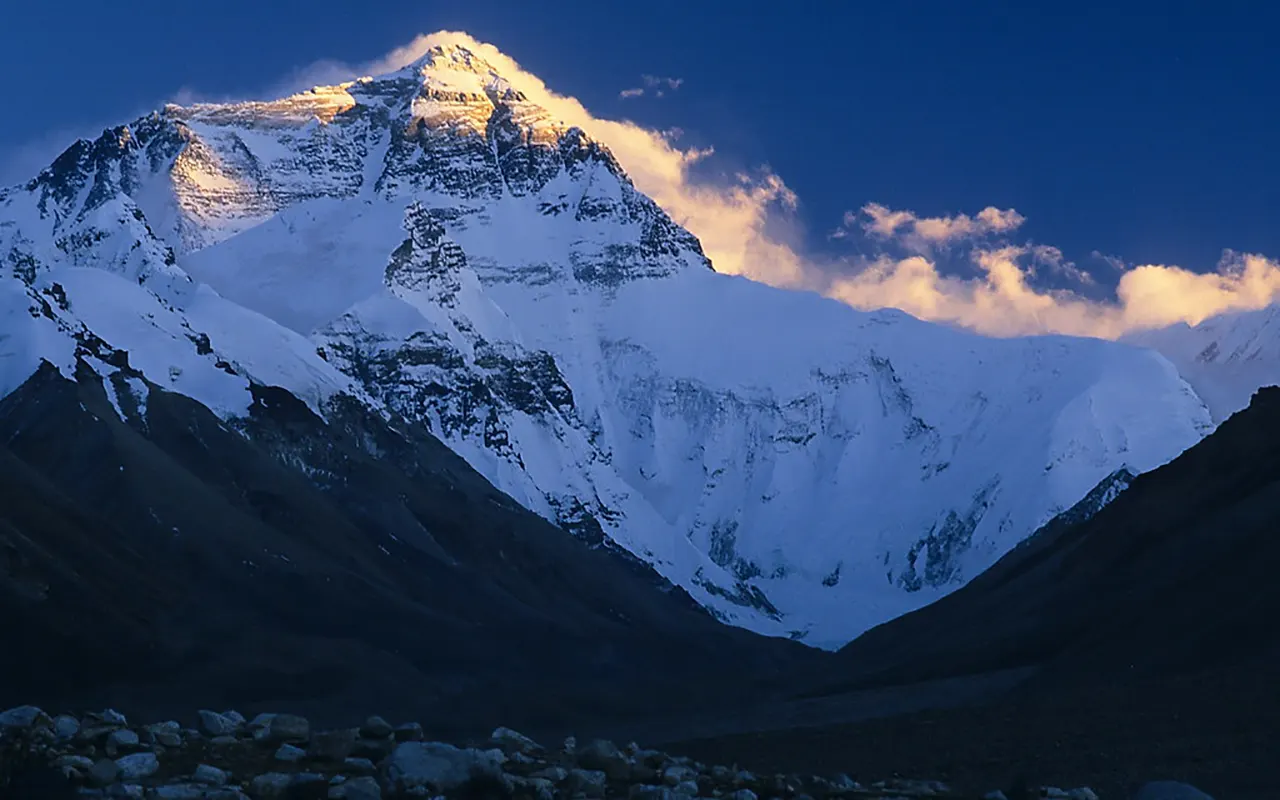
The tallest mountain on Earth is Mount Everest (8,848.86 m / 29,032 ft). It lies in the Mahalangur Himal section of the Himalayas, along the international border between Nepal and China’s Tibet Autonomous Region.
In Nepal, the mountain is called Sagarmatha while its Tibetan name is Chomolungma. The mountain is a popular destination for climbers from around the globe who try to climb to its peak.
History of the First Successful Ascent
The first confirmed successful ascent took place on 29 May 1953. New Zealand mountaineer Edmund Hillary and Nepali Sherpa Tenzing Norgay reached the summit as members of a British expedition.
Their achievement became an important moment in mountaineering history. Thousands have tried to follow in their footsteps since.
Fascinating Facts About Mount Everest
- Nepal and China jointly announced its updated elevation in December 2020
- The mountain is still growing because of the movement of tectonic plates
- The Khumbu Icefall is one of the most difficult areas of the southern climbing route
- The partial pressure of oxygen is very low at the summit, as compared to sea level
- Sagarmatha National Park is located in Nepal and Mount Everest is included in it
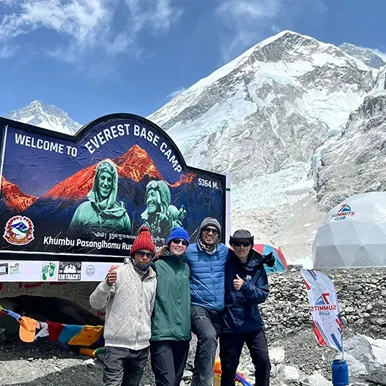
Everest is also one of the significant tourist attractions of Nepal. This Everest Base Camp trekking route offers people a chance to explore the mountains around Base Camp without climbing the Everest summit.

2. K2 – The Savage Mountain
Height and Geographical Location
K2 (8,611 m / 28,251 ft) is the second-highest mountain in the world. It is located in the Karakoram range on the border between Pakistan’s Gilgit-Baltistan region and China’s Xinjiang region.
Unlike Everest, K2 does not lie in the Himalayas. It is a major challenge for experienced mountaineers due to its remote location, steep slopes and difficult climbing paths.
Why K2 Is Considered One of the Most Difficult Mountains to Climb
The Savage Mountain is often referred to as such due to the difficulty of climbing it. American climber George Bell used the expression after an expedition in 1953.
It is a climber’s challenge due to its steep terrain. The weather can change rapidly and strong winds, avalanches and falling ice are a problem for climbers.
The first successful ascent took place on 31 July 1954 when Italian climbers Achille Compagnoni and Lino Lacedelli reached the summit.
Fascinating Facts About K2
- K2 is the highest peak of the Karakoram range
- It is also known as Mount Godwin-Austen
- Its name comes from the early geographical surveying of the Karakoram peaks
- K2 has a steep and exposed summit pyramid
- Its climbing season is generally shorter because of harsh weather
Although Everest is higher, K2 is often considered more technically demanding. It has very challenging routes and weather conditions that demand a high level of experience in mountaineering.
3. Kangchenjunga – The Five Treasures of Snow
Height and Geographical Location
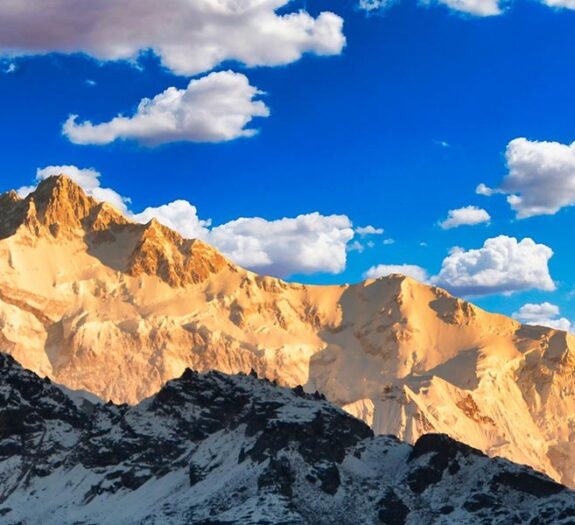
Kangchenjunga is the third-highest mountain on Earth with an elevation of 8,586 m (28,169 ft). It is located on the Nepal-India border area, near Sikkim state in India.
The mountain is part of the Kangchenjunga Himal section of the Himalayas. Its massive structure consists of five main peaks, which give it a distinctive appearance.
Cultural and Religious Significance
Kangchenjunga is usually referred to as the Five Treasures of Snow. Traditionally, these are linked to gold, silver, precious stones, grain and religious scriptures.
The community and people of Nepal and Sikkim consider the mountain to be of religious significance. It is locally regarded as sacred and it is believed that its top should be treated with respect.
When British climbers George Band and Joe Brown made the first successful ascent on 25 May 1955, they stopped just short of the true summit to respect local Sikkimese beliefs. Many climbers have continued this tradition.
Fascinating Facts About Kangchenjunga
- There are five major peaks on Kangchenjunga
- It was once considered the highest mountain in the world before Everest was accurately established as higher
- It has glaciers, which drain several important rivers in the surrounding area
- The mountain is also home to a variety of Himalayan wildlife, including snow leopards and red pandas
- Forest, alpine vegetation and large glaciers can be found in the surrounding landscape
Kangchenjunga is an area of special significance to eastern mountain tourism in Nepal. Kangchenjunga is a popular area for trekking that offers some of the more remote trails, traditional villages and views of the high Himalayas.
4. Lhotse – Everest’s Majestic Neighbor
Height and Geographical Location
Lhotse is the fourth-highest mountain in the world, standing at 8,516 m (27,940 ft). It is located on the border of Nepal and the Tibet Autonomous Region in China, near Mount Everest.
The two mountains are joined by a high mountain pass called the South Col, which mountain climbers use to pass between their climbing routes. Lhotse is part of the Mahalangur Himal range.
Climbing History and Unique Features
The first successful ascent of Lhotse took place on 18 May 1956. Swiss climbers Fritz Luchsinger and Ernst Reiss reached its summit during a Swiss expedition.
The Lhotse Face is one of its most famous aspects, a steep face of ice and snow which is part of the traditional Everest climbing route. Climbers heading towards Everest’s higher camps must pass this challenging section.
Lhotse is also technically demanding because of its steep slopes, exposed climbing sections and unpredictable weather.
Fascinating Facts About Lhotse
- Lhotse is connected to Everest through the South Col
- Its name means South Peak in Tibetan
- Lhotse Face is one of the key parts of the route to climb Everest
- There are several subsidiary peaks to Lhotse, such as Lhotse Middle and Lhotse Shar
- Being so close to Everest, it falls within the same large mountaineering area
Lhotse is not as popular as Everest but is still a big objective. It is a high elevation and steep terrain that requires technical skill and preparation.
5. Makalu – The Pyramid-Shaped Giant
Height and Geographical Location
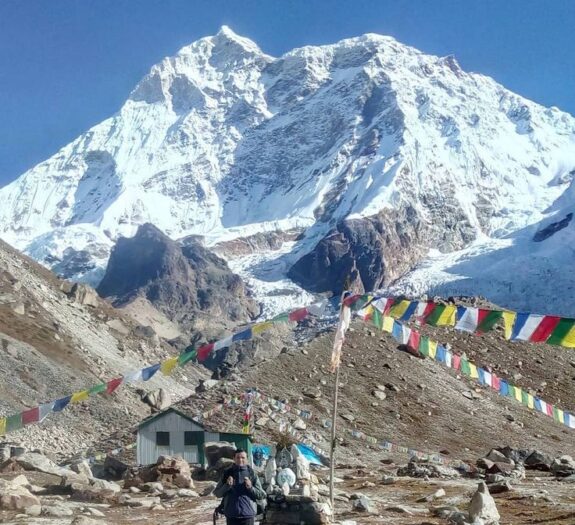
Makalu (8,485 m / 27,838 ft) is the fifth-highest mountain on Earth. It is located in eastern Nepal, near the border with the Tibet Autonomous Region of China.
The mountain is part of the Mahalangur Himal range of the Himalayas. It stands in isolation from the other peaks and is very prominent due to its steep pyramidal form.
Unique Landscape and Natural Features
The steep ridges and four-sided pyramid shape are the characteristics of Makalu. It has rocky areas, glaciers and snow-covered regions on its slopes.
The mountain is situated in Makalu Barun National Park, a protected area that is home to a diverse range of wildlife and flora. Subtropical forest, alpine meadow, glaciers and high mountain valleys are within the conservation area.
A successful first ascent was made on 15 May 1955. French climbers Lionel Terray and Jean Couzy reached the summit during a French expedition.
Fascinating Facts About Makalu
- Makalu is one of the most technically challenging eight-thousanders
- It is shaped like a pyramid at its top
- The mountain is surrounded by glaciers and steep ridges
- Makalu Barun National Park is home to significant ecosystems in the Himalayas
- The Makalu Base Camp trek offers a view of the mountain and surrounding landscapes
The area is far quieter than Nepal’s busier trekking regions, allowing trekkers to walk through secluded hamlets, forests, and high alpine valleys while experiencing local mountain culture.
Comparison of the Top 5 Tallest Mountains in the World
Although the Top 5 tallest mountains in the world are located in the Himalayan and Karakoram regions, they differ in their geographical features, climbing routes and mountaineering history. There are those that are renowned for their great height and others recognized for their steep pitches and technical climbing.
For a closer comparison, the following table shows the comparison.
| Mountain | Height | Mountain Range | First Successful Ascent | Main Challenge |
| Mount Everest | 8,848.86 m (29,032 ft) | Himalayas | 1953 | Extreme altitude and Khumbu Icefall |
| K2 | 8,611 m (28,251 ft) | Karakoram | 1954 | Steep and technical climbing |
| Kangchenjunga | 8,586 m (28,169 ft) | Himalayas | 1955 | Remote location and difficult terrain |
| Lhotse | 8,516 m (27,940 ft) | Himalayas | 1956 | Steep Lhotse Face |
| Makalu | 8,485 m (27,838 ft) | Himalayas | 1955 | Exposed ridges and technical sections |
There is an interesting difference here in that the difficulty of climbing doesn’t necessarily equal the height. Everest itself is the tallest but K2 is a more challenging climb in general due to steep slopes, exposed sections and unpredictable conditions.
The other factor that makes them different is the geographical context. Four mountains in this list belong to the Himalayas while K2 is part of the Karakoram range. In combination, they are some of the toughest mountaineering areas in the world.
Interesting Records and Achievements in High-Altitude Mountaineering
Throughout the history of mountaineering, a number of significant accomplishments have taken place on the highest peaks of the world. Climbers from all over the world have succeeded in scaling the peaks in the face of harsh conditions, rough terrain and inadequate oxygen.
The first winter ascent of Mount Everest was made by Polish climbers Krzysztof Wielicki and Leszek Cichy on 17 February 1980. Another significant success was the first winter climb of K2 which was accomplished by ten Nepalis on 16 January 2021.
Another notable achievement came from Spanish climber Edurne Pasaban, who became the first woman confirmed to have summited all 14 mountains above 8,000 metres (26,247 ft) in 2010.
These accomplishments depict the evolution of mountaineering throughout the years. Technology, meteorology, communications and knowledge about the hazards at altitude have transformed the process of preparing for difficult climbs. But it is physically challenging and hazardous to climb these peaks.
Why Are the World’s Tallest Mountains Located in Asia?
The highest mountains in the world are found in Asia because it has the process of formation of the Himalayas and Karakoram mountain ranges.
Around 50 million years ago, the Indian plate began colliding northwards with the Eurasian plate. This collision of the two plates bent, squashed and lifted the ground, forming the Himalayas.
This geological phenomenon still occurs today. The Indian plate still slides underneath the Eurasian plate, which is contributing to the metamorphosis of the landscape in the area.
Glaciers, rivers, earthquakes and weather also have an impact on the Himalayas and the Karakoram. Slowly, these natural forces modify the shape of mountain slopes and valleys.
Some important geographical facts include
- The Himalayas are a mountain range that crosses several countries in South Asia
- The mountains of the Karakoram range are among the highest outside the main Himalayan range
- All 14 mountains above 8,000 m (26,247 ft) are located in Asia
- Tectonic plate collisions still play a role in the formation of mountains
- Downstream, millions of people depend on glaciers as a source of fresh water
Challenges of Climbing the World’s Highest Mountains
To reach the highest mountains on Earth, a person must not only be physically fit but also mentally prepared. Mountaineers will face environmental and technical hazards.
The further they get from the ground, the more difficult it will be for their body to draw sufficient oxygen. Weather conditions can also change rapidly; we may not have time to act.
Some of the major challenges include
- Strong winds, freezing temperatures and unexpected snowstorms may affect climbing schedules
- Thin air increases the risk of altitude sickness and other serious health problems
- Falling snow and ice can threaten climbers along exposed routes
- Steep ice walls, loose rocks and crevasses require technical climbing skills
- Long climbing days and limited recovery time place considerable pressure on the body
- Isolation, unpredictable conditions and difficult decisions require patience and concentration
Best Places to Experience the World’s Highest Mountains Without Climbing Them
Not everyone who loves mountains wants to attempt a summit climb. Fortunately, several established trekking routes allow visitors to view the world’s highest summits from accessible mountain valleys and viewpoints. Nepal is suitable for these experiences because several major Himalayan mountains are accessible through established trekking regions.
Everest Base Camp Trek
Everest Base Camp Trek is quite a popular alternative to climbing Everest. The route also goes through Namche Bazaar before moving on to Tengboche and Dingboche and finally reaching Everest Base Camp (5,364 m / 17,598 ft).
Visitors to the trek will have breathtaking views of Everest, Lhotse, Nuptse and more. The trip also lets you get to know Sherpa people, Buddhist monasteries and traditional mountain villages.
Kangchenjunga Base Camp Trek
Located in eastern Nepal, the Kangchenjunga region is suitable for trekkers looking for a remote Himalayan journey. This path will pass through forests, traditional villages, river valleys and highlands.
The trekking experience is normally a visit to both the northern and southern base camp areas, depending on the itinerary selected. It offers chances to see Kangchenjunga and its surrounding environment without climbing to the summit.
Makalu Base Camp Trek
Another trek to experience the high mountain environment in Nepal is the Makalu Base Camp Trek. The route is also in Makalu Barun National Park, where the trekker will see forests, high Himalayan landscape, glaciers and far-flung settlements.
Makalu Base Camp lies at approximately 4,870 m (15,978 ft). It’s physically tough to traverse the remote trails and fluctuating terrain while facilities are sparse.
While the highest mountains in the world are being experienced at a more convenient altitude, visitors can explore the natural beauty and geographical significance of these mountains with these trekking routes. Even on these non-summit treks, proper physical preparation, gradual acclimatisation, and respect for the fragile mountain environment remain essential.
Conclusion
Four of these five mountains are situated at Nepal’s borders, proving the significance of Nepal in Himalayan mountaineering and tourism. From the point of sharp, pyramid-shaped peak of Makalu to the historic top of Everest, these mountains continue to attract climbers and researchers.
But conservation of these mountain places is as crucial as their exploration. Responsible tourism, waste management and understanding of and respect for the local communities can contribute in helping to safeguard these landscapes for future generations.
Frequently Asked Questions (FAQs)
Which are the highest 5 mountains in the world?
The five tallest mountains are Mount Everest, K2, Kangchenjunga, Lhotse and Makalu. All are situated within the Asian Himalayan & Karakoram mountain ranges.
Which is the highest mountain in the world?
Mount Everest (8,848.86 m / 29,032 ft) is the highest mountain above sea level. It lies on the border between Nepal and China’s Tibet Autonomous Region.
What is the name of the second highest mountain in the world?
K2 is the second-highest mountain at an altitude of 8,611 m (28,251 ft). It is situated in the Karakoram range between Pakistan and China.
Is K2 harder to climb than Mount Everest?
Yes, K2 is significantly more technically demanding than Mount Everest. It is a very demanding mountain because of its steep slopes, its difficult sections and the avalanches as well as the unpredictable weather.
How many of the world’s top five tallest mountains are in Nepal?
Four of the five highest mountains are located along Nepal’s international borders. These four peaks are Mount Everest, Kangchenjunga, Lhotse, and Makalu.
Are the world’s tallest mountains still growing?
Yes, the Himalayas are still rising because the Indian and Eurasian tectonic plates continue to move towards each other. But their heights and shapes are also altered by erosion, earthquakes and other geological processes.
How many mountains in the world are above 8,000 meters?
There are 14 recognised mountains with summits above 8,000 m (26,247 ft). They all occur in the Himalayan and Karakoram regions in Asia.

