 Runājiet ar Saroja kungu.

- Sākums
- galamērķis
- Nepālas pārgājieni
- Everesta reģions
- Everesta skatu pārgājiens
- Everesta bāzes nometnes pārgājiens 14 dienas
- Īss pārgājiens Everesta bāzes nometnē
- Grezns pārgājiens Everesta bāzes nometnē
- Helikoptera pārgājiens Everesta bāzes nometnē – 12 dienas
- Everesta bāzes nometne un pārgājiens pa Gokjo ezeriem
- Everesta helikoptera tūre Nepālā
- Gokyo ezeru pārgājiens 12 dienas
- Everesta trīs augsto pāreju pārgājiens
- Pikeja virsotnes pārgājiens – 10 dienas
- Ama Dablam bāzes nometnes pārgājiens – 9 dienas
- Everesta reģions
- Annapurnas reģions
- Dhampus Sarangkot pārgājiens
- Īss Pūna kalna pārgājiens 3 dienas
- Gorepani Pūna kalna pārgājiens 4 dienas
- Gorepani Pūna kalna pārgājiens – 8 dienas
- Mohares Dandas pārgājiens – 9 dienas
- Annapurnas bāzes nometnes helikopteru pārgājiens
- Īss Annapurnas bāzes nometnes pārgājiens — 6 dienas
- Annapurnas ziemeļu bāzes nometnes pārgājiens – 9 dienas
- Īss Mardi Himal pārgājiens
- Annapurnas bāzes nometnes pārgājiens – 10 dienas
- Mardi Himala pārgājiens – 10 dienas
- Annapurnas bāzes nometnes pārgājiens caur Pūna kalnu
- Gorepani Pūnas kalns ar Mardi Himala pārgājienu
- Annapurnas bāzes nometne un Mardi Himala pārgājiens
- Īss Annapurnas apļa pārgājiens
- Annapurnas apļveida pārgājiens ar Tilicho ezeru
- Khopras grēdas pārgājiens
- Kori Himala pārgājiens - 10 dienas
- Narphu ielejas pārgājiens ar Kang La un Thorong La Pass — 17 dienas
- Jogas pārgājiens Gorepani Pūnhilā
- Annapurnas bāzes nometnes pārgājiens
- Mardi Himal jogas pārgājiens
- Annapurnas reģions
- Ceļojumu informācija
- Uzņēmums
- Sazināties
 Plāno savu ceļojumu
Rezervācijas 2026.–2027. gada sezonai ir atvērtas! Sāciet plānot savu sapņu ceļojumu.
Pančasas pārgājiens – 3 dienas
Nepieciešama palīdzība?

Rīkotājdirektors
Saroj (+977-9806627713)

ilgums
3 dienas

Ceļojuma grūtības
mērens

Maksimālais augstums
2,030m / 6,660ft

aktivitāte
Sightseeing , Hiking

galamērķis
Nepāla

Grupas lielums
2-20 cilvēki

Apmešanās
Guest House, Hotel

Maltītes
Brokastis, pusdienas un vakariņas

transportēšana
Privātais Transportlīdzeklis
Highlights of Panchase Trek – 3 Days
- Travel across Phewa Lake by boat and then on to the trek
- Go to the World Peace Pagoda (Shanti Stupa) in Pokhara Valley
- Lake Phewa and views of the foothills of the Himalayas
- Take a walk through traditional villages and terraced farmland at Pumdi Bhumdi
- Visit the oak and rhododendron woods at the Panchase trail
- At the top of the day, climb to the highest point of the day, reach Panchase at 2,030 m (6,660 ft)
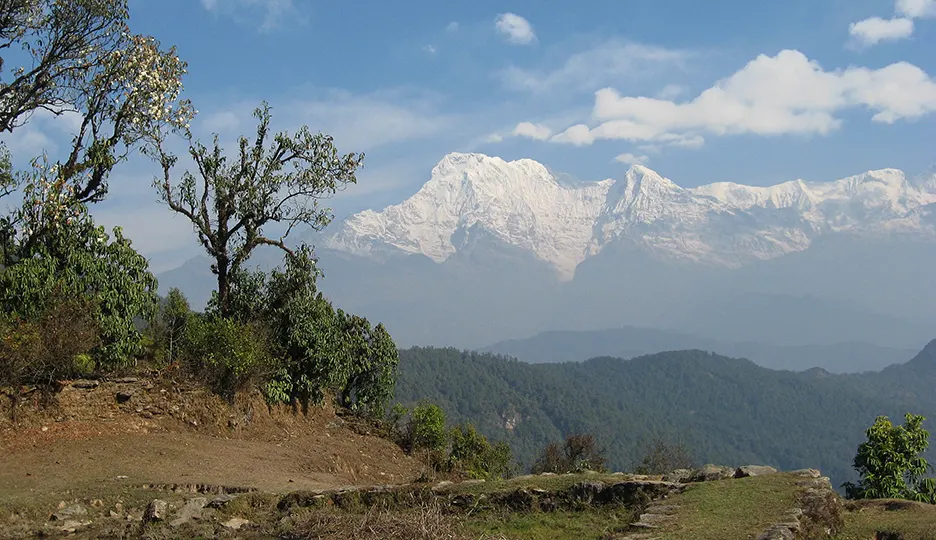
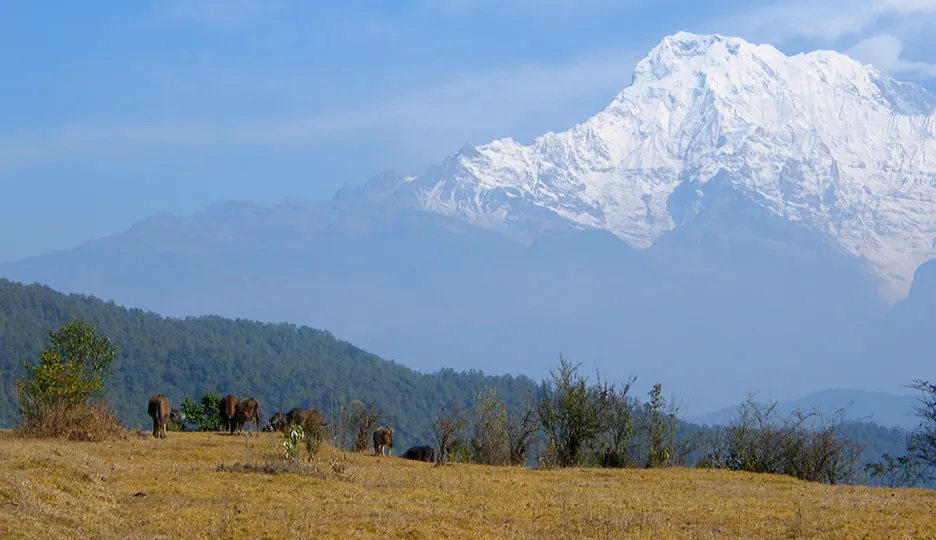
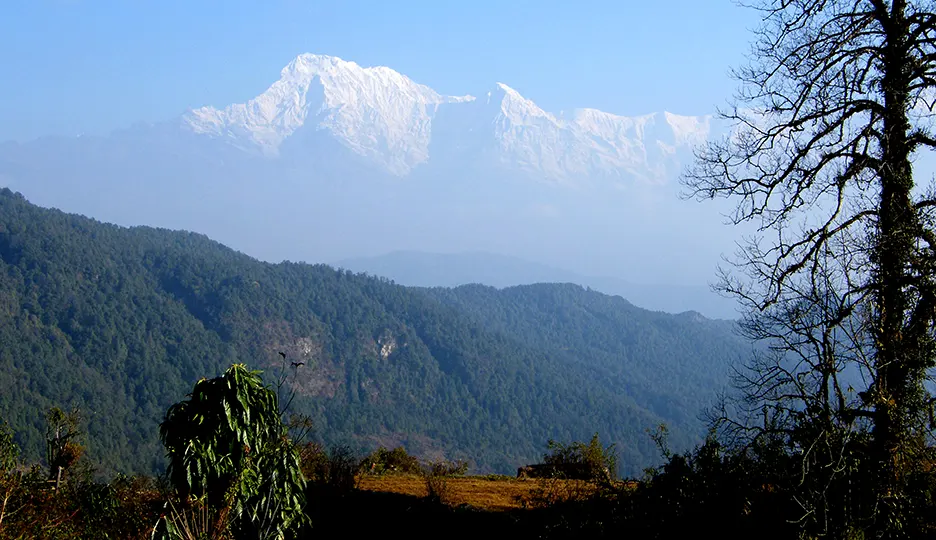
- On clear days, enjoy the views of the mountains Annapurna, Dhaulagiri, Manaslu and Machapuchhre
- Overnight accommodation at guesthouses in local villages with local hospitality
- Explore local culture, rural life and natural environment
- Three-day trek up to the Himalayas and return trip from Bhadaure to Pokhara
Trip Overview of Panchase Trek – 3 Days
The Panchase Trek is a short Himalayan walking journey near Pokhara that takes you through forest trails, traditional villages, terraced farmland and elevated viewpoints. This three-day trek is a good choice for travellers who are interested in experiencing the nature and rural way of life of Nepal without having to follow a long and grueling trekking route. It involves a boat ride, a hike through the gentle hills, a visit to the villages and a view of the Annapurna range.
The trip starts in Pokhara, which involves crossing Phewa Lake by boat. Once you are at the southern lakeshore, you proceed uphill to Shanti Stupa, or World Peace Pagoda. The hilltop site has panoramic views of Pokhara Valley, Phewa Lake and other Himalayan peaks such as the Machhapuchhre (Fishtail), Annapurna South and Hiunchuli peaks. The trail now moves through wooded areas, through village lanes and along terraced fields to reach Pumdi Bhumdi and stay at a local guesthouse the first night.
On the second day, you will be taken on a trek from Pumdi Bhumdi to Panchase (2,030 m/6,660 ft) deep into the hills. The path slowly ascends through old villages, oak woods and rhododendron forest. In the spring period, the rhododendron is in bloom and in clear weather, you can see Annapurna, Dhaulagiri, Manaslu and Lamjung Himal. The second night is spent at Panchase in a local guest house, amongst forested hills and rural areas.
The last day is spent driving from Panchase to Bhadaure (1670 m /5479 ft). The walking trail goes through the forest areas, cultivated land and serene villages. After a 4-5 hour walk, arrive at Bhadaure and then take a local bus or jeep to Pokhara. Typically, the road trip will last 1.5 to 2 hours and you’ll be too tired to enjoy it. The road trip will take about 1.5 to 2 hours and then you will be done with your 3-day adventure.
The Panchase Trek is considered to be an easy to medium trek. It doesn’t call for technical climbing abilities, but it will be beneficial if you have some degree of fitness for walking up and down hills for successive days. This walk is suitable for the spring and autumn seasons as it mostly walks well and there are good sightlines to mountains.
In the case of Glory Adventure, you will be provided with arrangements for accommodation, transportation, trekking support and applicable permits. This short trip is a practical approach to the rural environment around Pokhara and a chance to experience the village life, forest habitat and Himalayan landscape.
Kāpēc izvēlēties Panchase pārgājienu?
The Panchase Trek is an option for anyone seeking a taste of the mountains of Nepal without the lengthy trek. Its three-day programme includes a boat trip across Phewa Lake and visits to the World Peace Pagoda, walks in the traditional villages, in the terraced farmland and in the rhododendron forests.
The main advantage of this tour is that you can start from Pokhara. The Panchase Trek from Pokhara is perfect for those who are new to trekking or need a quick getaway from the hustle and bustle of the city. Depending on the weather conditions, you can have views of the Himalayan peaks Machhapuchhre, Annapurna and Dhaulagiri.
The Panchase Trekking Course is also a great opportunity to taste the local culture and stay at the village guesthouses. This walk has short walks, a natural environment and simple accommodation, making it suitable for travellers with limited time.
Panchase Trekking Route Overview
The Panchase Trekking Route is a 3-day trek around the forested hills and traditional villages to the west of Pokhara. The journey starts with a boat trip on Phewa Lake and then on foot to World Peace Pagoda, an uphill walk. The route then passes through the woods, into the terraced fields and local villages until you arrive at Pumdi Bhumdi at 1650 m (5,413 ft), where you will spend your first night.
On the second day, you hike up the hill from Pumdi Bhumdi to Panchase at 2030m (6660ft). The route runs through oak and rhododendron woods to the overnight camping site. The last day is spent descending towards Bhadaure (1670m /5479ft) and then a 1.5-2 hour drive back to Pokhara.
The Panchase trek from Pokhara is a three-day walk of about 33 km with a crossing of the boat and road back to Pokhara.
Itinerary of Panchase Trek – 3 Days
Diena 01: Boat Ride Across Phewa Lake, Visit World Peace Pagoda and Trek to Pumdi Bhumdi (1,650 m / 5,413 ft)
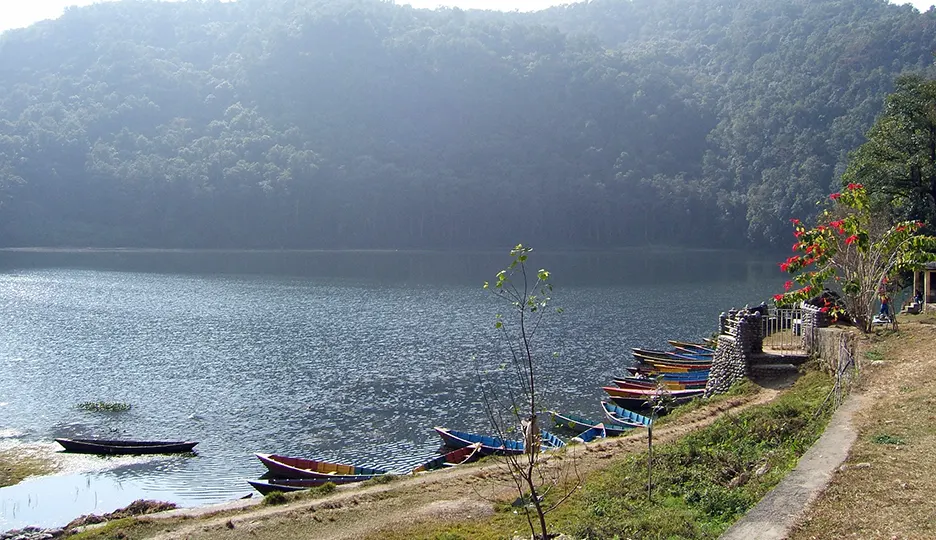
The Panchase Trek starts in Pokhara, from where you take a boat ride over Phewa Lake. It takes around 30-45 minutes to cross, depending on the water and weather conditions. On the trip, you will get the chance to see the green hills around the lake and the Annapurna range reflected in the lake. Get off the boat and walk up to the World Peace Pagoda (Shanti Stupa), located at the southern shore.
It passes through woods featuring both wooded paths and stone steps, ending at the pagoda on the hilltop at around 1,100 m (3,609 ft). Spend some time visiting the tranquil environment and get a glimpse of Phewa Lake, Pokhara Valley, Fishtail (Machhapuchhre) and Hiunchuli.
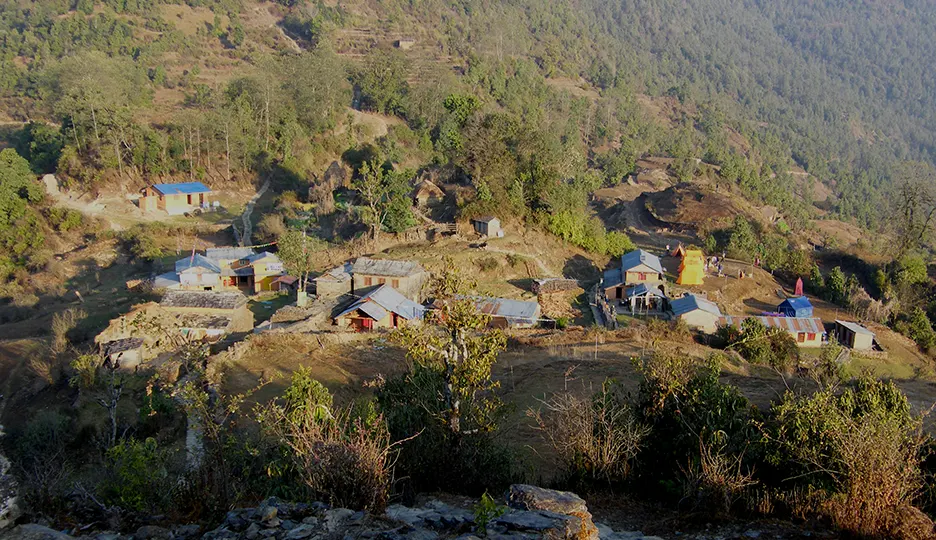
From the pagoda, head along a forest path, then follow village paths and rural roads towards Pumdi Bhumdi. You’ll see traditional villages, terraced farmland, wooded hillsides along the route and have the chance to see local village life.
Walk for about 4-5 hours and then reach Pumdi Bhumdi at 1650m (5413ft). Stay at a local guesthouse, have dinner and come back up for the night’s rest and sleep before heading out tomorrow to Panchase.

Aktivitāte un ilgums
Laivošana un pārgājieni, 30–45 minūtes laivošanā un 4–5 stundas pārgājienā
Augstākais augstums
1650m / 5,413ft (Pumdi Bhumdi)
Maltītes
Pusdienas un vakariņas
Apmešanās
Viesu mājaDiena 02: Pārgājiens no Pumdi Bhumdi uz Pančasu (2,030 m / 6,660 pēdas)
After breakfast at your guest house, head out from Pumdi Bhumdi on the way to Panchase. This is a level off through the small villages, tillage fields and forested hillsides of today. The trail leads through a mix of stone steps, narrow village pathways and natural forest paths, introducing you deeper into the countryside west of Pokhara.
The landscape gradually evolves as one ascends. The oak and rhododendron forests provide shade along several stretches of the trail, covering most of the hillside. In the spring, the rhododendron trees lend colour to the woodland around them. Small clearings along the route provide suitable places to rest and enjoy views of the neighbouring hills.
From here, the trail winds through the woods and up to Panchase, reaching about 2,030 m (6,660 ft). On sunny days, it is possible to view multiple peaks of the Himalayas such as Annapurna, Dhaulagiri, Manaslu and Lamjung Himal. Panchase is also a natural and cultural landmark for the nearby communities, having forest areas and religious relevance.
Reach Panchase after completing the walk of approximately 4-5 hours and check in to a local guest house. Take the other half of the afternoon to rest and enjoy the calm of the mountain landscape, while getting ready for the last walk to Bhadaure.
Aktivitāte un ilgums
Pārgājiens pa mežiem un tradicionāliem ciematiem, 4–5 stundasAugstākais augstums
2030m / 6,660ft (Panchase)Maltītes
Brokastis, pusdienas un vakariņasApmešanās
Viesu mājaDiena 03: Pārgājiens no Pančasas uz Bhadauru un brauciens atpakaļ uz Pokharu
After breakfast, set off from Panchase and start the last day of your trek to Bhadaure. The trail meanders down through forested hillsides, through traditional villages and terraced agricultural fields. While the majority of walking is done on gentle downhill slopes, there are also a few gentle uphill slopes and rough terrain to navigate along the way.
The path then winds through more serene villages, allowing you to see the traditional buildings, farmlands and the quiet life of the villagers. A number of sections are shaded forest paths, with others offering vistas of the countryside and distant hills. Rest as necessary, especially on the steep downhill sections.
After around 4-5 hours of walking (11 km), reach Bhadaure. The village is located at about 1,670 m (5,479 ft) and is surrounded by agricultural land and the hills of forest. Elevations may be slightly different at the actual finish line.
Take a local bus or jeep back to Pokhara from Bhadaure. The journey typically takes about 1.5 to 2 hours, depending on the traffic and road conditions. Once you reach Pokhara, transfer to your hotel and enjoy some time to rest after completing the three-day trek.
You are going to end your Panchase Trek at Pokhara.
Aktivitāte un ilgums
Downhill hiking and drive to Pokhara, : 4–5 hours hiking and 1.5–2 hours drivingAugstākais augstums
2030m / 6,660ft (Panchase)Maltītes
Breakfast and LuncApmešanās
ViesnīcaEssential Information of Panchase Trek – 3 Days
Pančasas pārgājiena grūtības pakāpe un ikdienas pastaigu apstākļi
Overall, the Panchase Trek is rated as an easy to moderate trek and is suitable for beginners and those who wish to explore the hills surrounding Pokhara. Technical skills and a previous trek at high altitudes are not necessary. But you should be able to walk for a few hours a day for a couple of days.
The first day is dedicated to a crossing by boat on Phewa Lake before a hilly hike up to the World Peace Pagoda and Pumdi Bhumdi. The second day is a gradual ascent through forests and through traditional villages to Panchase at 2030 m (6660 ft). On the last day, the trail leads towards Bhadaure and then by road back to Pokhara.
The walk includes stone steps, rough terrain, forest paths and a few steep inclines. It’s best to take a few short breaks while walking at a comfortable pace to enjoy the walk.
Best Time for the Panchase Trek
The Panchase trek is best done during the spring season or autumn season. These are the times of day when walking will be comfortable and when the mountain vistas are more available. Conditions vary with each season and you will get different experiences depending on when you travel and what the weather and visibility are like.
Spring (March to May) is suitable for exploring the forest trails. The woodland is coloured by the rhododendrons that are blooming over the hillsides. Autumn (September to November) usually brings clearer skies after the monsoon, making it a good period for mountain photography and village walks.
Winter (December to February) is also possible, although mornings and evenings can be cold. The monsoon months from June to August bring frequent rainfall, muddy paths, leeches and reduced mountain visibility. In case of travelling during this time, it is important to wear proper rain protection plus adequate footwear.
Trail Route, Elevation Profile and Walking Distance
The Panchase trekking route starts from Pokhara with a boat crossing through Phewa Lake. Starting from the southern lakeshore, a walk up the hill towards the World Peace Pagoda, then through forest areas and rural settlements to Pumdi Bhumdi.
The first day is around 10km; this includes walking and crossing the lake. Overnight stay at Pumdi Bhumdi guesthouse (1650 m/5413 ft).
The second day of the trail follows through traditional villages, fields and oak and rhododendron woodlands. You will arrive at Panchase after about 12 km or 4-5 hours of walking at 2030 m (6660 ft).
The last day is an 11 km downhill and undulating trek towards Bhadaure (1670m /5479 ft). Then, you can ride a local bus or jeep on the way back to Pokhara.
Accommodation and Overnight Facilities Along the Trail
The accommodation for the Panchase Trek is in local guesthouses. These make a straightforward place to rest every day of the walk and enable you to experience the hospitality of communities residing in the encompassing hills.
The first night will be spent in Pumdi Bhumdi while the second night will be spent in Panchase. Most of the rooms are very simple, with shared bathroom facilities and simple beds and blankets. The availability of attached bathrooms, hot showers and other comforts depends on the individual guesthouse.
There is less accommodation service along the trail than is found in larger trekking areas of Nepal; unlike these, do not expect luxury hotels or large lodge service. Some areas may also experience restrictions on electricity and hot water.
Glory Adventure will book appropriate guest house accommodation for both nights. Personal toiletries and a small towel are recommended.
Meals, Drinking Water and Local Food Experiences
Generally, the food is basic, tasty and has a strong Nepali flavor in the Panchase Trek. At the local guesthouses, breakfast is served, which will give you enough energy for several hours of walking. A typical meal in Nepal is dal bhat, which is a mixture of rice, lentil soup and vegetables and is a convenient option for trekking.
Other options available: noodles, fried rice, vegetable curry, eggs, potatoes and local food available in season. Eating habits are less varied than in the town of Pokhara, especially in the small villages. Glory Adventure will be informed of dietary needs before departure and arrangements will be discussed.
Take a reusable water bottle and be sure to drink water often. Hot boiled or filtered water for drinking can be available at guesthouses (depending on location). Water purification tablets or an appropriate filter can be taken as well for extra protection. Do not drink raw stream water.
Transportation and Boat Arrangements on Phewa Lake
This trip involves taking a boat ride across Phewa Lake and a road transfer from Bhadaure to Pokhara. The boat trip is an integral part of the first day as it allows access to the southern side of the lake from which the walk to the World Peace Pagoda starts.
Generally, a crossing takes about 30-45 minutes depending on weather, water and boat arrangements. Hills and the Annapurna range can be seen on the way. Once on the other bank, you set off on foot to the Peace Pagoda and Pumdi Bhumdi.
The last day is spent walking at Bhadaure before you head back to Pokhara by local bus or jeep. Typical driving time will be about 1.5-2 hours, depending on road and traffic conditions.
Glory Adventure will coordinate the transportation arrangements included in your package and help you manage the transfers between walking and road sections.
Purchase Trek Packing List and Essential Equipment
This is a short trip, but it is important to pack light, yet bring enough clothing and personal gear for the sometimes-changing weather. Temperatures can be cold in the forest areas and warm during the day in the sunny sections of the trail.
Useful items include a comfortable backpack, appropriate walking shoes and weather protection. There is a section with stone steps, uneven surfaces and downhill sections, so shoes with good traction will make it easier to walk.
Ieteicamie vienumi ietver:
- Shoes that are comfortable for trekking and have good traction
- Viegla mugursoma
- Trekking trousers and shirts that are breathable
- Use a fleece or jacket to keep warm
- Waterproof jacket and raincoat
- Additional socks and comfortable clothing
- Saules cepure, saulesbrilles un saules krēms
- Atkārtoti lietojama ūdens pudele
- Personal toiletries and quick-drying towel
- A First Aid Kit and personal medication
- Small flashlight/headlamp
- Stick poles to help walking up and down hills
- Camera and cell phone with charging equipment
Bring only for three days. Backpacks are lighter to carry around in the villages and forest trails.
Physical Fitness and Preparation for the Trek
The Panchase Trek is not a hard hike, but if one has a certain fitness level, the three walking days will be more pleasant. You need to feel comfortable walking up and down hills, such as those with stone steps and uneven terrain, for several hours, especially uphill.
In the absence of regular exercise, start training a few weeks prior to leaving. Walking, climbing stairs and taking regular outdoor walks can help improve your stamina. It is also good to practise gentle hills, as it will mean that you have some gentle climbing on the second day and some downhill walking on the final day.
Preparation activities may include:
- Regularly walking for 45-60 minutes
- Hill walking – uphill and downhill
- Using stairs to improve leg strength
- Doing light squat and step movements
- First, wear your trekking shoes to depart
- Training with a minimal pack weight
This hike does not require any climbing skills. It is important to let your guide know if you have difficulty walking and allow for adjustments to walking speed and rest breaks as needed.
Mountain Views, Photography and Sunrise Experiences
A significant feature of the Panchase Trek is the mountain scenery, which is most evident on clear mornings and in clear sections of the trail. The hike goes through wooded hills, old settlements and high points for an overview of the landscape.
From the World Peace Pagoda, there is a great opportunity to capture photos of the Phewa Lake and Pokhara Valley. There are also a number of ideal vantage points along the way from where you can catch scenic views of the Himalayas, including Makhapučhre (Zivsastes) Annapurna South, Hiunchuli, Dhaulagiri and others. Cloud cover and weather will determine visibility.
Panchase is also famous for its high altitudes and mountain scenery. Your itinerary doesn’t have you doing a hike to the Panchase top, but you can get to enjoy the morning scenery from the guest house areas and from some vantage points.
Take a camera or cell phone with sufficient storage and battery capacity. Landscape photography is best done in the early morning or late afternoon when the natural light is less harsh.
Local Culture, Village Life and Community Interaction
Walking through the villages is an important part of the Panchase Trek. The trail goes through the traditional villages of Pumdi Bhumdi, Panchase and Bhadaure, where you can witness the rural life and the daily routine of the villagers. Agriculture is still a significant part of local life and terracing is a feature along the hillsides.
Residents may be seen working on their farms, caring for their animals, doing the washing up, or other chores. These everyday experiences help provide a better understanding of life in the hills around Pokhara.
There are different ethnic groups, including the Gurung people in parts of the neighboring area, in the local community. Living traditions, food habits, languages and customs may differ from village to village.
When visiting homes and settlements, respect local customs and ask permission before photographing people or private property. Use a friendly greeting and polite conversation to make interactions more comfortable. Staying in local accommodation and purchasing locally made goods are also ways of helping the local economy.
Forest Biodiversity, Rhododendrons and Wildlife
Forest landscapes are an important aspect of the Panchase trekking route. Much of the walk is through woodland of oak, rhododendron and other native species. These forests are used to give shade and make a pleasant environment, especially in the warmer months.
Nature lovers may find it interesting that spring is a time when rhododendrons bloom throughout portions of the surrounding hills. With varying elevations and varying seasons, different flowering plants and forest vegetation are visible. It’s also an orchid hotspot, relevant to those interested in regional flora.
Birds can be heard in the woodlands and the attentive observer can see a variety of species among the trees. There are other wildlife residents to the habitats around it, but not guaranteed.
Don’t stray from trails and don’t disturb the animals or pick flowers or plants. To help keep these natural areas for the community and future visitors, take your trash away and respect the forest environment.
Altitude, Health and Safety on the Panchase Trail
Panchase Trek is an overall low-altitude trek as compared to the longer treks in the Himalayas. If you are on a trip, the highest elevation (as per your itinerary) is 2030m (6660ft) at Panchase. The rise makes this a suitable route for many novice skiers, but it’s important that everyone check how they feel.
The primary challenges are walking uphill on the first two days and going downhill towards Bhadaure. Rugs and uneven surfaces, such as stone steps, can also pose a risk of slipping, particularly when wet after rain.
While following the trek, adhere to the following basic precautions:
- Take a normal and even stride
- Drink sufficient safe drinking water
- Rest often as necessary
- Avoid wearing soft-soled shoes; wear shoes with good grip
- Use walking poles if going uphill or downhill
- Bring personal and basic first aid supplies
- Spend as little time as possible in the sun or in the rain
- Informējiet savu gidu, ja jūtaties slikti
- Do not walk alone on new Forest trails
Major altitude issues at these elevations do not occur as often but can still cause headaches, dehydration and fatigue. If you have any unusual or continued symptoms, please consult medical advice.
Permits, Travel Insurance and Guide Arrangements
Unlike the limited trekking area, the Panchase Trek follows a short village and forest path near Pokhara. The permit for a restricted area is not necessary for this itinerary. But the requirement for permits may be dependent on the particular path alignment of the route and whether or not any protected forest or conservation entrance points are used on the route.
The Annapurna Conservation Area Permit (ACAP), local forest entry permission, or community access requirements should be checked against the confirmed route before departure. The Panchase route is not specifically mentioned in the tour provisions of the Nepal Tourism Board for trekking without a TIMS card.
Glory Adventure will attend to the requirements and arrange all pertinent permits and permissions as part of the package. These can not be arranged separately.
It is also advisable to have travel insurance. Select a policy which includes trekking, medical treatment and emergency evacuation. Bring insurance and passport with you on the trip.
Mobile Network, Internet and Electricity on the Trek
Mobile network coverage is generally available around and in Pokhara; however, certain villages and sections of forest on the Panchase Trek may experience a weak signal. Depending on network provider, weather and exact location. Ncell and Nepal Telecom may offer the service in certain areas, but there is no guarantee of uninterrupted service.
Outside of the city, mobile data and internet access are more limited. There are some guesthouses that offer the internet; however, it can vary in terms of availability and connection. It would be advantageous to download critical travel information, maps and contact details before departure from Pokhara.
Villages are generally equipped with electricity, although it may be of limited quality. Bring a power bank and charger cable for electronic devices. A fully charged phone is necessary for the three days of trekking for communications, navigation and photography.
Bieži uzdotie jautājumi (BUJ)
No previous trekking experience is required, but basic fitness and the ability to walk uphill and downhill for several hours are good.
Well, most hotels in Pokhara offer luggage storage service. Extra items can be left at the hotel and a smaller backpack can be used.
Yes, Glory Adventure can provide a private tour with a tour guide of your own choosing and you can experience the tour at your own pace.
Guesthouses and some local stops have basic toilet facilities. Between villages and forest sections, there may be limited public toilet facilities.
Yes, if they are willing to do several hours of walking. Consideration should be given to their fitness, mobility and individual health issues before they leave.
Charging stations are typically available, with some areas having access to power. A power bank is suggested for powering devices.
Yes, heavy rain can make trails slippery, bring about more leech activity and make it less visible in the mountains. Weather should be checked prior to departure.
Basic snacks and necessities may be available in small village shops, but this may be limited. Make sure to buy personal necessities in Pokhara before going.
Unsafe conditions may lead to delays or temporary cessation of boat services. Depending on local boating safety decisions, your departure will be based on those decisions.
Yes, there is an option to arrange any kind of extra sightseeing, trekking, boating, or any other activity around Pokhara based on time availability and travel plans.
Trip Reviews on Panchase Trek – 3 Days

Nepieciešama palīdzība?
Rīkotājdirektors
Saroj (+977-9806627713)
Saistītie ceļojumi
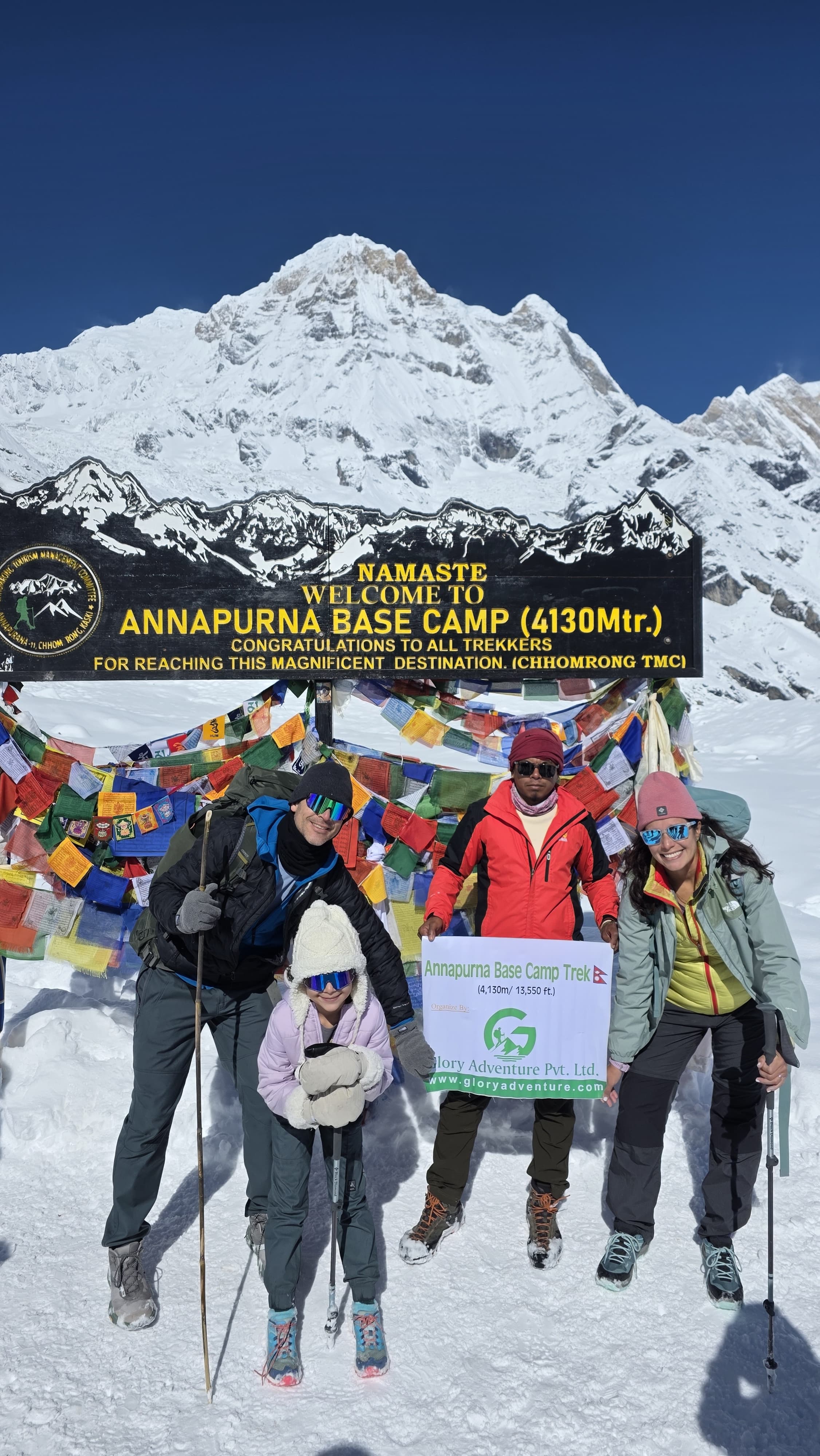
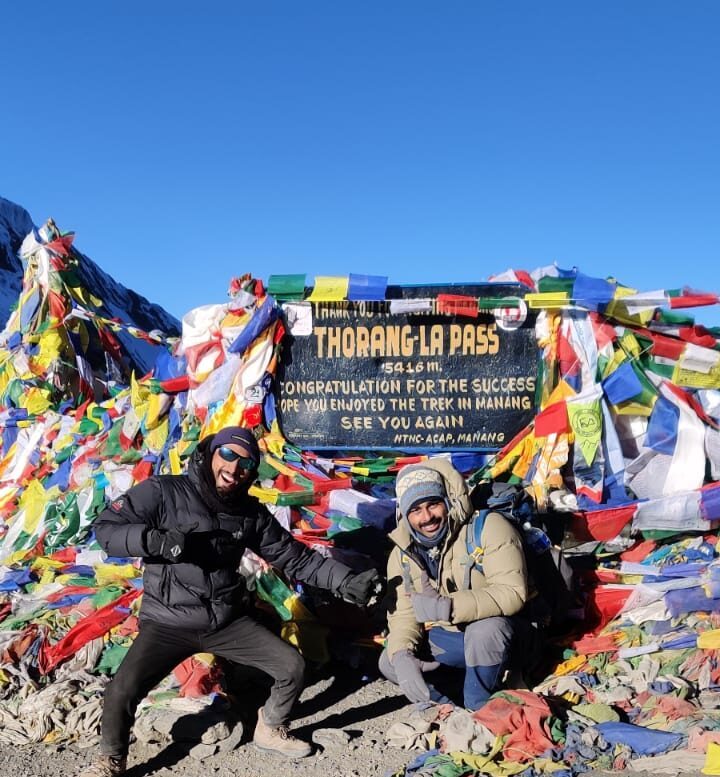

Annapurnas bāzes nometnes helikopteru pārgājiens

ilgums
4 dienasSākot no
US $ 2280 US $ 2508
Saroj Sunar
Ceļojumu konsultants
Meklējat privātu ceļojumu?
Sasveicinieties ar savu ceļojumu konsultantu
Plānojat savu nākamo atpūtu? Mūsu ceļojumu speciālisti ir gatavi izstrādāt pilnībā pielāgotu paketi, kas atbilst jūsu interesēm. Ja jums nepieciešama palīdzība vai ir kādi jautājumi, droši sazinieties ar mums — mēs esam šeit, lai palīdzētu jums no sākuma līdz beigām.
✖
Bezmaksas ceļojumu plānotājs
Runāt ar
Kungs Saroj Sunar

