 Talk to Mr. Saroj
- Home
- Destination
- Nepal Trekking
- Annapurna Region
- Short Poon Hill Trek 3 Days
- Ghorepani Poon Hill Trek 4 Days
- Ghorepani Poon Hill Trek – 8 Days
- Annapurna Base Camp Heli Trek
- Short Annapurna Base Camp Trek- 6 Days
- Annapurna Base Camp Trek – 10 Days
- Annapurna Base Camp Trek Via poon Hill
- Short Mardi Himal Trek
- Mardi Himal Trek – 10 Days
- Ghorepani Poon Hill with Mardi Himal Trek
- Short Annapurna Circuit Trek
- Annapurna Circuit Trek with Tilicho Lake
- Annapurna North Base Camp Trek– 9 Days
- Khopra Ridge Trek
- Mohare Danda Trek – 9 Days
- Kori Himal Trek -10 Days
- Nar Phu Valley Trek with Kang La and Thorong La Pass- 17 Days
- Annapurna Region
- Travel Info
- Company
- Contact
 English
 Malay
Malay Dutch
Dutch Japanese
 Hindi
Hindi Italian
 Spanish
 French
 German
 Chinese
 Korean
 Arabic
 Hebrew
 Russian
 Portuguese
 Danish
 Czech
Czech Polish
 Swedish
 Plan Your Trip
 Bookings open for the 2026-2027 season! Start planning your dream journey.
Mera Peak Climbing
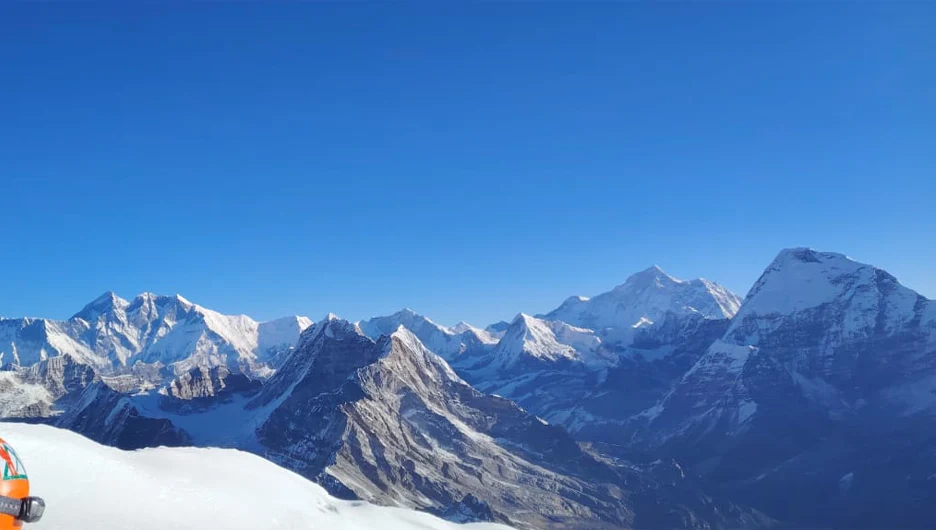
Mera Peak
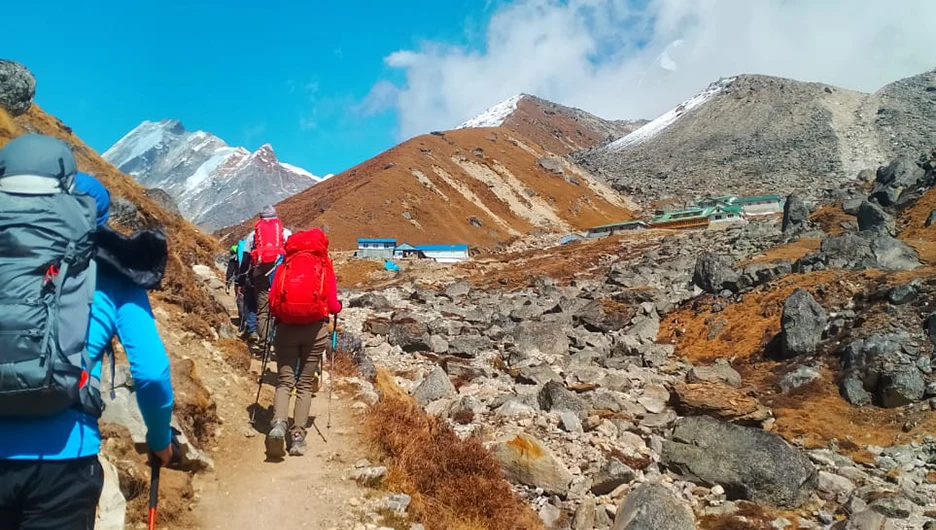
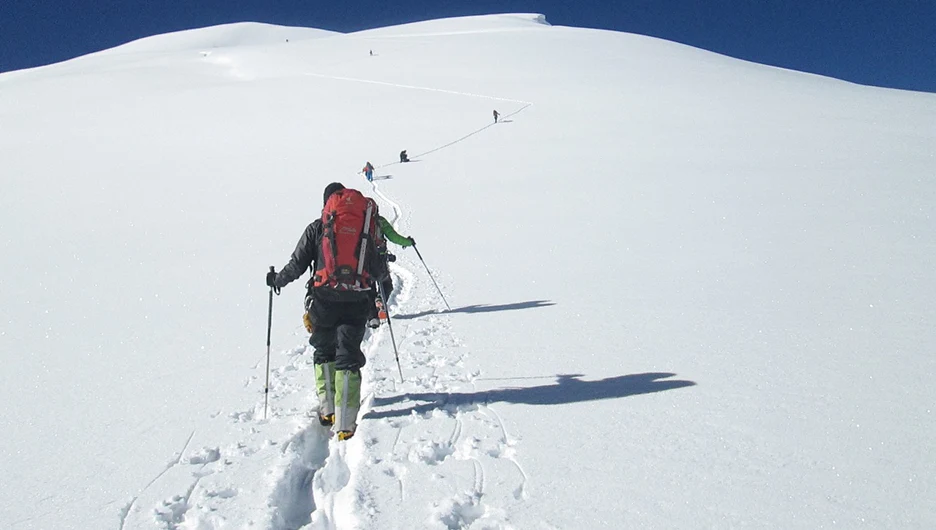
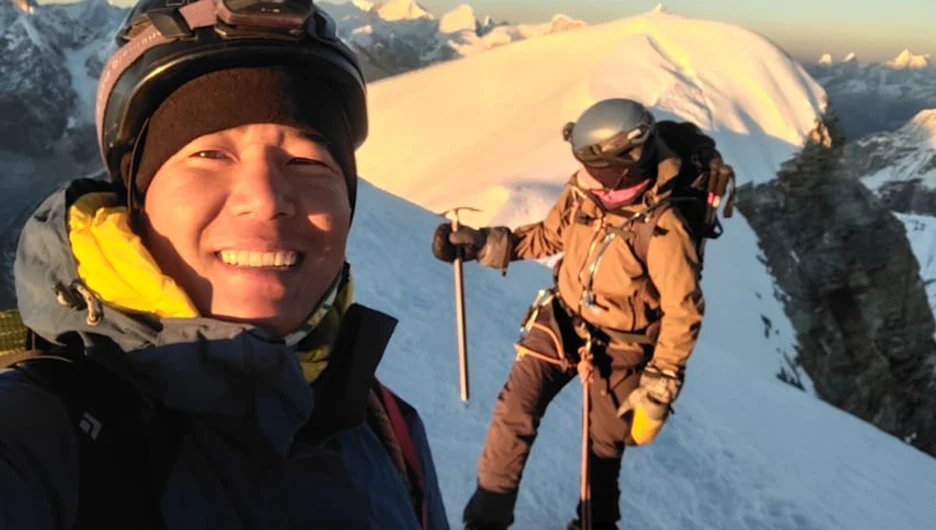
Selfie with Guest - Mera Peak Summit
Price starts from
US$ 2090
For group of minimum 3 Pax
Group Discount Price
- 1 personUS$ 2200
- 2 - 5 personUS$ 2090
- 6 - 8 personUS$ 1980
- 9 - 14 personUS$ 1870
- 15 over 9999 US$ 1760
US$ 2200
Need Help? 
Managing Director Saroj (+977-9806627713)

Duration
16 Days

Trip Difficulty
Challenging

Max Altitude
6,476m / 21,247ft

Activity
Climbing

Destination
Nepal

Group Size
2-16 People

Accommodation
Tea House

Meals
Breakfast, Lunch and Dinner

Transportation
Private vehicle
Highlights of Mera Peak Climbing
- Set a personal record with a triumph over Nepal’s tallest trekking peak
- Get the extraordinarily stunning views of five of 8000 m snow monsters from Everest, Makalu, Kanchenjunga, Lhotse, and Cho Oyu to beautiful Ama Dablam, Nuptse, Baruntse, and Chamlang
- Experience the outstanding thrill of crossing two high Passes of Zatrwa La and Mera La
- A journey through the enchanting land of Makalu Barun and Everest National Parks
- Gain profound insights into the Buddhist traditions of the Tibetan Sherpa community
- Improve your mountaineering skills and prepare for higher and more challenging mountains
- A short program with properly placed acclimatization days
- An adrenaline-pumping flight over the high mountains to Lukla
- Kathmandu visit with a peek at its cultural heritage
Trip Overview of Mera Peak Climbing
Every climber seeks the thrill of reaching the mountain peak that has its own character which can uplift not only the body but also the soul. If you are also an aspiring climber and looking for such a mountain expedition, then we welcome you to join our Mera Peak climbing expedition. This remarkable journey will take you to one of the very best Trekking peaks of Nepal- the Mera itself.
Being situated in the picturesque Makalu Barun National Park of the Hinku Valley, right next to Everest National Park of Khumbu, our 17 days Mera peak climbing route thus combines a real Himalayan expedition with parts of the classic Everest trek.
Piercing the sky, this mountain has three distinct peaks with Mera North reigning supreme with 6476 m altitude above sea level. Mera South with an impressive height of 6065 m above sea level is the lowest of the three. However, our Mera Peak climbing adventure will focus on crowning the Central Mera which stands at 6461 m above sea level.
We have chosen this route because the approaches to the north and south summits are notoriously hazardous as they are filled with numerous crevasses that pose significant risks. In addition, the Mera central summit is not technically difficult as the climb goes up to 35°, and with the easier use of ice ax and crampons, the summit can be conquered easily.
Additionally, the summit serves as the world’s most impressive area which grants us the excellent spectacle of five 8000 m high snow monsters: Cho Oyu (8188 m), Kanchenjunga (8586 m), Makalu (8485 m), Lhotse (8516 m), and Her Majesty the Sagarmatha (Everest, 8848 m).
Lying shyly behind these giants are also the striking walls of Nuptse (7861 m), Baruntse (7,162 m), Chamlang (7319 m), and Ama Dablam (6,812 m).
Following the historic path once taken by Col. Jimmy Roberts and Sen Tenzing on May 20, 1953, our Mera peak climbing itinerary will head us south of Lukla towards Paiya. Then, we will venture deep into the rugged wilderness of the Sherpa Kingdom.
Our adventure will then lead us over the 3081 m high Khari La Pass leading us to the ethnic Sherpa village of Panggom. There awaits another Pass crossing of Panggom La rising to 3175 m height above sea level.
Then, moving alongside the picturesque Hinku Khola through the settlements of Ningsow, and Kothe, we will arrive at the bizarre rocky setup of Thangnag.
We will dedicate an entire day to acclimatization at Thangnag, ensuring our bodies adjust to the altitude. The next day, we will ascend to Khare, and then to High Camp at 5780 m but not before overcoming the next monstrous pass of Mera La erecting at 5415 m.
From High Camp, still, under the blanket of darkness, we will set on our ascent, and reach the summit at 6461 m in approximately 5 to 6 hours. Once we upload our memory bank with the amazing spectacle, we will descend via Thuli Kharka.
Before concluding our Mera Peak climbing journey, we will overcome one more enormous Pass of Zatrwa La standing tall at 4600 m. that serves as a borderline between the Khumbu and Hinku Valleys.
Then, hiking through Chutanga to Lukla, we will end our exciting history-making adventure with a flight back to Kathmandu from Lukla.
In short, our 17 days Mera peak climbing program combines both the thrill of a real expedition along with an authentic cultural experience in the stunning Himalayan Valleys.
Recommended in spring and autumn, this journey welcomes everyone. No climbing experience or high-altitude background is necessary, but you should be in excellent shape and have a true passion for mountains, chilly climates, and personal growth challenges.
Believe us, our Mera peak expedition will not only elevate your climbing confidence but also refine your skills and prepare you for more serious 7000+ meter peak adventures in the future.
Itinerary of Mera Peak Climbing
Day 01: Arrival day in Kathmandu (1350 m)
Welcome to the magical Kingdom of Mera, its capital Kathmandu is thrilled to have you here. As you arrive, one of our Glory Adventure employees will be at the TIA Gate to receive you. He will greet you with khada and guide you to your accommodation located in the picturesque location of the city.
Please get comfortable in your room, then take the opportunity to explore the back street and alleys of the city and get acquainted with its marvelous wonders.
Later in the evening, you can feast the rich and varied cuisines of Kathmandu. Enjoy the spicy and flavorful dishes and feel like the true King.

Activity & Duration
30 Mins and transfer to Hotel thamel
Highest Altitude
1350m / 4,429ft (Kathmandu )
Meals
-
Accommodation
3 Star Hotel in kathmanduDay 02: Kathmandu Valley Sightseeing and Climbing Preparation
After you finish your first Himalayan breakfast in the morning, our guide will come to greet each climber participating in our Mera Peak climbing expedition.
After everyone gathers, he will lead a brief introductory session, and explain about our Mera peak climbing itinerary. He will also inspect your gear (if you have brought any) and help you identify any missing items. He will also guide you on where to purchase or rent what you need.
Meanwhile, our team member will organize the necessary permits by collecting your documents. You can now enjoy the rest of the day visiting Kathmandu’s UNESCO-listed treasures, such as Swayambhunath, Boudhanath, Pashupatinath, and Kathmandu Durbar Square.
We advise you to end your sightseeing early, as we may have to leave very early for a drive to Ramechhap for our flight to Lukla.
Note
Most flights to Lukla airport have now been rerouted from Kathmandu TIA to the Manthali Airport of Ramechhap. This airport is used as an easy option and alternative to the TIA so the high air traffic load can be eased off. We will have to cover the 130 km distance to Ramechhap airport for which we will use a private vehicle and will take around 3 to 4 hours of road journey.
Activity & Duration
After break fast sightseeing in kathmandu valleyHighest Altitude
1350m / 4,429ft (Kathmandu )Meals
BreakfastAccommodation
3 Star Hotel in kathmanduDay 03: Fly to Lukla (2860 m), 20 to 30 minutes, and trek to Paiya (2,730 m/8,954 ft) 3-4 hrs.
Early morning we will fly to the most unusual and exciting airport in the world- the renowned Tenzing Hilary Airport of Lukla. Gaze below at the majestic sight of Manaslu, Kanchenjunga, and Everest and experience the excitement of landing.
As soon as we step out of our small aircraft, the 6187 m high Mount Kongde Ri will welcome us with its imposing presence. Our Sherpa crew with a warm genuine smile will greet us and will take charge of our luggage.
We will now set off towards Paiya where we will spend our first mountain night. Steeply going down for around 1 to 2 hours, we will reach Surke. From here, the trail now goes up for another 1 or 2 hours taking us to Pake.
Then, following the green ocean of fir, rhododendrons, and pines, we will slowly make our way to Chhutak lying gently at the foot of Kalo Himal Ridge.
Prepare for your first vertical ascent over the 2945 m Chhutak La Pass. We will now move down slowly and reach Paiya. Situated at a breathtaking location, this village gifts us with the wonderful panorama of Khatang (6582 m), Tengi Ragu Tau (6938 m), and Kongde Ri.
Activity & Duration
Flight + trek 3-4 hrsHighest Altitude
2860m / 9,383ft (Paiya)Meals
Breakfast,Lunch and DinnerAccommodation
Tea HouseDay 04: Trek from Paiya to Panggom (2,850 m/93,48 ft) 5-6 hrs.
We will leave Paiya early in the morning and plunge downward towards the gorgeous Paiya Khola. Here, we will walk across the world-famous Nepali suspension bridge and commence our upward hike to the Khari La Pass (3081 m).
Climbing down from the Pass, we will find ourselves in the picturesque Khari Khola Valley. The path will now twist and turn through the vast sea of rhododendrons, steadily we will keep on climbing towards Lenjikharka.
Dudh Koshi’s torrential waters can be seen below as we walk on the constant zigzagging trail till we reach Panggom. It is a small yet beautifully calm Sherpa village that is set against the stunning backdrop of the Everest climbing route from Jiri.
Activity & Duration
Trek to panggom 5-6 hrs trekHighest Altitude
2850m / 9,350ft (Panggom)Meals
Breakfast,Lunch and DinnerAccommodation
Tea HouseDay 05: Trek from Panggom to Ningsow (2,745 m/90,003 ft) 4-5 hrs.
After Panggom, we will take on an hour-sharp vertical climb to conquer the 3175 m high Panggom La Pass. Mera Peak will be visible for the very first time here smiling alongside the very attractive silhouette of Numbur Peak (6958 m).
Enjoying the view, we will now climb down the pass which may take us around 2 hours. We are now in front of another long metal bridge suspended over the beautiful Hinku Khola. The 6240 m high Naulekh peak will motivate us to cross the bridge and get on with the downward journey towards the 2770 m Sibuje Village.
Our adventure will then carry us further up the Ningsow River valley, enveloped by trees, towards Ningsow Village. Feast your eyes on the delightful south face of Mera.
Activity & Duration
Trek to Ningsow 4-5 hrs trekHighest Altitude
2745m / 9,006ft (Ningsow)Meals
Breakfast,Lunch, and DinnerAccommodation
Tea HouseDay 06: Trek from Ningsow to Chhetra Khola (3,150 m/10,332 ft) 7-8 hrs.
Our day today begins with around 400 m hike up over the majestic Ramailo Danda elevated at 3120 m. This beautiful cliff offers the bewitching glances of 6367 m Kusum Kanguru and Mera itself. After tackling the pass, we will now journey along a series of climbs and descents for around 3 hours.
Finally, we will be at the bridge arching the Tama Khola. A half-hour journey from this bridge will now lead us to 4G Danda where the newly built teahouse is located.
Activity & Duration
Trek to Chhetre khola 7-8 hrs trekHighest Altitude
3150m / 10,335ft (chhetre khola)Meals
Breakfast,Lunch, DinnerAccommodation
Tea HouseDay 07: Trek from Chhetra Khola to Kothe (3,600 m/11,808 ft) 6-7 hrs
From Chhetra Khola, the trail again steeply rises through the vast forested landscape for around one hour and forty-five minutes. Now a gentle slope will be followed for around 3 to 4 hours till we arrive at Taktor.
Now walking alongside the calm shore of the Hinku Khola, we will reach the picturesque village of Tashing Dingma. Next, we will journey across a long steel bridge over Sanu Khola and proceed for another 2 and half hours until we reach the land of Kothe.
On the edge of the village is the checkpoint for the National park of Makalu Barun which will grant us the needed permit for the Park.
Activity & Duration
Trek to kothe 6-7 hrs trekHighest Altitude
3600m / 11,811ft (Kothe)Meals
Breakfast, Lunch and DinnerAccommodation
Tea HouseDay 08: Trek from Kothe to Thangnag (4,350 m/14,270 ft): 3-4 hrs.
The journey today is meant for a gentle introduction to the 4000 m altitude of Thangnag where the forest is slowly seen to be replaced by the highland grasslands and pastures.
Taking our time, we will leisurely hike alongside the waters of the Hinku Khola. Soon one of the highland Yak Pasture on the western side of Hinku Drangka will be on our way.
We will eat our lunch at the old town of Gondishung which will prepare us for our climb to the small hill where the 2-century-old historic monastery of Lungsumgba is perched beautifully.
A large rock beside the monastery has a rough sketch of Mera engraved. A moment here worth our time as the stunning silhouettes of Mount Kyashar or Charpate Himal (6770 m), Thamserku (6608 m), Mera, and Kusum Kanguru can be admired from up here.
Now prepare for another one-hour uphill hike till we are at the modest yet humble lodge of Thangnag.
Activity & Duration
Trek to thangng 3-4 hrs trekHighest Altitude
4350m / 14,272ft (Thangnag)Meals
Breakfast, Lunch and DinnerDay 09: Acclimatization Day: Hiking to Charpate Himal Glacier.
Today, we will utilize our time to get used to the higher grounds and its air as much as possible. And the ideal way will be to take on a 3 to 4-hour upward hike to reach the top of Charpate Glacier.
With its unique square form, the Charpate Peak has made a special place in the heart of locals. It will also not fail to win our hearts as well as we will have some of the stunningly bewildering views of Kusum Kanguru, Mera North, and the trail to Mera La, the first step toward conquering Mera Peak.
It’s now time to head back to our shelter for a night’s rest before we again kick start our journey tomorrow.
Activity & Duration
Hike to up hills 3 - 4 hrs trekHighest Altitude
4500m / 14,764ft (charpate)Meals
Breakfast, Lunch and DinnerAccommodation
Tea HouseDay 10: Trek from Thangnag to Khare (5,045 m/16,486 ft) 2-3 hrs.
Today, we have yet another splendid opportunity for acclimatization before we ascend the majestic Mera Peak. Setting off from Thangnag, we will steadily walk uphill for about half an hour. We have now reached the amazing glacial lake of Sabai Tsho which sits at a remarkable altitude of 4463 m above sea level.
Enjoying some time by the lake will truly be something memorable. Then, pressing onwards, we will now carefully watch our feet and walk along the lateral edge of the Kharka Glacier.
Get ready for the steeply rising trail that will lead us to another Glacier called Hinku Nup. Now, the Kangtega Himal (6782 m) along with Charpate Peak can be seen just up close.
We will now overcome our next hurdle – the great Lhotse Shar Glacier and just behind it is Khare which is also sometimes known as the base camp of Mera. Feel the authentic high mountain atmosphere of the Nepali Himalayas.
Activity & Duration
Trek to khare 2-3 hrs trekHighest Altitude
5045m / 16,552ft (Khare)Meals
Breakfast, Lunch and DinnerAccommodation
Tea HouseDay 11: Trek from Khare to Mera High Camp (5,780 m/18,958 ft) 5-6 hrs.
After Khare, our trail now begins to rise steeply guiding us over the icy expanse until we reach the summit of 5415 m high Mera La Pass. The panoramic views of Makalu, Lhotse, and Everest are priceless from up here.
Some climbers may prefer to set up their base camp a short distance down the pass but we will adventure and follow the track that goes through the Mera and Naule Glaciers to reach Mera High Camp.
This will allow us to spend only one frosty night under the open sky instead of two at the camp. Once we reach High Camp, our team will quickly pitch the tents for our stay.
After we devour the sights of Makalu, Cho Oyu, Chamlang, Lhotse, Baruntse, and Nuptse for a while, we will get on with the training session of our climbing guide.
We will learn and practice the skills to handle ice axes, carabiners, jumars, and harnesses. We will also learn to walk up and down along the fixed rope with our group.
Activity & Duration
Trek to high cam 5-6 hrs trekHighest Altitude
5780m / 18,963ft (High Camp)Meals
Breakfast, Lunch and DinnerAccommodation
Tent Camp sleepDay 12: : Mera High Camp to Summit (6,461 m/21,190 ft) and back to Khare (5,045 m/16,547 ft) 8-9 hrs.
As our alarm wakes us up at 3 am, we will quickly get up, eat breakfast, then wrap ourselves up in the warmest clothing. Putting on the gear, and headlamps, we with our entire group will not set off to attack the summit.
Depending on our stamina, pace, and health, we may reach the tip of the summit within 5 to 7 hours. At first, there will be some vertical climb but not too hard and adequately manageable.
Then, a slippery stretch along the icy ground awaits us taking us to the ridge. Now the climb will become more and more steeper, and we reach the foot of the peak. This final stretch will be particularly challenging where our climbing guide may decide to use the fixed ropes for our safety.
Throughout the climb, our guide will closely monitor our progress, ensuring we only use the pre-installed railings after he has verified their safety. He will also help us traverse the steep sections with the right gear.
Congratulations! You have set a new altitude record and have reached the altitude of 6461 m above sea level. Enjoy the moment for this is yours to enjoy, breathe in the Himalayan air, and fill your heart with pride as you have just conquered not a mountain but a grand Himalaya of Nepal.
Ama Dablam, Kanchenjunga, Lhotse, Baruntse, Cho-Oyu, Makalu, Nuptse, Chamlang, and Everest will also be right there next to you celebrating with you the greatest joy of your life.
Now, it is time that we travel back down to High Camp for a hot meal. Then, taking down the tents and clearing away the trash, we will make our way back to Khare once more.
Activity & Duration
Climbing to peak 8-9 hrs trekHighest Altitude
6461m / 21,198ft (Summit)Meals
Breakfast, Lunch and DinnerAccommodation
Tent Camp SleepDay 13: Trek from Khare to Kothe (3,600 m/11,808 ft) 4-5 hrs.
Filled with joy from our success, we are now ready to make our way home. After Khare, we will walk the same route again, meeting the same familiar faces once more. Our descent will lead us through Thangnag and into the Hinku Valley, continuing until we arrive at the welcoming comfort of Kothe.
Activity & Duration
Trek to kothe 4-5 hrs trekHighest Altitude
3600m / 11,811ft (Kothe)Meals
Breakfast, Lunch and DinnerAccommodation
Tea HouseDay 14: Trek from Kothe to Thuli Kharka (4315 m.): 5-6 Hrs.
We will have quite an adventure today as we have a series of thrilling ascents and descents as we continue to travel along the twisting trails that crisscross the enchanting tributaries of the Hinku Khola River.
Soon, we will find ourselves in the delightful village of Taktor, we will follow the right path from the village and walk past a collection of serene chortens. The path will then take a sharp dive leading us down to Thuli Kharka where once again we will be at an altitude of more than 4000 m.
Activity & Duration
Trek to thuli kharka 5-6 Hrs trekHighest Altitude
4315m / 14,157ft (Thuli Kharka)Meals
Breakfast, Lunch and DinnerAccommodation
Tea HouseDay 15: Trek from Thuli Kharka to Lukla: Crossover via Zatrawa La pass (4600m.) 6-7 hrs.
Here comes the grand conclusion of our 17 days Mera peak climbing expedition. Our time between the inspiring Himalayas is coming to an end as we prepare to make our way back to Kathmandu.
On the way back, do not forget to take a good look at the calm beauty of the vast green jungles and the expansive views of the Middle Hills’ ridges and valleys. From Thuli Kharka, we will commence our trek by ascending the Naulekh Himal ridge, followed by a steep climb to the Zwatra La pass at 4600 m elevation.
Enjoy one last magnificent view of Cho Oyu and the breathtaking Himalayan skyline. Our descent then will lead us through rugged terrain for nearly 2000 meters until we reach Chhutanga. Lukla is just a three-hour trek from this small village.
Activity & Duration
Trek to lukla 6-7 hrs trekHighest Altitude
4600m / 15,092ft (Lukla)Meals
Breakfast, Lunch and DinnerAccommodation
Guest HouseDay 16: Fly to Kathmandu.
We will board an early morning flight to Kathmandu, return to our accommodation, and enjoy the afternoon at our leisure for sightseeing or relaxation.
Activity & Duration
back to kathmanduHighest Altitude
1350m / 4,429ft (Kathmandu)Meals
Breakfast, Lunch and DinnerAccommodation
3 Star Hotel in KathmanduDay 17: Departure day.
We hope that your Mera Peak climbing journey has been a memorable one complimented by our top-class service. As a final gesture, we will take you to TIA for your journey home.
Activity & Duration
30 mins drive and drop finally Send your homeHighest Altitude
1350m / 4,429ft (Kathmandu)Meals
BreakfastAccommodation
-Includes / Excludes of Mera Peak Climbing
What is included?
- All ground transport in a private vehicle included airport transfer.
- Two night’s three star twin-sharing basis hotel with breakfast in Kathmandu.
- Full broad meals with Tea /coffee ( Breakfast, Lunch, and Dinner) during Trek.
- Best available twin-sharing (Tea House) for accommodation during the trek.
- Private bathrooms with hot shower are provide at phakding , Namche bazzer and Lukla
- Seasonal fruit during the trek.
- English-speaking experienced helpful and friendly government license holder guide ( 1 porter : 2 Trekker’s) all his salary, food, drink, accommodation, transport and insurance included.
- Kathmandu – Lukla – Kathmandu both ways by flight departure included tax.
- Sagarmatha National park permit fee and peak climbing permit fee.
- TIMS Fee – Trekker’s information management system.
- Sleeping bag and duffle ( Returned back after your trip completed )
- Trekking and peak climbing achievement certificate for organizer company.
- Glory Adventure T-shirt.
- First aid medicine kit box.
- All government tax and official expenses.
What is excluded?
- Kathmandu and city meals exclude
- Your personal travel insurance.
- International airfare
- International airfare ( Nepal entry visa . you can obtain a visa easily upon your arrival at Tribhuvan international airport in Kathmandu a multiple-entry tourist visa good for 30 days can be obtain by paying us$ 40 or equivalent in foreign currency. similarly, multiple- entry tourist visa for 90 days can be obtain by paying us$100 .please bring 2 copy passport-size photos.
- Soft drink , hard drink, snacks, hot shower Battery charge, Wi-Fi fee.
- Tips For guide (s) Porter (S) Driver(S)
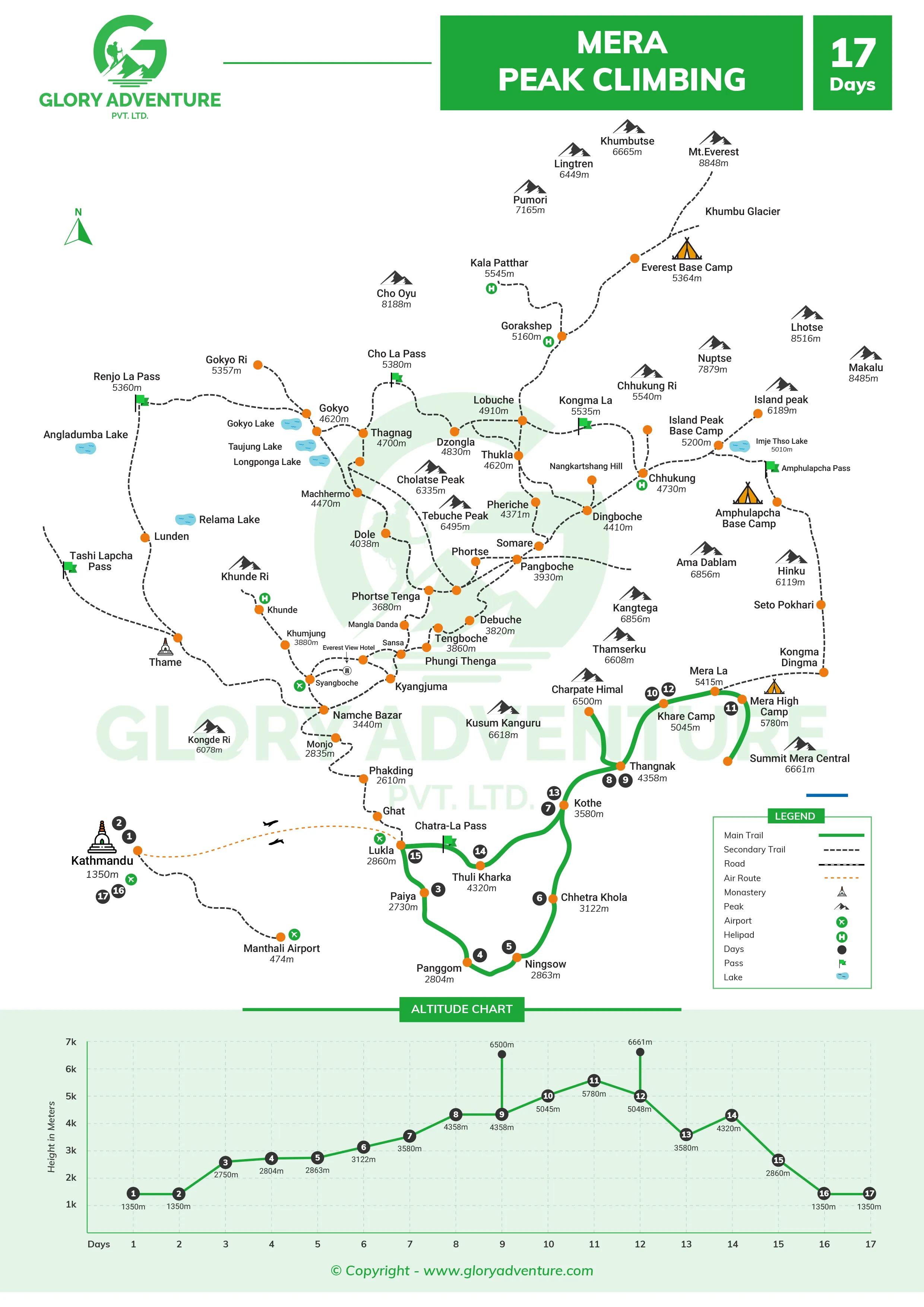
Route Map & Altitude Chart
Essential Information of Mera Peak Climbing
Mera Peak Best Climbing Season
Although Mera Peak is considered the easiest peak to ascend, but it still is a 6000 m Himalayan peak where there will always be a risk of unpredictable weather conditions. Keeping this in mind, the best Mera Peak climbing season would be spring and then autumn.
The spring days of March, April, and May arrive after the harsh winter climate with daytime heat slowly rising to 25 degrees Celsius in the lower region of Mera summit making the trekking very pleasant.
However, snow will remain present at the passes and at the base and high camp. Thankfully, the thickness will be just right, making it simple to traverse with ropes, crampons, and ice axes.
On the other hand, the autumn days of September, October, and November reach Mera after the heavy monsoon rain and the intense hot days of summer.
With the daytime temperatures gradually dropping to a comfortable 20 degrees Celsius, the region begins to experience a gentle touch of snow. This gradual drop in temperature makes traversing the Pass and reaching the summit a more manageable effort.
Although Mera Peak climbing is also possible during the harsh winter (December, January, and February) and summer months (June, July, and August), we advise against it, especially for new climbers who lack experience.
The unpredictable weather, potential snowstorms, avalanches, and extremely low temperatures can significantly increase the risks, and many lodges along the route may also be closed.
Difficulty of Mera peak climbing
Mera Peak is known to be Nepal’s tallest trekking peak that presents no significant technical difficulties, with slopes that never exceed 40 degrees. This means that ascending to its summit only requires a lengthy and challenging trek at a high altitude rather than a technical climb.
This character of the peak makes it reachable to a wider range of climbers, including those without prior experience, while still maintaining a level of safety. However, it is vital to remember that thorough training is essential, and climbers must be equipped with gear like crampons and ice axes.
You also have to keep in mind that the Mera peak climbing journey will require several days of rigorous trekking at mid-altitude which will take you through the remote Hinku Valley midst the grand Himalayas. The isolation of this valley means that the amenities found here will be much simpler than those found on the Everest base trek.
And, you can’t forget about the crossing of the enormous mountain passes and the night of camping on the slopes of Mera Peak High Camp where the altitude exceeds 5,500 m.
This means that you will be spending two full days of high-altitude climbing and will be experiencing the real expedition before reaching the summit.
Therefore, you have to prepare yourself for long days of climbing, descending, and the fatigue that accumulates along the way. And once the summit day arrives, it will demand every ounce of your energy till you reach the summit.
On the other hand, the challenge of altitude will also be present, but we have taken numerous precautions, such as selecting the longest route and incorporating acclimatization days, to ensure a smoother journey with minimal risks.
Who can engage in the Mera Peak Climbing Adventure?
Mera Peak is for everyone which means that you can enjoy the thrill of this journey without spending a fortune. Being a non-technical trekking peak, our Mera peak climbing itinerary can therefore be an ideal introductory program to mountain adventures in Nepal.
Participating in this journey will give you a fantastic opportunity to develop your high-altitude trekking and mountaineering skills, setting the stage for future climbs like Imja Tse, Ama Dablam, Lhotse, or even Everest.
However, the Mera peak climbing does require a solid level of physical fitness and some basic mountaineering skills, such as traversing ice and snow with ropes and crampons, as well as using an ice axe.
Our guides will conduct thorough training sessions before the ascent, ensuring that all participants are well-prepared and confident in their abilities.
Our climbing guide will also accompany you every step of the way, checking the safety railings as needed, and will also keep a close eye on your safety and progress throughout the journey.
Overall, this expedition is open to any newcomer looking to make a name for themselves in high-altitude trekking. But please remember that those individuals with lung or heart issues even if already treated, hypertension, thrombosis, untreated blood coagulation disorders, or pregnant ladies should reach out to their doctor before deciding to participate in our expedition.
Acute Mountain Sickness and Acclimatization
The 17 days Mera Peak climbing journey will take you to the ultimate elevation of 6461 m which means the significant altitude gain throughout the trip.
Thus, adequate acclimatization is vital to avoid altitude sickness/acute mountain sickness (AMS) and to ensure a safe climb. Our Mera peak climbing itinerary is therefore intentionally lengthy with gradual acclimatization, rest day, and shorter trekking phases. This strategy will allow the body to acclimatize effectively to the increased altitude.
For example, we have planned an acclimatization day in Thangnag, where we will spend about three hours climbing to the Charpate Himal Glacier. Then the next day, we will have a short two to three-hour trek to Khare before our summit attempt the next day.
However, you will then spend a night at High Camp, located at nearly 5,800 m. This segment of the ascent is one of the most demanding, as the body works hard to adjust to the harsh conditions.
Sleep at such high altitudes is often disrupted due to physical strain and altitude sickness, and a lack of rest can worsen both physical and mental health, impairing the body’s ability to cope with the altitude.
You may therefore go through fatigue, body aches, headache, dizziness, and confusion. However, our guides and support team will provide thorough support during this challenging phase, offering quality equipment, tents, and hot meals to ensure your comfort and safety.
However, if you continue to experience symptoms of Acute Mountain Sickness (AMS) despite taking precautions, our climbing guide may halt your expedition for a day or two to allow for proper rest.
If your condition does not improve, he may suggest descending to a lower altitude to facilitate better acclimatization. Our team is equipped with a satellite phone so immediate action can be taken, including arranging helicopter rescue if necessary.
We therefore strongly advise you to stay well-hydrated throughout your trek and to avoid fatty foods, alcohol, and smoking. With a doctor’s approval, you may also consider taking Diamox before and during the trip to aid in acclimatization.
How to prepare for Mera Peak Climbing?
Mera Peak demands more endurance than your climbing skills. Therefore, you should engage in regular cardiovascular and strength training, such as running, weighted walking, and stair climbing.
If possible, participating in smaller climbs or high-altitude treks before taking part in our Mera Peak climbing journey can be beneficial. These activities are not mandatory but they will enhance your aerobic capacity and strengthen bIt is also essential to recognize that Mera Peak climbing is as much a mental challenge as it is a physical one. You should be ready for long treks lasting up to eight hours, face unpredictable weather, travel remote terrain, and endure the harsh conditions of the Himalayas.
Therefore, maintaining a positive mindset and the ability to get used to the changing circumstances is essential for a successful ascent. We encourage you to build up the mental attitude to know that although we do everything possible to reach the summit, the final decision always belongs to the mountain.
Accommodation and Dining
As your supportive partner in Nepal, we will take care of all your logistical arrangements for your Mera Peak climbing journey. Your stay in Kathmandu, both before and after the ascent, will be in a three-star hotel with double rooms.
During the trekking segment, accommodations will be in lodges for two people which may have shared toilet and shower facilities in the hallway. The lodges are equipped with charging sockets for your devices, generally at a cost of $1-2, and hot water is available for an additional fee.
For the camping experience at High Camp, our team will provide high-quality tents for sleeping, cooking, and latrine needs. We will also supply you with high-quality sleeping bags to ensure you stay warm throughout the cold nights.
When it comes to dining, the hotel in Kathmandu includes breakfast in your accommodation package. However, you will be responsible for your own lunch and dinner, which can be enjoyed at local cafes and restaurants that offer a variety of national, European, and continental cuisines.
During the trekking and peak ascent, meals will be served, including breakfast, lunch, and dinner, along with tea or coffee and seasonal fruits each evening. At Mountain Lodges, you can select your meals from a menu that includes both traditional Nepalese and European cuisine.
Transportation
We have also included in our Mera Peak climbing price your transportation throughout the adventure. We ensure that all ground transfers are made in comfortable private vehicles, which can range from cars to minibuses or jeeps, depending on the group size. Our Mera Peak climbing price also covers the domestic flight from Kathmandu to Lukla and back, along with any departure taxes.
Essential Mera peak climbing permit
Although Mera Peak is known to be an easily climbable trekking peak, but it is still essential to have the climbing permit for the Peak which is granted by the NMA (Nepal Mountaineering Association). The permit fees vary with the seasons: US$ 250 per climber in spring, US$ 125 in autumn, and US$ 70 in summer and winter.
In addition, as our journey begins in Lukla, the local permit for the Khumbu Municipality is also one of the essential Mera Peak climbing permits that we will be needing. This local permit will be available in Lukla for USD 20 per person.
To enter the Makalu Barun National Park, which starts at Kothe, a national park entry permit is also required, which costs USD 30 per person.
Our team and guide will manage the entire Mera peak climbing permit process, and these costs are already part of our Mera peak climbing price.
Frequently Asked Question (FAQ’s)
Sure, you can! You can begin your journey to Everest Base Camp by following the traditional trekking route from Lukla. Then after completing the EBC trail, you can return to Lukla and trek to Thuli Kharka from where you can connect to the trail that leads to Mera Peak. You can also opt for a helicopter ride from Lukla directly to Khare.
You can consider including Island Peak climbing in your itinerary. If you feel confident in your climbing abilities, you can also include both Island Peak and Lobuche Peaks alongside Mera Peak climbing.
Yes, the grading of both Mera North and Mera South is ED, which means that the climbing conditions are more challenging, involve increased risk, and require a higher degree of technical expertise.
The mobile networks of NCELL and NTC are generally functional in most trekking villages; however, they may be unavailable at base camps and high camps. For urgent communication, we do provide satellite phones.
Until Lukla, you can easily stay online without any hassle, you may even get free WiFi to stay online. However, donot bet on the reliable WiFi after Lukla as the lodges en route may or may not be equipped with WiFi. You can however try to stay online via the 4G service of NTC or NCELL.
If by any misfortune, you were not able to reach the summit as we have planned, then you can consult with your group, guide, and our team to request an additional day for your attempt. If they agree, you can plan to climb the summit the next morning. However, if your health does not allow for this, please do not rush. The mountains will always stand there, and there will of course be other days and other chances; only not this time.
We have set aside two days for the summit push; one day will be spent at the High Camp with climbing prep and the second day is planned for the summit assault.
If you choose not to climb the summit, you can stay in Khare or at the High Camp, and enjoy the breathtaking views of the towering Himalayan peaks as you wait for the climbers to return.
Sure, if there are no clouds and the morning is all very clear, then you can view not only Everest but also Cho Oyu, Lhotse, Makalu, and Kanchenjunga.
Trip Reviews on Mera Peak Climbing

Price starts from
US$ 2090
For group of minimum 3 Pax
US$ 2200
Need Help?
Managing Director Saroj (+977-9806627713)
Related Trips
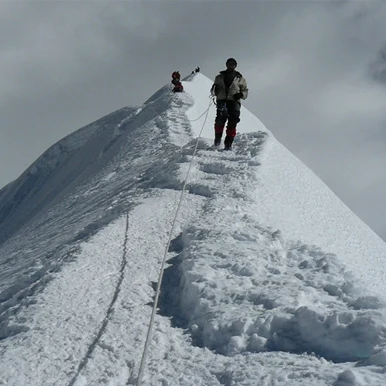
Everest Base Camp Trek with Island Peak Climbing

Duration
18 DaysStarting from
US$ 1920 US$ 2112
Saroj Sunar Travel Consultant
Looking for a Private Trip?
Say Hello to Your Travel Consultant
Planning your next getaway? Our travel specialists are ready to design a fully customized package tailored to your interests. If you need help or have any questions, feel free to connect with us—we’re here to guide you from start to finish.
Price starts
US$ 1920
✖
Free Trip Planner Talk to Mr. Saroj Sunar

