 Talk to Mr. Saroj
- Home
- Destination
- Nepal Trekking
- Annapurna Region
- Short Poon Hill Trek 3 Days
- Ghorepani Poon Hill Trek 4 Days
- Ghorepani Poon Hill Trek – 8 Days
- Annapurna Base Camp Heli Trek
- Short Annapurna Base Camp Trek- 6 Days
- Annapurna Base Camp Trek – 10 Days
- Annapurna Base Camp Trek Via poon Hill
- Short Mardi Himal Trek
- Mardi Himal Trek – 10 Days
- Ghorepani Poon Hill with Mardi Himal Trek
- Short Annapurna Circuit Trek
- Annapurna Circuit Trek with Tilicho Lake
- Annapurna North Base Camp Trek– 9 Days
- Khopra Ridge Trek
- Mohare Danda Trek – 9 Days
- Kori Himal Trek -10 Days
- Nar Phu Valley Trek with Kang La and Thorong La Pass- 17 Days
- Annapurna Region
- Travel Info
- Company
- Contact
 English
 Malay
Malay Dutch
Dutch Japanese
 Hindi
Hindi Italian
 Spanish
 French
 German
 Chinese
 Korean
 Arabic
 Hebrew
 Russian
 Portuguese
 Danish
 Czech
Czech Polish
 Swedish
 Plan Your Trip
 Bookings open for the 2026-2027 season! Start planning your dream journey.
Helambu Trek

Price starts from
US$ 475
For group of minimum 3 Pax
Group Discount Price
- 1 personUS$ 499
- 2 - 5 personUS$ 475
- 6 - 8 personUS$ 449
- 9 - 14 personUS$ 425
- 15 over 9999 US$ 399
US$ 499
Need Help? 
Managing Director Saroj (+977-9806627713)

Duration
6 Days

Trip Difficulty
Easy

Max Altitude
3,690m / 12,106ft

Activity
Trekking & Sightseeing

Destination
Nepal

Group Size
2-16 People

Accommodation
Hotel, Tea House

Meals
Breakfast, Lunch & Dinner

Transportation
Bus
Highlights of Helambu Trek
- We get to walk the ancient trade route from Sundarijal to Melamchi Bazaar.
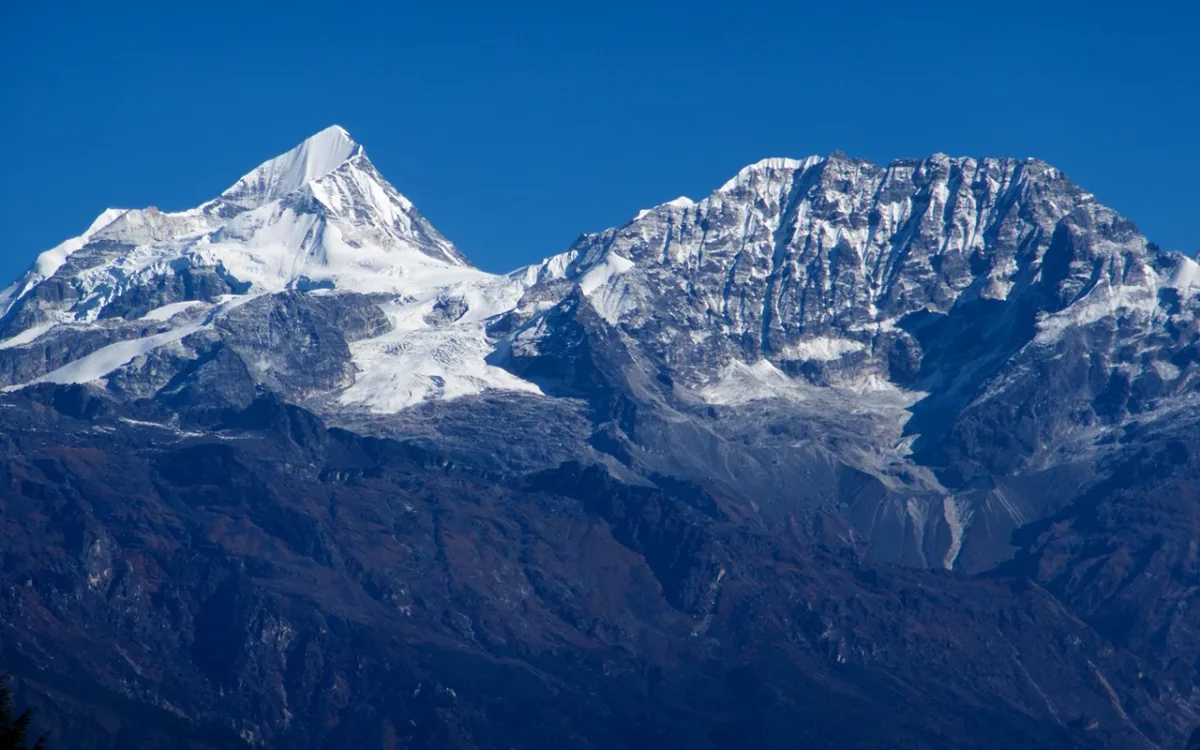
- See Langtang Lirung, Dorje Lakpa, and Jugal Himal from Chisapani ridge.
- Enter and trek through the Shivapuri Nagarjun National Park.
- Spot red-billed blue magpies and Himalayan bulbuls in the forest.
- Visit the 400-year-old monastery in Melamchi Ghyang.
- Experience Tamang culture in villages like Kutumsang and Tarke Ghyang.
Trip Overview of Helambu Trek
We start the Helambu Trek in Kathmandu and drive 15 kilometers to Sundarijal. The starting point of this trek is set at 1,460 meters. We cross into Shivapuri Nagarjun National Park, show our TIMS card and park permit at the checkpoint, and follow the Bagmati River. This area supplies drinking water to Kathmandu and you can see the Sundarijal water treatment plant at the trailhead.The region of Helambu receives way fewer trekkers than Everest or Annapurna.
In 2023, Nepal Tourism Board recorded 12,000 visitors to Helambu while Annapurna had over 160,000. You can already tell, we will walk quieter trails on this trek. We will also meet farmers, school children, and monks en route. The region follows Tibetan Buddhist teachings which you can easily tell by their tradition and Monasteries. You can visit many Gompas en route, featuring the one at Tarke Ghayang and Sermathang where daily prayers are hosted. The locals of the region grow potatoes, millet, and buckwheat and we can see terraced fields on steep slopes.
We will reach Chisapani by late afternoon on the first day of the Helambu Trek. Chisapani sits at 2,150 meters and offers one of the closest views of Langtang Lirung, Dorje Lakpa, and Jugal Himal. Clear days reveal snow peaks just 40 kilometers north of the village. We stay in a basic guesthouse with shared toilets and unheated bedrooms. Meals are cooked on wood stoves or kerosene burners.
The Helambu region lies north of Kathmandu Valley, spanning the districts of Sindhupalchok and Nuwakot. The trek averages 14 to 18 kilometers per day with a total distance of 60 kilometers. We will complete it in six days, reaching a maximum elevation of 3690 meters at Thadepati Pass. Altitude sickness is rare but possible, so we have to monitor our breathing and hydration.
This trek will have you walk through forests of oak, maple, and fir, and during the spring season, rhododendron blooms add vibrant colours. The months of April and May offer red and pink flowers along the ridges. Meanwhile, October and November offer stable weather and clear skies. These are the peak months and the best seasons for trekking and many other outdoor activities. December to February is cold, and snow may block high passes, which is why we must avoid trekking in winter.
Itinerary of Helambu Trek
Day 01: Kathmandu to Sundarijal (drive to Chisapani)
We kick off the Helambu Trek early in Kathmandu. The city wakes slowly, but we’re already on the move; by 7 a.m., we’re in a private jeep, heading northeast out of the chaos. The road climbs steadily, leaving behind honking vehicles and bustling city streets. After about 15 kilometers and just over an hour, we reach Sundarijal, the go-to gateway to Helambu Valley.
Sundarijal feels very different from Kathmandu; the air is cooler and the sound of the river fills the silence. We make a stop at the checkpoint to have our permits checked. The TIMS card and Shivapuri National Park entry should be kept ready. No need to rush, but smooth paperwork saves time.
The forest wraps around us as we approach Chisapani. Pine, oak, and rhododendron line the trail we traverse. In spring, the pink Rhododendron flowers bloom beautifully, decorating the trails. We pass small settlements where life moves at a different speed. Women carry loads on their backs and children walk to their local school. Farmers tend terraced plots of maize and potatoes, and some cattle roam freely.
Teahouses and eateries pop up every few kilometers. We stop for water, a snack, and maybe different types of tea. Chisapani sits on a ridge, facing north, and on clear days, the Himalayas unfold with glimpses of Langtang Lirung, Dorje Lakpa, and even of the Gosainkunda peaks. We drop our packs at a cozy guesthouse and our dinner will be served after some rest. Tomorrow, we will go deeper into Helambu.

Activity & Duration
Kathmandu to Sundarijal (drive to Chisapani)
Highest Altitude
1350m / 4,429ft (Sundarijal)
Meals
( Breakfast. Lunch, Dinner )
Accommodation
Guest HouseDay 02: Trek From Chisapani To Kutumsung
We leave Chisapani by 7 a.m. while the sunrise lights the Langtang range. We start on a wide trail made of compact dirt and stone steps. Soon after, the path descends through pine and rhododendron forest; the elevation drops 300 meters in the first hour. Then, we have to cross small streams on wooden footbridges. Trail markers are visible all the way and yellow and blue signs point to Kutumsang. The locals call this area Melamchi Gadhi. We then pass stone houses with slate roofs.
After around 3 hours of walking, we will reach the village of Kutumsang at 2,250 meters. The 2nd day of the Helambu Trek covers 11 kilometers with an average walking time of 5 to 6 hours. Kutumsang is a Tamang village, decorated by prayer flags and chortens. We can see many walls carved with Buddhist prayers. The locals use solar panels for electricity since power outages are quite common in the highlands. Guesthouses offer basic rooms with blankets and shared toilets.
Our lunch of the day is likely dal bhat with pickled vegetables, but you can also choose other options from the menu provided. The evening hours are free, you can walk to a nearby ridge unguided or explore the village. Views including Jugal Himal and Gauri Shankar can be seen on clear days. The sunset colors fade by 6 p.m., offering a stunning view of the peaks in the distance. Altitude sickness is not a risk here since we are considerably low in elevation. We gain elevation slowly. We will spend the night at 2,250 meters, preparing us for the higher days ahead.
Activity & Duration
Trek from Chisapani to Kutumsung 5/6 HrsHighest Altitude
2371m / 7,779ft (Kutumsung)Meals
( Breakfast. Lunch, Dinner )Accommodation
Tea HouseDay 03: Trek From Kutumsung To Thadepati
On the 3rd day of the Helambu Trek, we leave Kutumsang after breakfast. The trail begins with a descent through pine and rhododendron forest; the path is well-marked with stone steps and wooden signs. We follow a narrow ridge with views to the east and after about 2 kilometers, we cross a small stream at a wooden bridge. This is a common water refill point.
From there, the trail climbs steadily toward Thadepati Pass, which is the highest point of the day at 3,690 meters. The ascent to the top takes about 3 hours from Kutumsang. The gradient is consistent throughout the ascent; we will take short breaks every 30 minutes to keep our breath steady. Trekking poles help greatly in this section.
Some locals might greet us with “Julay”, which is really just a friendly hello. Some homes run small teahouses and eateries where trekkers often stop for hot lemon tea and other drinks. Continuing the Helambu trek, the vegetation changes above 2,400 meters, and Rhododendron trees give way to oak and juniper. Bird calls are very common on the trail, and you can spot the Himalayan bulbul and red-billed blue magpie frequently. No major wildlife sightings, but signs of deer are visible on the trail.
Thadepati village sits just beyond the pass, it is small compared to previous villages, with about 20 homes. Guesthouses are very basic but clean and well-managed. We arrive at our destination by 3 p.m. if we maintain a steady pace. Hot water is available for bucket showers, but it’ll cost you extra. In the evening hours, sunset brings clear views west toward the Langtang range.
Activity & Duration
Trek from Kutumsung to Thadepati 4/5 HrsHighest Altitude
3690m / 12,106ft (Thadepati)Meals
( Breakfast. Lunch, Dinner )Accommodation
Tea HouseDay 04: Trek From Thadepati To Tarke Ghyang
Day 4 of the Helambu Trek starts from Thadepati at 7 a.m. The morning is quiet and the trail descends through pine and rhododendron forest. We follow a narrow dirt path with stone steps and the initial descent is steep in some sections. We recommend using trekking poles for knee support.
The route passes through small clearings and we see terraced fields on the slopes. Farmers grow buckwheat and potatoes and Yaks graze near meadows. We will then cross a stream at Thul Ghyang, followed by a wooden bridge spanning the water. From there, the path climbs steadily as we gain 550 meters over 10 kilometers. The ascent takes 5 to 6 hours. The trail conditions are dry and well-marked and we pass chortens with prayer flags.
Soon after, we will reach Serke Ghyang at around noon, one of the minor stops en route. The next section is exposed with no tree cover. After a while, the final approach to Sermathang is steep, lasting about 45 minutes including over 150 stone steps. Our destination of the day sits at 2,250 meters above sea level. It is a small village with slate-roofed houses and the tea houses have rooms with wooden floors and thick blankets.
Our dinner is served by 7 p.m., and the water at the tea houses is often boiled and safe to drink. We recommend trekkers carry reusable bottles to minimize waste. The village has a small monastery where monks chant evening prayers.
Activity & Duration
Trek From Thadepati To Tarke Ghyang 5/6 HrsHighest Altitude
2560m / 8,399ft (Tarke Ghyang)Meals
( Breakfast. Lunch, Dinner )Accommodation
Tea HouseDay 05: Trek From Tarke Ghyang To Sermathang
We wake in Tarke Ghyang at 6 a.m. and start the 5th day of the Helambu Trek with breakfast. We eat early to start walking by 7. The trail to Sermathang is 14 kilometers long, with an estimated duration of 6 to 7 hours. We carry water, snacks, and a weather-proof jacket since the weather changes fast at this elevation.
The path begins with a steep descent and we drop about 600 meters in the first 3 kilometers. The stone steps and packed dirt lead through pine and rhododendron forests. We cross small streams on wooden footbridges and reach a dirt trail. Some of the bridges en route might appear old and unsteady, but they are completely safe.
At 2,800 meters, we reach a valley and the trail immediately flattens. We walk past terraced fields where farmers grow buckwheat and potatoes. Soon after, we will enter the village of Sermathang by noon, passing chortens and other small settlements. After a 45-minute break, you can explore the village on your own, before calling it a night.
Serma means “horse hair” in Tibetan. Locals say a lama’s horse left its hair here during a pilgrimage, and then the name stuck. We can see small monasteries where a 100-year-old statue is on display.
Activity & Duration
Trek From Tarke Ghyang To Sermathang 6/7 HrsHighest Altitude
2600m / 8,530ft (Sermathang)Meals
( Breakfast. Lunch, Dinner )Accommodation
Tea HouseDay 06: Sermathang To Melamchi Bazaar and Drive To Kathmandu
On the final trekking day of the Helambu Trek, the trail descends from 2,200 meters to 700 meters in Melamchi Bazaar. The total trek distance of the day is 13 kilometers, which takes about 4 to 5 hours of walking. The path is well-marked with stone steps and dirt trails that lead downhill.
We walk through Thulo Bangal, a small village with red-tiled roofs. You can see farmers work in terraced fields where potatoes, radishes, and millet are planted. The descent eases near Sermathang Kharka and the forest thins. From there, we reach the Melamchi River where a concrete bridge marks the final approach. After a while, we will get on the ride to Kathmandu, which takes 3 to 4 hours.
Activity & Duration
Sermathang to Melamchi Bazaar and Drive to Kathmandu 7/8 HrsHighest Altitude
1400m / 4,593ft (Kathmandu)Meals
( Breakfast )Accommodation
Three Star Hotel In KathmanduIncludes / Excludes of Helambu Trek
What is included?
- Kathmandu to sundarjal , melamchi to Kathmandu by local bus.
- Best twin-sharing basis (tea house) accommodation during the trek.
- English-speaking experience helpful government licenses holder trekking guide his all salary, food, accommodation and insurance included.
- Full broad meals (Breakfast, Lunch and Dinner) during the trek.
- Shivapuri national park permit.
What is excluded?
- Any personal expenses
- If you needed your carry porter it will cost 130 USD per porter.
- If you require for private jeep it will cost 200 USD.
- Tips for guide(s) porter(s) .
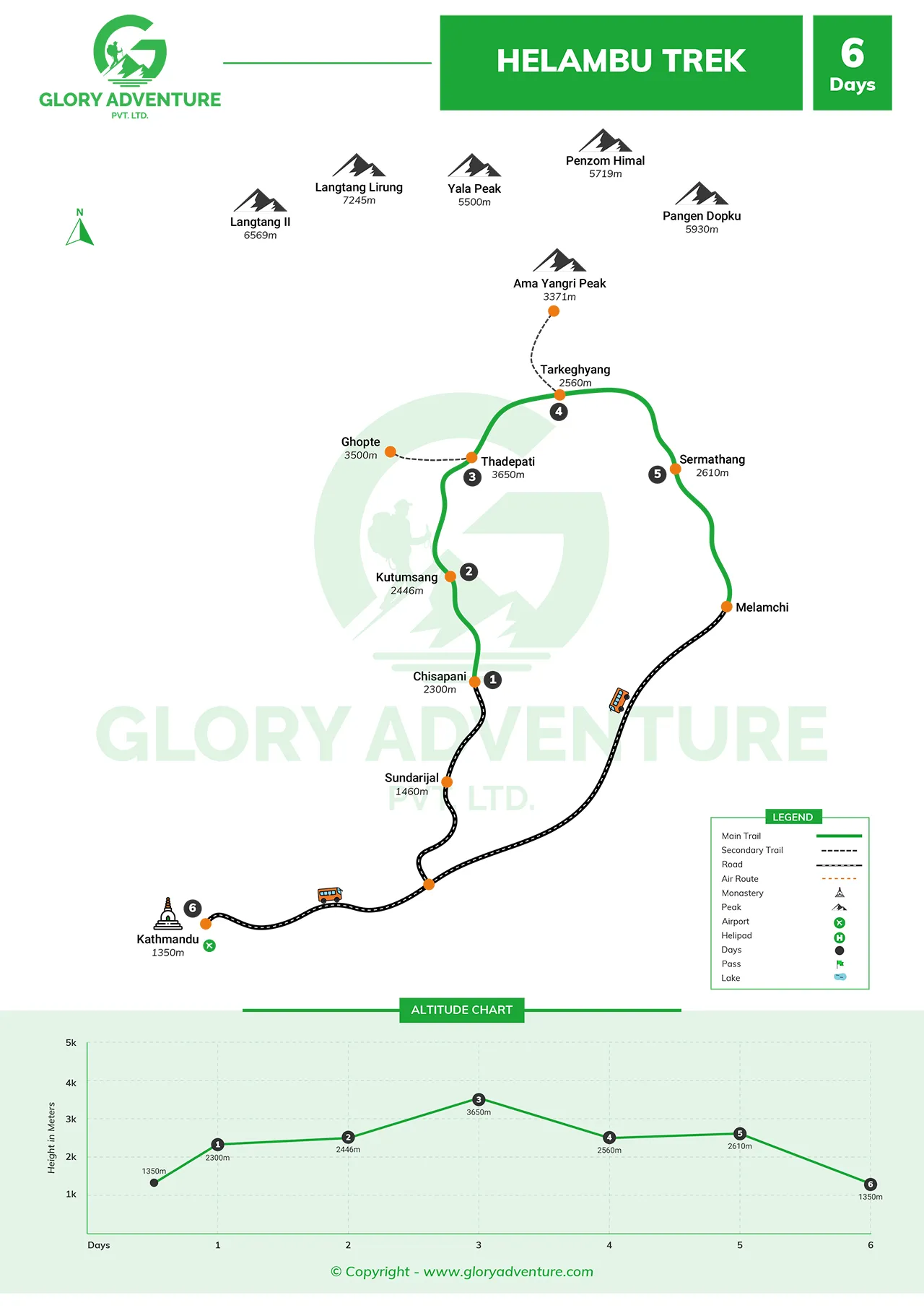
Route Map & Altitude Chart
Essential Information of Helambu Trek
Best season and weather
We recommend the Helambu Trek in two main seasons. Autumn runs from September to November and spring runs from March to May. These months offer stable weather, the skies are clear and the visibility is high. Daytime temperatures range from 10°C to 20°C while nights drop to 5°C at lower elevations.
Rain falls heavily during the monsoon. June to August brings almost daily showers. Trails become muddy and leeches appear on forest paths. Meanwhile, the winter season is cold; December to February brings frost. We will check forecasts before departure, but it can be unreliable at times. Weather changes fast in the hills, so we pack a rain cover and a windproof jacket.
Difficulty
The Helambu Trek is moderate; we walk 10 to 14 kilometers per day with a daily elevation gain that rarely exceeds 1,200 meters. We descend just as much on some days. Our legs work on downhill stretches, which can be taxing on the knees. Trails are well-maintained, featuring some stone steps, dirt paths, and forest tracks. We need good trekking shoes with ankle support that help on uneven ground.
We also cross a high mountain pass, reaching a maximum altitude of 3,690 meters at Thadepati Pass. No technical climbing is required, so the trek suits beginners with fitness. We walk 5 to 6 hours each day at a steady pace. You should carry a daypack, which is under 5 kilograms, while the porters are available to carry your heavy luggage.
Altitude Sickness
The Helambu Trek stays below 2,800 meters, which is why altitude sickness is rare. We do not spend any nights in high-risk zones, and most cases occur above 3,000 meters. Symptoms include headache, nausea, dizziness, and fatigue, so we monitor our bodies. Trekkers should drink 3 to 4 liters of water daily since dehydration worsens symptoms.
You must avoid alcohol and smoking, since those things reduce oxygen intake. We eat light meals full of carbohydrates that fuel our bodies and daily physical needs. We walk at a slow pace, taking breaks, and sleep at lower elevations when possible. If symptoms appear, you should stop and not climb any higher.
Preparation and Fitness
We walk 5 to 7 hours each day on this trek and the elevation ranges from 700 to 2,600 meters. We face daily ascents and descents of 800 to 1,200 meters and recommend three to four weeks of cardio training before departure. Trekkers have to walk daily and go up stairs at times. You have to carry a daypack of 5 to 7 kilograms, so strengthen your legs and core. We pack a headlamp, water bottles, rain gear, warm layers, and also bring blister care and pain relief.
Food and Accommodation
The Helambu Trek package covers three meals a day; the teahouses serve breakfast, lunch, and dinner for you daily. Breakfast includes porridge, eggs, and toast with a side drink of tea or hot lemon. You can refill water bottles at guesthouses and use water purifying tablets or filters.
The main dinner is the national dish of dal bhat, which includes rice, lentil soup, vegetables, and pickles. Some lodges offer noodles, pasta, or pancakes and other international meals. You must avoid raw vegetables, salads, and meat as much as possible.
Transportation
At the start of the Helambu Trek, trekkers have to drive from Kathmandu to Sundarijal. The trip takes 1.5 hours and we travel in a private jeep or minivan. Roads are paved but narrow at times. After the trekking days are over, you will be driven from Melamchi Bazaar to Kathmandu. The drive lasts 3 to 4 hours and the route passes through Sindhupalchok. Road conditions vary. Potholes and landslides occur during the monsoon. We use 4WD vehicles for safety and maneuverability.
Communication
You can stay connected using local SIM cards like Ncell and Nepal Telecom (NTC). Out of the two, NTC works in most Helambu villages, you can buy a SIM in Kathmandu with a valid ID. Data works up to Chisapani and Kutumsang, but it is not very reliable. The signal drops in deeper areas like Thadepati and Tarke Ghyang, so do not expect a constant internet connection. We will check in at guesthouses with Wi-Fi when possible, but you will have to pay a couple of bucks for it. Sermathang has limited network access.
Permit
We need two permits for the Helambu Trek. Trekkers must obtain a TIMS card and Shivapuri National Park entry. As a registered agency, we will help you obtain the required permits. We will process the permits in Kathmandu and complete the process in just one day preferably before the trek starts. We will avoid delays by preparing early.
Visa
You can not enter Nepal without a tourist visa. Visitors can apply online at immigration.gov.np. or simply fill out an application form after reaching the Tribhuvan International Airport. You can select a 15, 30, or 90-day option as per your intended stay. For this trek, you can just take the 15-day option.
Travel Insurance
We require travel insurance for every trek. It is mandatory since it covers medical emergencies, helicopter evacuation, and trip cancellations, which the Helambu Trek package does not. This trek reaches 2,600 meters above sea level, where altitude-related issues are not that prevalent. Your insurance package pays for rescue if needed, so you should carry a copy of your policy. We keep emergency contact numbers accessible and use a satellite phone to contact them. Without insurance, you need to pay out of pocket.
Extra Expenses
We budget $20 to $30 per day for extras, which covers energy bars, drinks, snacks, and so on. Bottled water costs $1 to $2 per liter depending on the village and elevation you are in. Trekkers have to drink 2 to 3 liters of water daily and use purification tablets every time they refill. We eat all our meals at guesthouses and eateries along the way. Meals are included in the Helambu Trek package, but you have to pay extra for extras. Hot showers will cost you $2 to $3, while phone charging is $1 to $2.
Private vs. Group Trek
You can choose a private or group trek based on your personal budget and preference. Group treks are cheaper in comparison, where you join others. This is a great way to meet new people who enjoy the same things that you do. Schedules are fixed on group treks since there are many members in the group. We adjust to the group pace throughout the Helambu Trek. Private treks allow you to set your own starting dates. You can control the pace of the trek depending on your physical capability and limitations.
Frequently Asked Question (FAQ’s)
The trail follows the stone path along the Bagmati River through Bancharedanda to Chisapani.
NTC works in Sundarijal, Chisapani, and Tarke Ghayang. Signal drops in deep valleys.
We walk 5 to 6 hours daily. Day 2 and Day 4 take the longest.
We adjust daily start times. Major changes require prior agreement with the agency.
Every guesthouse has squat toilets. Basic toilets are at major trail junctions.
Trip Reviews on Helambu Trek

Price starts from
US$ 475
For group of minimum 3 Pax
US$ 499
Need Help?
Managing Director Saroj (+977-9806627713)
Related Trips


Saroj Sunar Travel Consultant
Looking for a Private Trip?
Say Hello to Your Travel Consultant
Planning your next getaway? Our travel specialists are ready to design a fully customized package tailored to your interests. If you need help or have any questions, feel free to connect with us—we’re here to guide you from start to finish.
Price starts
US$ 765
✖
Free Trip Planner Talk to Mr. Saroj Sunar

