 Talk to Mr. Saroj
- Home
- Destination
- Nepal Trekking
- Annapurna Region
- Short Poon Hill Trek 3 Days
- Ghorepani Poon Hill Trek 4 Days
- Ghorepani Poon Hill Trek – 8 Days
- Annapurna Base Camp Heli Trek
- Short Annapurna Base Camp Trek- 6 Days
- Annapurna Base Camp Trek – 10 Days
- Annapurna Base Camp Trek Via poon Hill
- Short Mardi Himal Trek
- Mardi Himal Trek – 10 Days
- Ghorepani Poon Hill with Mardi Himal Trek
- Short Annapurna Circuit Trek
- Annapurna Circuit Trek with Tilicho Lake
- Annapurna North Base Camp Trek– 9 Days
- Khopra Ridge Trek
- Mohare Danda Trek – 9 Days
- Kori Himal Trek -10 Days
- Nar Phu Valley Trek with Kang La and Thorong La Pass- 17 Days
- Annapurna Region
- Travel Info
- Company
- Contact
 English
 Malay
Malay Dutch
Dutch Japanese
 Hindi
Hindi Italian
 Spanish
 French
 German
 Chinese
 Korean
 Arabic
 Hebrew
 Russian
 Portuguese
 Danish
 Czech
Czech Polish
 Swedish
 Plan Your Trip
 Bookings open for the 2026-2027 season! Start planning your dream journey.
Everest Helicopter Tour in Nepal

Price starts from
US$ 5225
For group of minimum 3 Pax
Group Discount Price
- 1 personUS$ 5500
- 2 - 5 personUS$ 5225
- 6 - 8 personUS$ 4950
- 9 - 14 personUS$ 4675
- 15 over 9999 US$ 4400
US$ 5500
Need Help? 
Managing Director Saroj (+977-9806627713)

Duration
1 Day

Trip Difficulty
Easy

Max Altitude
5,500m / 18,045ft

Activity
Heli Tour

Destination
Nepal

Group Size
2-16 People

Accommodation
-

Meals
-

Transportation
Helicopter
Highlights of Everest Helicopter Tour in Nepal
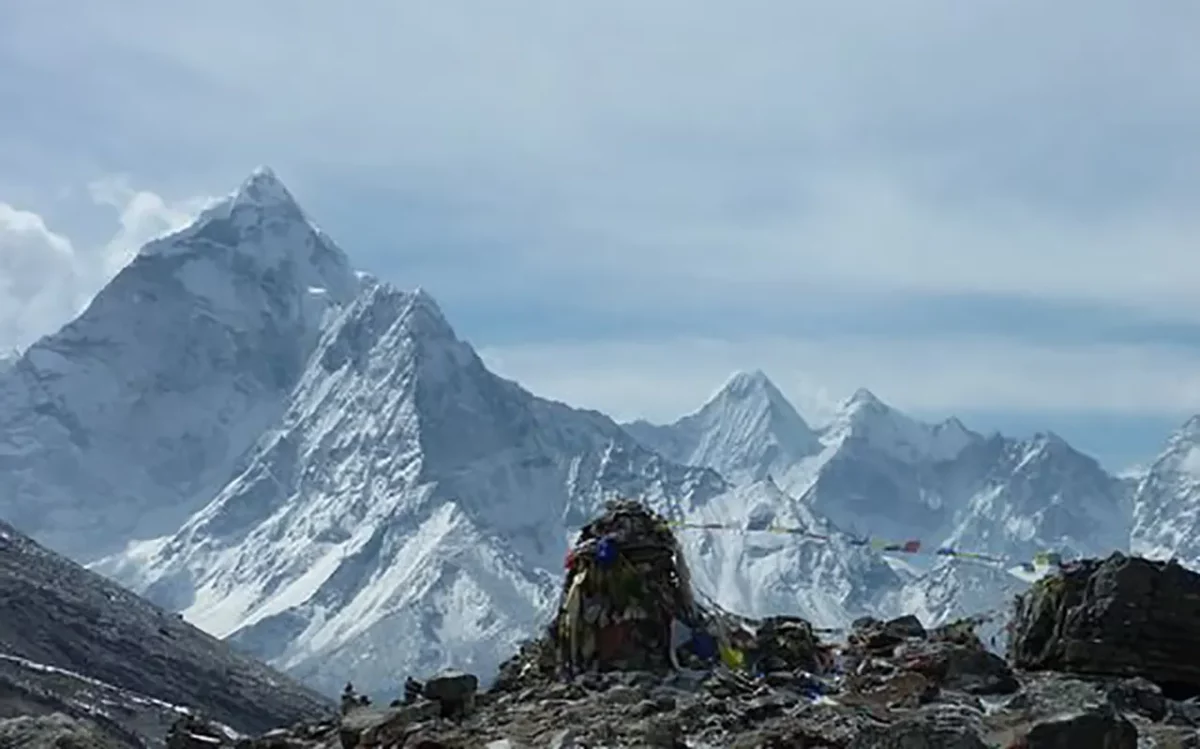
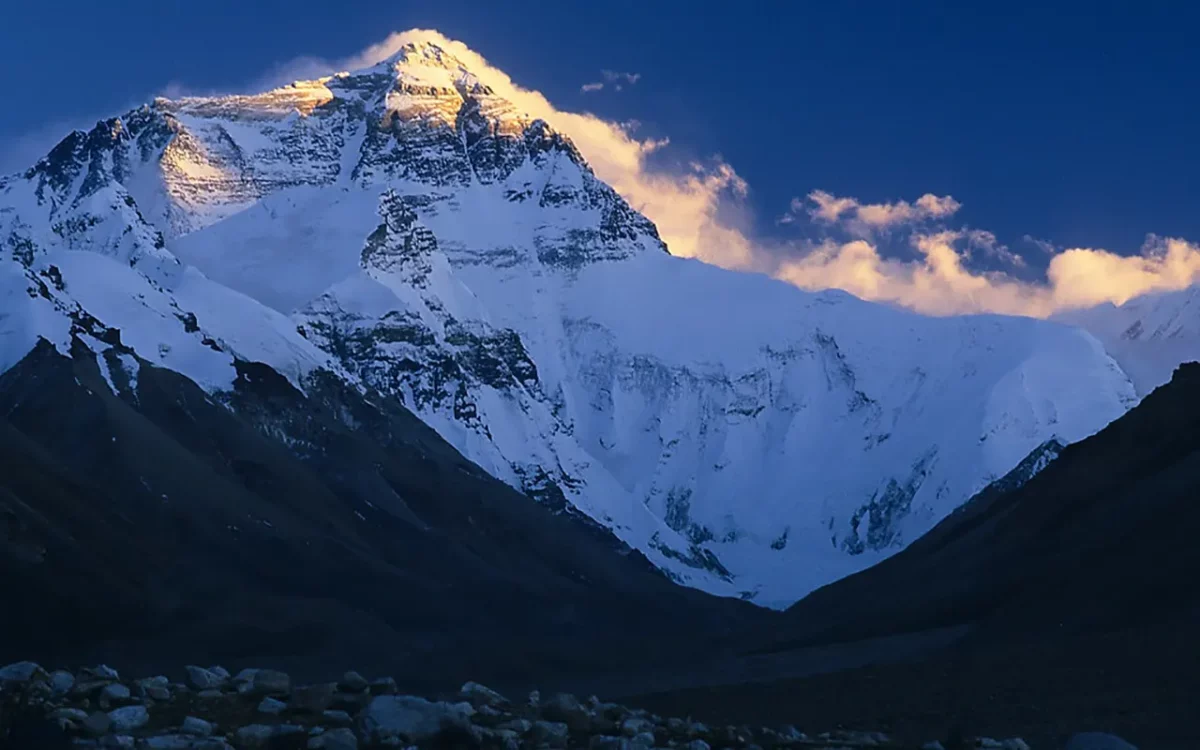
- Amazing aerial scenes of the Everest peaks, along with other nearby peaks in the Khumbu region of northeastern Nepal.
- Experience the Everest region of Nepal without having to spend days trekking tiring and rugged trails.
- Save your valuable time and effort by opting for a 4.5-hour helicopter tour instead of a week-long hiking itinerary.
- Personalized EBC tour with an experienced guide featuring a chartered helicopter for you and your friends.
- Get a chance to taste the local delicacies and meet the locals of the remote Himalayan highlands
- Enjoy many great scenes of the Himalayan landscape throughout the tour.
Trip Overview of Everest Helicopter Tour in Nepal
Located in the Solukhumbu region of Nepal, this Everest Helicopter Tour in Nepal takes us to the popular EBC and the viewpoint of Kala Patthar in less than an hour. The tour takes place within the limits of Sagarmatha National Park, a UNESCO World Heritage Site open since 1976. The range of this conservation area ranges from 2845 meters at Lukla to 8848 meters at the top of Everest.
Along with great panoramic scenes of Everest, you will also get to enjoy views of peaks like Lhotse, Ama Dablam, Thamserku, Nuptse, Cho Oyu, Pumori, and more. These mountains make up the greatest Himalayan scene on the planet. With white snow blanketed slopes and pointy summits, the Everest region peaks have been protected and conserved, offering peak scenes. The Solukhumbu region is the heart of Sherpa communities, where they typically dominate villages like Namche Bazaar, Tengboche, Khumjung, Monjo, and more.
While some have argued that a helicopter ride to Everest harms the fragile Sherpa-led economies of the Everest region, this is not really the case. In fact, our one-day helicopter rides to Everest give people a chance to experience the remote Himalayan nature.
Those who do not have time to trek for weeks would instead just not visit the Everest region at all. So, a helicopter ride shows them the great scenes and offers of the Everest region with minimal time investment.
While itinerary customization options are limited, you can still make your own itinerary, but it has to be approved by the pilot. Changing the itinerary might affect the overall pricing of the Everest Helicopter Tour in Nepal package; we will let you know of the changes before you book the tour with us.
Here are more things you should know before you make up your mind. Stick with us until the end, as we will discuss all the important aspects of the tour along with the activities.
Itinerary of Everest Helicopter Tour in Nepal
Day 01: Flight from Kathmandu to Everest Base Camp and return to Kathmandu
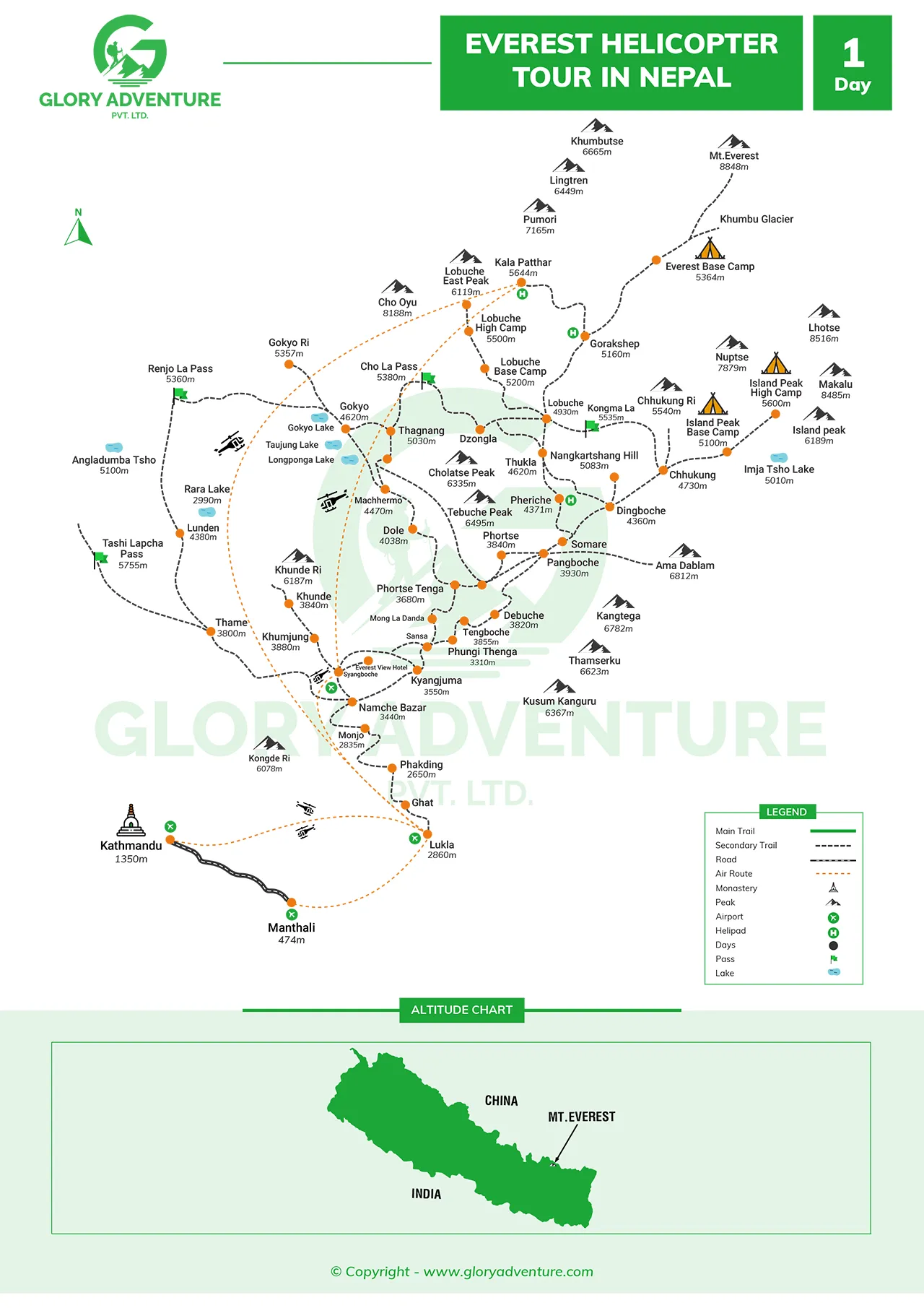
We will take an early morning flight to Lukla; this 35-minute flight is one of the most scenic flights in the world. After refueling the helicopter, we will depart from Lukla and fly straight to the viewpoint of Kala Patthar, which takes about 25 minutes to reach.
Enjoying the greatest scene of the Everest region peaks from Kala Patthar, we will snap a ton of pictures before heading towards Syangboche.
From Kala Patthar, it will take us about 10 minutes to reach Syangboche, where we will stop for a leisurely 45-minute breakfast. This morning meal will be accompanied by a great view of the mountains in the north.
We recommend you try something local or traditional dishes instead of Western options. After this amazing meal, we will head back to Lukla and subsequently to Kathmandu, which takes about 115 minutes.

Activity & Duration
Fly to Everest by helicopter
Highest Altitude
5500m / 18,045ft (Solukhumbu)
Accommodation
-Includes / Excludes of Everest Helicopter Tour in Nepal
What is included?
- Airport Pickup and drop.
- Experience guide.
- Private Helicopter rider to Everest Base Camp.
- All official expenses.
- Oxygen for emergency for in case
What is excluded?
- National Park fee which is Rs 3000 ( around 25$) if you required.
- Local government tax Rs 2000 ( around $ 30) if you require.
- Breakfast in Everest View Hotel.
- Personal expenses.
Route Map & Altitude Chart
Essential Information of Everest Helicopter Tour in Nepal
Best seasons for the Everest Helicopter Tour in Nepal
One of the best seasons for the Everest Helicopter Tour in Nepal is spring. This season is known for its clarity and comfortable outdoor settings. The visibility is clear, but afternoon winds might put a little haze in the air.
While the temperature remains around 20°C in Kathmandu, it can drop down to -5°C in Kala Patthar, early in the morning. Spring is also one of the busiest times at the Everest Base Camp, offering us the chance to see it at full operation.
Another best season for this tour is autumn. This post-monsoon period is chosen by travelers for its peak visibility, very low chances of rainfall, and reliable weather patterns. The daytime temperature is similar to that of spring, with slightly cooler nights.
The trails are usually dry above 4000 meters; however, the peaks in the distance are fully covered in snow. Because of the reliable weather patterns, this season has the fewest flight delays and reschedules. However, this also means that most people fly in this period of the year.
In general, you must avoid doing this tour in the monsoon as the visibility is poor, offering unclear scenes. On most days, the skies are dominated by clouds of grey, blocking the scene of the peaks in the distance. While frequent storms are experienced in Kathmandu, the higher regions are also prone to snowfall and cloudy days. Storms and heavy rainfall cause flight delays and postpones.
The winter season is also one you should avoid. During this time of the year, you will experience harsh cold temperatures in the mountains, and the scenes are gloomy for days on end, with a couple of sunny days sprinkled over a period of 4 to 5 months.
It can reach -20°C in Kala Patthar, which is not an ideal setting. The foggy weather in the Kathmandu valley also restricts flights to a certain extent. Delays are very common in the winter season.
Altitude Sickness
Altitude sickness usually starts at an elevation of 3500 meters above sea level. This illness strikes trekkers when they ascend too rapidly without following the proper altitude sickness prevention measures.
On this Everest Helicopter Tour in Nepal, we will reach a maximum elevation of 5545 meters, an altitude sickness-prone elevation, but by limiting our time spent at such heights, we will stay clear of the illness.
The common symptoms of altitude sickness include shortness of breath, headache, nausea, fatigue, and dizziness. If you experience any of these symptoms, you must consult with the tour guide, who will take care of the rest of the procedures.
If it gets too serious, which is highly unlikely, he will call for emergency evacuation services. Riding a helicopter is also known to reduce the risk of altitude sickness, as we will be descending from high elevations before altitude sickness even gets a chance to affect us.
Just to be on the safe side, we recommend that you be fully hydrated and properly rested. You can also take a Diamox pill to reduce the risk of altitude sickness. You should avoid drinking alcohol and eating heavy meals since they can increase the chances of getting altitude sickness. We will have oxygen cylinders in the helicopter, and the tour guide is trained to administer oxygen, and the pilot will descend to a lower elevation in severe altitude sickness cases.
Transportation
Your helicopter ride expenses are a part of the Everest Helicopter Tour in Nepal package. You do not have to pay any extra fees for it, unless you want to tip the crew members. In addition to that, we will also have you dropped off at the airport for free.
Permit required for the Everest Helicopter Tour in Nepal
For this tour, you need to have a Sagarmatha National Park Entry Permit and a Khumbu Pasang Lhamu Rural Municipality Permit. While the former permit is set up by the Government of Nepal, the latter is a municipality-level permit, but nevertheless mandatory. The Everest Helicopter Tour in Nepal package will not cover any permit fees; you will have to pay separately for them.
Tour preparation
During your time in Kathmandu, you will experience 19°C to 24°C of average daytime temperature while it drops to –10°C at Kala Patthar. This requires travelers to have layered clothing. A base layer made with moisture-wicking materials, an insulating layer, a fleece jacket, and a weatherproof outer layer to top it all off. Warm trekking trousers, gloves, a beanie, a gaiter, sunglasses, warm and sturdy boots, warm socks, etc., are required. Avoid wearing jeans.
You should carry a reusable water bottle, your cameras, phones, a power bank to charge on the go, some snacks in case you get hungry, and some cash to pay for your breakfast at Syangboche. To carry all this, you need to have a small daypack. You should also carry your passport, a printed copy of the tour confirmation, two passport-sized photos, and your insurance info.
Alternative routes
One of the best options for an alternative route includes flying to Kala Patthar, over the Everest Base Camp, and landing at Gokyo Village. This village sits at an elevation of 4790 meters above sea level and offers stunning views of many Gokyo lakes in the near distance.
We will first visit the Kala Patthar viewpoint, head towards Hotel Everest View for a relaxing and scenic breakfast, and head towards Gokyo Village. This whole tour will take about 6 hours to complete.
You can also extend the tour by adding destinations like Namche Bazaar and Tengboche. Both of these villages in the Khumbu region are worth a visit, offering a great perspective into the daily lives of the locals, their daily chores, and their religious beliefs.
Or you can trek all the way to the Everest Base Camp from Lukla, and get on a helicopter ride to Lukla on the way back. You will get on the ride from Gorak Shep, the last settlement before reaching EBC.
Cost & Budget
Our Everest Helicopter Tour in Nepal will cost you USD ___________ per head. This package covers airport pick up and drop off, wages of the tour guide, wages of the pilot, helicopter ride expenses, oxygen cylinder in case of altitude sickness, and more.
Internet
While the internet is available at Everest View Hotel, it might not be that reliable. What you can do instead is buy an Everest Internet card, which provides you with a reliable internet connection throughout the region. Mobile networks are not available at high-altitude destinations.
Your Extra expenses
Expenses such as permit fees, local taxes, breakfast at Syangboche, and other expenses of a personal nature are not a part of the standard package.
Things to Remember Before Doing the Everest Helicopter Tour In Nepal
- We will let you know the flight details before the start of the tour; depending on it, we will either have to stay in Kathmandu or Ramechhap the night before.
- It can be freezing in Kala Patthar, so make sure that you have down jackets that can handle temperatures up to 0°C.
- You have to be precise about your body weight; any surprise excess while boarding the helicopter might delay your flight.
- Carry some cash with you for your breakfast at the Everest View Hotel.
- Flying drones is strictly prohibited; you need to have special permits to fly them.
- If you have underlying medical conditions, make sure you consult your doctor before doing this tour.
Frequently Asked Question (FAQ’s)
As per the standard practice, our Everest Helicopter Tour in Nepal starts at around 5:30 in the morning. We will head to the Tribhuvan International Airport’s domestic terminal and get on the helicopter flight to Lukla.
We should start the tour early in the morning to make sure that we can return to Kathmandu before the afternoon swift winds start, which bring in clouds, blocking the amazing view of the landscape. In addition to that, the early morning scenes are clear, and the visibility is at its peak.
We will stop at Lukla for about 15 minutes or less to refuel the helicopter fully. This is also a great time for you to stretch your legs and look around the serene hilly landscape.
The weather conditions in the Himalayas can be very unpredictable, which causes flight delays and sudden reschedules. Flights are mainly rescheduled on the same day, but if it gets too late, we will miss the target of exploring the Everest region before the afternoon clouds block the view.
In that case, we will take the next day’s flight. However, a helicopter flight is more resistant to environmental conditions in comparison to standard small aircraft that go to Lukla.
The standard Everest Helicopter Tour in Nepal package offers a shared helicopter ride, which is the most inexpensive helicopter ride option available. Usually, there are 5 passengers in a group. If you and your friend group want an exclusive flight, we can arrange a private charter as per your preferred itinerary.
The latter option will cost you more, but it offers flexible timing, which is a great exchange. You can extend the time you spend in certain locations to make the most out of the tour.
In general, Eurocopter AS350 models and AS250 H125 helicopters are used for the Everest Helicopter Tour in Nepal. Some travel agencies also use the Russian MI-17 for its huge body and high weight capacity in comparison to Eurocopter models.
The Eurocopter models can go up to 23000 ft above sea level with 5 to 6 passengers and a pilot. Meanwhile, the Russian MI-17 can carry up to 21 passengers, which seems suitable for larger groups of people. Its only drawback is that it can only go up to 17060 feet above sea level.
Seats are assigned by the tour guide; however, this does not mean that if you are seated in the middle seat, you will not get to enjoy the views from the window. The windows are large enough that you can see the landscape even from the middle seat.
Moreover, the Everest Helicopter Tour in Nepal guide will make sure that the passengers rotate their seating, making sure that everyone gets a chance to sit by the window.
As previously discussed, the weather conditions in the Himalayas are very unreliable, especially after we reach over 12000 ft above sea level. In cases such as mid-flight weather condition changes, the pilot holds the utmost authority to make the necessary decision.
He will drop to a safer altitude and fly to Lukla before heading back to Kathmandu. Things like weather conditions and natural calamities are out of our control, so the extra expenses incurred due to such events are not a part of the standard Everest Helicopter Tour in Nepal package.
Yes, landing at Kala Patthar is very safe since we will be riding helicopters equipped for high-altitude operations, such as the AS350 models of Eurocopter. There are standard safety protocols to make sure that your helicopter ride to high-altitude places such as Kala Patthar is fully safe. Sitting at 5545 meters, Kala Patthar is the highest point of the tour. To minimize the risk of altitude sickness, the whole landing process takes about 10 minutes.
In general, we will spend about 15 to 20 minutes at Kala Patthar, witnessing the panoramic scene of the Himalayas and glaciers. After walking a short distance from the helipad, we will reach the viewpoint, and you can walk around a little, but not that much. The high altitude limits our exploration options, and a hike to a higher elevation is not a possibility at all. We must not spend much time at such a considerable altitude because it increases our chance of getting altitude sickness.
There are no permanent helipads at the base camp; the Government of Nepal does not allow anyone to fly there directly. This is done to protect the landscape of the base camp and prevent any kind of noise pollution. The constantly shifting, delicate glacier terrain can be affected by the helicopters landing and taking off.
Another good reason not to land at EBC is the fact that you can not really see the Everest peak from the base camp. Sounds counterintuitive, but it is the truth. Only rare cases and emergency helicopter landings are permitted at the Everest Base Camp.
In most cases, we will fly out from the Tribhuvan International Airport, but there are times when flights are booked for weeks and months at a time, which might make it impossible for you to visit the Everest Base Camp in your preferred time. We can go around this obstacle by taking a flight from the Ramechhap domestic airport.
However, we must drive about 5 hours to reach Ramechhap from Kathmandu, so we must travel to Ramechhap the day before the flight and spend a night there. The extra expenses that occurred during the process will be adjusted to the final bill accordingly.
During the flight, you will get to see dramatic scenes of the Everest Base Camp and the Khumbu Icefall. You will fly over the base camp for an overhead view of the multi-colored tents; it is the only vibrant thing you will see in the brown and white landscape of Everest. You will also see EBC and the Khumbu Icefall from the viewpoint of Kala Patthar.
Syangboche, where the highest hotel on earth is located, the Everest View Hotel, is a great viewpoint to see scenes of Thamseku, Ama Dablam, Everest, Nuptse, Lhotse, and more peaks in the nearby distance. This hotel is particularly visited for the views it offers and also because it is one of the few luxury hotels in the Everest region.
You will have enough time to admire the view as we will be stopping there for breakfast before heading back to Lukla.
While hiking from Kala Patthar is generally not recommended, you can go on a 3 to 4 minute walk, but make sure that you are back in time to fly out of there. Meanwhile, at Syangboche, you will have to walk about 5 minutes to reach the Everest View Hotel.
You can explore the surroundings while your meal is being prepared, but there is not much to explore around the hotel; the scenes are more than enough to keep you engaged for the time being.
As per the data, we have only encountered 15% of our trekkers having altitude-related complications, almost all of whom were treated immediately with a pill and dropped to a lower altitude. A few of the people had lingering effects, which went away after a while.
In general, you are highly unlikely to get altitude sickness on your Everest Helicopter Tour in Nepal if you follow all the preventive measures mentioned by the tour guide. Common altitude sickness symptoms include a slight headache, nausea, shortness of breath, dizziness, etc.
Yes, oxygen supplies are kept in the helicopter as a part of emergency supplies, along with a first aid box and other common medical and emergency kits. If you are getting some mild symptoms of altitude sickness, we will have you administered an oxygen mask, helping you get rid of the effects of altitude sickness.
Glory Adventure’s tour guides are highly experienced, and they know how to handle different altitude sickness cases. If you get any symptoms, you should report to the guide immediately.
While there is no legal age restriction, most of the tour agencies, including us, do not take children under the age of 7. Children under the age of 2 require a special medical approval to join the Everest Helicopter Tour in Nepal.
Kids over the age of 7 will have their own seat, and there is no provision for making them sit on your lap. Travelers who suffer from heart or lung conditions must get medical approval before getting on this tour.
Yes, the pilots you will be assigned to are highly experienced with a great sense of the mountains. They have been doing this for years and can even predict the weather better than weather stations sometimes. In addition to that, Nepal’s Civil Aviation Authority makes the pilots take occasional tests to make sure that they are capable of flying high-altitude flights.
Travelers who weigh more than a hundred kilograms are usually not suitable for the helicopter’s weight limit. If the group’s weight limit exceeds the capacity of the helicopter, we will have to break the group into two, splitting into two different flights. The extra expense incurred from this event will be accounted for and added to the final amount of the Everest Helicopter Tour in Nepal package.
Any kind of DSLR is allowed in the region since photography is a big aspect of the Everest Helicopter Tour in Nepal. However, flying drones for personal or business purposes is highly regulated. You will need a special permit to fly drones in the region.
Generally, regular travelers are not given the permit to fly drones since they can cause many unwanted disturbances and issues. You can bring it along, but you can fly it anywhere within the restricted region.
Trip Reviews on Everest Helicopter Tour in Nepal

Price starts from
US$ 5225
For group of minimum 3 Pax
US$ 5500
Need Help?
Managing Director Saroj (+977-9806627713)
Related Trips

Saroj Sunar Travel Consultant
Looking for a Private Trip?
Say Hello to Your Travel Consultant
Planning your next getaway? Our travel specialists are ready to design a fully customized package tailored to your interests. If you need help or have any questions, feel free to connect with us—we’re here to guide you from start to finish.
Price starts
US$ 1235
✖
Free Trip Planner Talk to Mr. Saroj Sunar

