
 Talk to Mr. Saroj
 English
 Malay
Malay Dutch
Dutch Japanese
 Hindi
Hindi Italian
 Spanish
 French
 German
 Chinese
 Korean
 Arabic
 Hebrew
 Russian
 Portuguese
 Danish
 Czech
Czech Polish
 Swedish
 Plan Your Trip
Nepal Tea House Trek: Complete Beginner’s Guide (2026)
Nepal is known as one of the best trekking destinations in the world. People from many countries visit Nepal every year to walk in the mountains and experience local life. The nation has numerous trekking trails, which traverse villages and forests and high mountain regions.
A tea house trek is one of the most famous methods of exploring these trails. This kind of trekking is radically different to wilderness camping. You stay in small local lodges on the way, making the journey more comfortable and manageable.
This is a guide that is specifically designed to help beginners preparing to go on a Nepal tea house trek in 2026. This guide explains everything step by step in a simple way, especially if you are new to trekking.
This blog will inform you of what a tea house trek is, why it is a good option, the best routes to take as a first time, cost information, permits and the best time to travel. By the end, you will feel more confident to plan your first trekking experience in Nepal.
What is Nepal Tea House Trek?
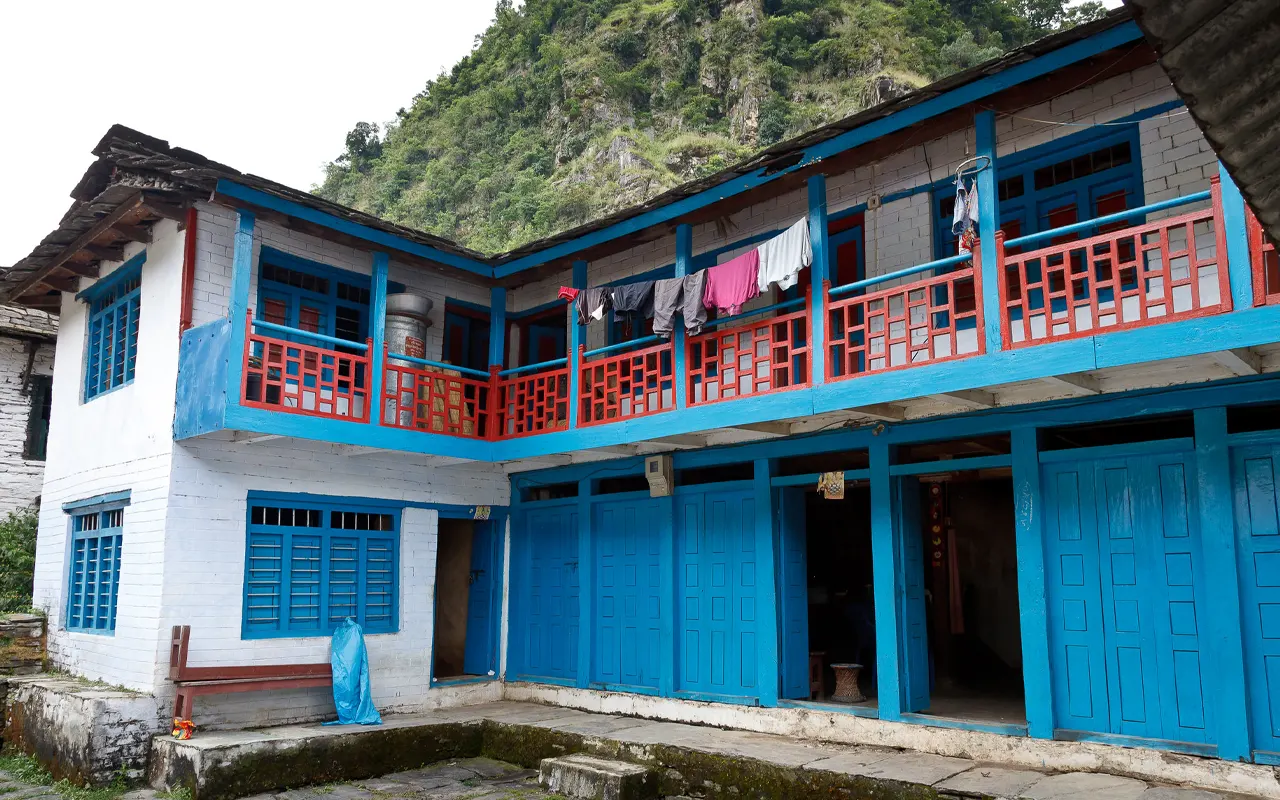
A Nepal tea house trek is a walk through mountain trails with accommodation in local lodges known as tea houses. These tea houses are basic guesthouses owned by families. They offer the fundamental food, a place to sleep, and an opportunity to rest in the course of your journey.
Tea houses have simple rooms. You will find two single beds, a pillow, and a blanket. Other trekkers usually share bathrooms with other trekkers. There are those with western style toilets and others might be in a simpler form depending on the place.
Trekkers have a normal dining place where they sit down, share meals and keep warm. Meals are fresh and comprise local and simple international meals.
Trekking in tea houses is not at all like camping treks. A camping trek requires tents and cooking gear and a full-support crew. A tea house trek means that all is already provided on the way so you can pack lighter.
This form of trekking can be used by first time trekkers, individuals, couples, and even small groups. It provides comfort, safety, and a chance to meet other travelers during the journey.
Why Choose a Tea House Trek in Nepal?
The reasons why tea house trekking is a wonderful option, particularly to beginners, are numerous.
First, you do not have to carry bulky camping equipment. With food and shelter on the trail, you can keep your bag pack light and easy to carry.
Second, it is less expensive than most other forms of trekking. You can arrange your trip according to your budget, and there are opportunities both to low-cost and comfortable travelling.
Third, you have an opportunity to learn the local culture up-close. You will get to know the local families, have some traditional food, and get to know more about everyday life in the mountain villages.
Another important reason is safety. The most common tea house trekking trails are well recognized and frequented by the trekkers. This eases navigation and minimizes chances of losing the way.
Lastly, tea house treks are adaptable. You will be able to vary the speed of your walks, have days of rest, or alter your plan. This makes the trip not so stressful and more enjoyable.
Best Nepal Tea House Trek Routes for Beginners
There are numerous trekking paths in Nepal but there are those that are more beginner friendly. These are more accessible and less demanding in terms of trekking skills and are well-equipped.
Popular Beginner Friendly Routes
This journey typically lasts between 7 and 12 days. It provides a combination of villages, forest trails and mountain views. The road is in good condition and tea houses are readily accessible. It is a fine option to beginners who would prefer a full trekking experience.
This path is near Kathmandu, and hence traveling is easy. The trek is shorter and less crowded compared to other regions. It is an excellent choice in case you desire a relaxing trip to see beautiful landscapes.
This is one of the easiest treks in Nepal. It is ideal as it takes less time by beginners. The view of the sunrise on Poon hill is the main attraction. The path is in good condition and can be undertaken by most levels of fitness.
- Everest Base Camp Trek (beginners with good fitness)
This trek is more challenging compared to others on this list. But with good fitness and proper preparation, beginners can accomplish it. The process requires acclimatization, about 12-14 days to complete.
All these paths provide unique experience, though they are all based on the tea house trekking system.
Nepal Tea House Trek Price in 2026.
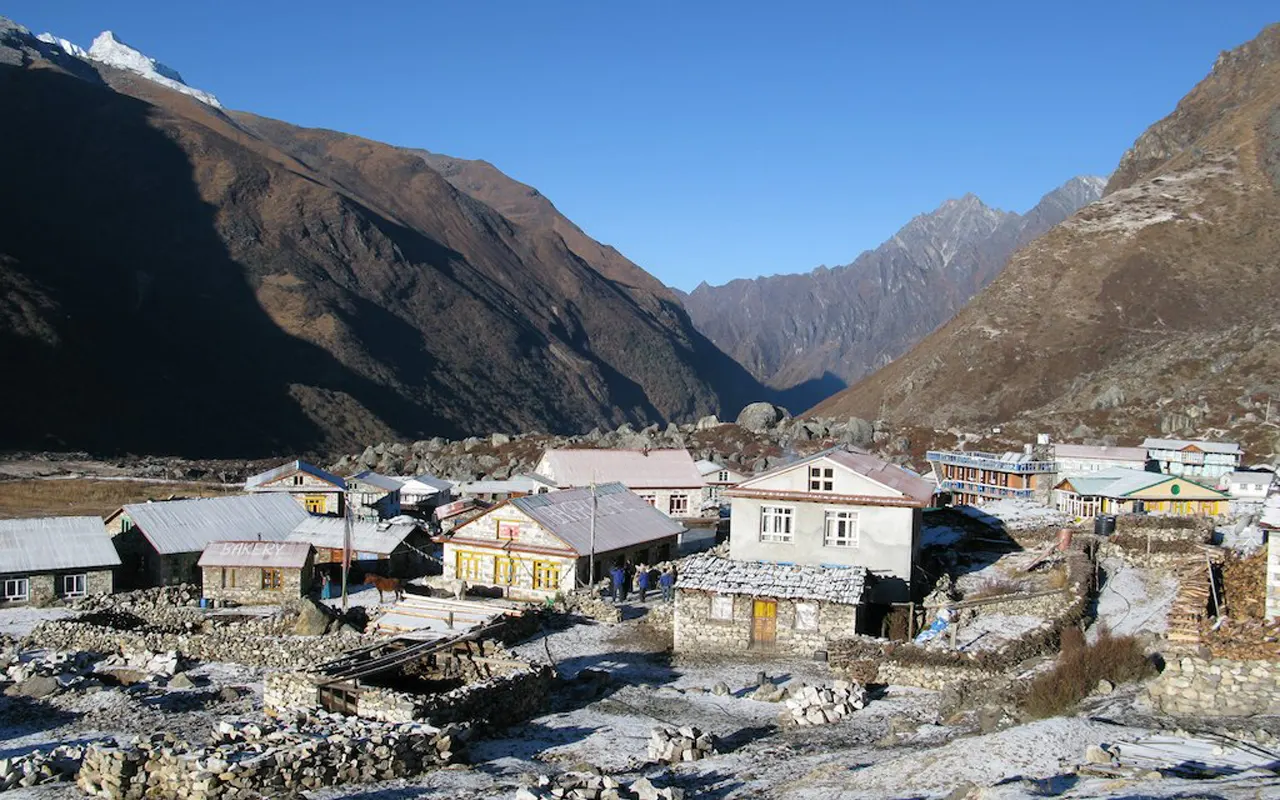
A tea house trek in Nepal will cost you depending on how you will be traveling. The average cost would be about 25-50 USD per day of a budget trekker. When you want more comfort, it might be more expensive.
Cost Breakdown
- Accommodation
Basic tea house rooms are affordable. There can be a tendency of getting higher prices at higher altitudes.
- Food and Drinks
Food is plain yet nutrishing. Remote areas have higher prices since they are carried by animals or porters.
- Permits
Depending on the area you want to visit you have to pay trekking permits.
- Guide and Porter (Optional)
It is a little more expensive to employ a guide or porter, however, this may make your trip easier and safer.
Tips to Save Money
- Travel in small group and share expenses.
- Select the local dishes such as Dal Bhat that are satisfying and economical.
- Take a reusable water bottle rather than purchasing bottled water.
- Don’t spend money on unnecessary activities such as frequent charging or WiFi connections.
Budgeting will also make your trek enjoyable without having to worry.
Permits Required for Nepal Tea House Trek
The permits of Nepal tea house trek are based on the location of the trekking. Trekking permits to conservation areas or national parks are generally required by trekkers in most popular trekking regions like Annapurna, Langtang, and Everest. There are also routes that are subject to TIMS card as per the Nepal Tourism Board regulations.
As an example, to do trekking in the Everest region, one usually needs the Sagarmatha National Park Entry Permit and the Khumbu Pasang Lhamu Rural Municipality Permit. The Annapurna Conservation Area Permit is required in the Annapurna region.
In case you intend to visit restricted zones, then you need a special trekking permit. These permits can be obtained at the Department of Immigration and normally you have to travel with a licensed guide and in some cases in a group.
Depending on the area, permits can be organized either via trekking agencies or at the official offices in Kathmandu and Pokhara. The rules of trekking and the prerequisites of the permits can vary with time, so before your trek, it is always better to check the most recent official data.
Best Time for Nepal Tea House Trek
It is quite crucial to pick the appropriate time of the year to have a comfortable trekking experience.
Between March and May, spring is an excellent trekking season. The climate is pleasant, and the hills are covered with flowers. It is not hot, making it easier to walk.
Autumn, which is between September to November, is the best season. It is always sunny and the mountain scenery is generally at its best. Trails may also get crowded during this time which is the most popular.
The winter is less noisy and there are fewer trekkers. But it is quite cold, particularly in high places. Certain tea houses can be also closed.
The monsoon season is associated with rain and wet tracks. It is not as popular with beginners, but it is still possible to visit some regions.
What to Expect in Tea Houses
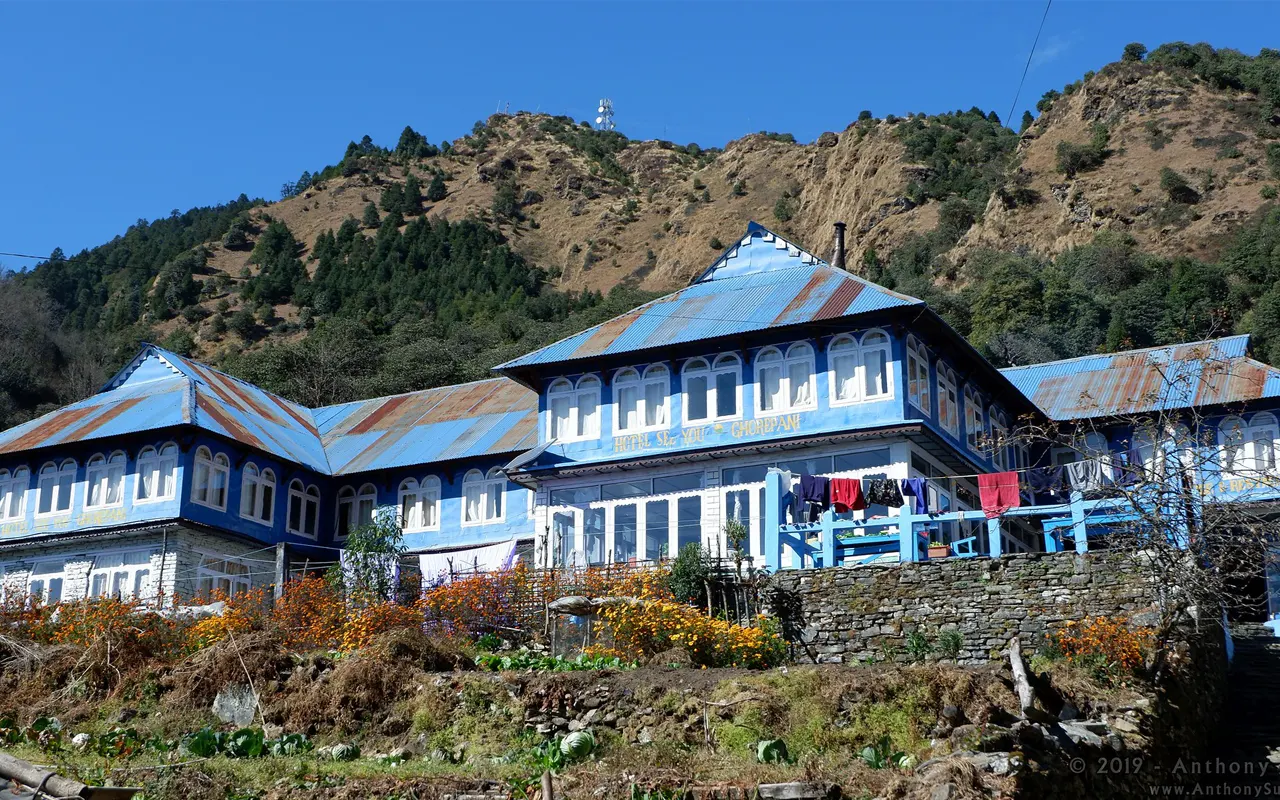
The daily accommodation on a Nepal tea house trek will be in small local lodges. These tea houses are basic yet comfortable to trekkers.
The rooms are generally simple and have two single beds. A mattress, pillow, and blanket will be provided to you. A sleeping bag is also a good idea in higher places to provide additional warmth. Nights are cold and most rooms lack heating.
Bathrooms are mainly shared. In lower areas, you may find attached bathrooms, but as you go higher, facilities become more basic. There are locations that have western toilets, and some may have squat style toilets.
One of the most significant aspects of the tea house experience is food. You will get a wide variety of foodstuff like Dal Bhat, noodles and rice, soup, pancakes, eggs and tea. Dal Bhat is most popular as it is filling and is normally offered free refills in most locations.
Trekking areas have a common dining area where the trekkers sit together. It is also here that you could heat yourself beside a stove at night. It turns out to be a social place in which people exchange stories and experiences.
Most tea houses have the option to charge your phone and use WiFi, although at an extra cost. The more uphill the more costly it is. Having a power bank as an emergency is preferable.
Packing List for Beginners
Carrying the correct things can make your journey a lot easier. It is important to pack light but also carry all necessary essentials.
- Clothing
You are supposed to adhere to a layer system. This includes having various layers you can put on or take off depending on the weather.
Bring along t-shirts, a warm-up jacket and a down jacket in the cold. A waterproof jacket will also be necessary in case of a rain. Thermal clothing to wear at night and comfortable trekking pants are also handy.
- Trekking Gear
Trekking boots are extremely essential. Ensure that they are in use and comfortable before you go on a trek. Do not bring brand new boots. Make sure your trekking boots are already used and comfortable.
A backpack will be required also. When you get a porter, you can carry a day bag that is small and leave the main luggage with the porter. Sleeping bag is also advisable particularly in treks at higher altitudes.
- Essentials
Bring a reusable water bottle, sunglasses, sunscreen and a hat. A power bank is beneficial to charge devices. Energy bars or dry fruits are also handy when one has to walk long distances.
- What Not to Pack
Keep the amount of clothes or other things to a minimum. Your trek will be more cumbersome with heavy luggage. You do not have to wear expensive clothes or additional footwear.
A light bag will also allow you to walk freely and have a more pleasant experience during your journey.
Fitness and Preparation Tips
Fitness is a concern amongst many beginners prior to trekking in Nepal. The best part is that, you do not have to be an athlete, but a little fitness is essential.
You should be able to walk for 5 to 7 hours a day at a steady pace. The paths will consist of uphill and downhill, and thus your body must be ready to move regularly.
You can prepare with a basic training program. Begin with daily walks at least 30 to 60 minutes. low and slow, a little uphill walking (where you can). Your stamina can also be enhanced by cardio exercises such as jogging, cycling or swimming.
It is also important to prepare mentally. Trekking is more than just about physical prowess. There are long days or even tiring days when climbing to higher altitude is involved. Remaining patient and positive will enable you to make it.
Resting, having a proper meal, and walking at your own pace are important to a successful walk.
Altitude Sickness and Safety Tips
One of primary issues when trekking in Nepal is altitude sickness. It happens when your body does not adjust properly to higher altitudes.
The typical symptoms are headache, dizziness, nausea, and insomnia. These are signs that cannot be overlooked.
The most appropriate prevention of altitude sickness is the slow pace and letting yourself adapt. This is referred to as acclimatization. Numerous trekking paths have rest days to aid in this process.
The risk can also be prevented by drinking plenty of water, eating healthy, and avoiding alcohol. If symptoms become serious, it is important to go down to a lower altitude immediately.
Travel insurance is very important for trekking. It must include high altitude trekking and emergency evacuation. This will provide you with security and tranquility on the trip.
By listening to your body and observing simple safety precautions, you will have a safe trekking experience.
Do You Need a Guide or Porter?
The biggest question that many trekkers pose is whether to go alone or to employ a guide. Both options are possible, but each has its own benefits.
Autonomous hiking provides increased freedom. You are free to walk as slow as you want and to make your own decisions. Nevertheless, it takes proper planning and trust.
You can hire a guide to make your trek easier and safer. Guide assists in navigation, elaborates on local culture and assists you in case of difficulties. This can be particularly useful to beginners.
Your heavy bag is carried by a porter and you are able to walk with a light backpack. This is able to alleviate tiredness and make the walk more pleasant.
Prices of a guide or a porter vary depending on the location and time of trek. It is also important to check the latest trekking rules before your trip, because a licensed guide may be required on many trekking routes in Nepal under current regulations. Before you go, it is a good idea to review the most recent updates.
Hiring a guide is usually a good choice among the beginners.
Sample Beginner Itinerary
Here is a simple example of a short and beginner friendly trek.
Example: 7 Day Poon Hill Trek
Day 1: Kathmandu-Pokhara and rest.
Day 2: Drive to the starting point and start trek to Ulleri.
Day 3: Hike to Ghorepani by forest path.
Day 4: Poon hill in the morning and proceed towards Tadapani.
Day 5: Hike to Ghandruk village.
Day 6: Trek down and drive back to Pokhara
Day 7: Back to Kathmandu.
This is simply an illustration. The itinerary can be modified according to your time and comfort.
First Time Trekker tips
Your first trek can be both exciting and somewhat challenging. The following are some simple tips that will enable you to have a smooth experience.
Get up early in the morning and stroll slowly. Do not rush, as slow and steady walking is better for your body.
Take sufficient water during the day. It is good to keep your body hydrated as it will make your body adapt to the altitude and decrease the fatigue.
Observing the current culture and traditions. Visiting villages and monasteries, dress modestly and be polite.
Bring sufficient cash since most of the trekking places do not have ATMs. It is better to plan your expenses in advance.
Be able to listen to your body and rest when necessary. Enjoy the journey instead of focusing only on the destination.
Conclusion
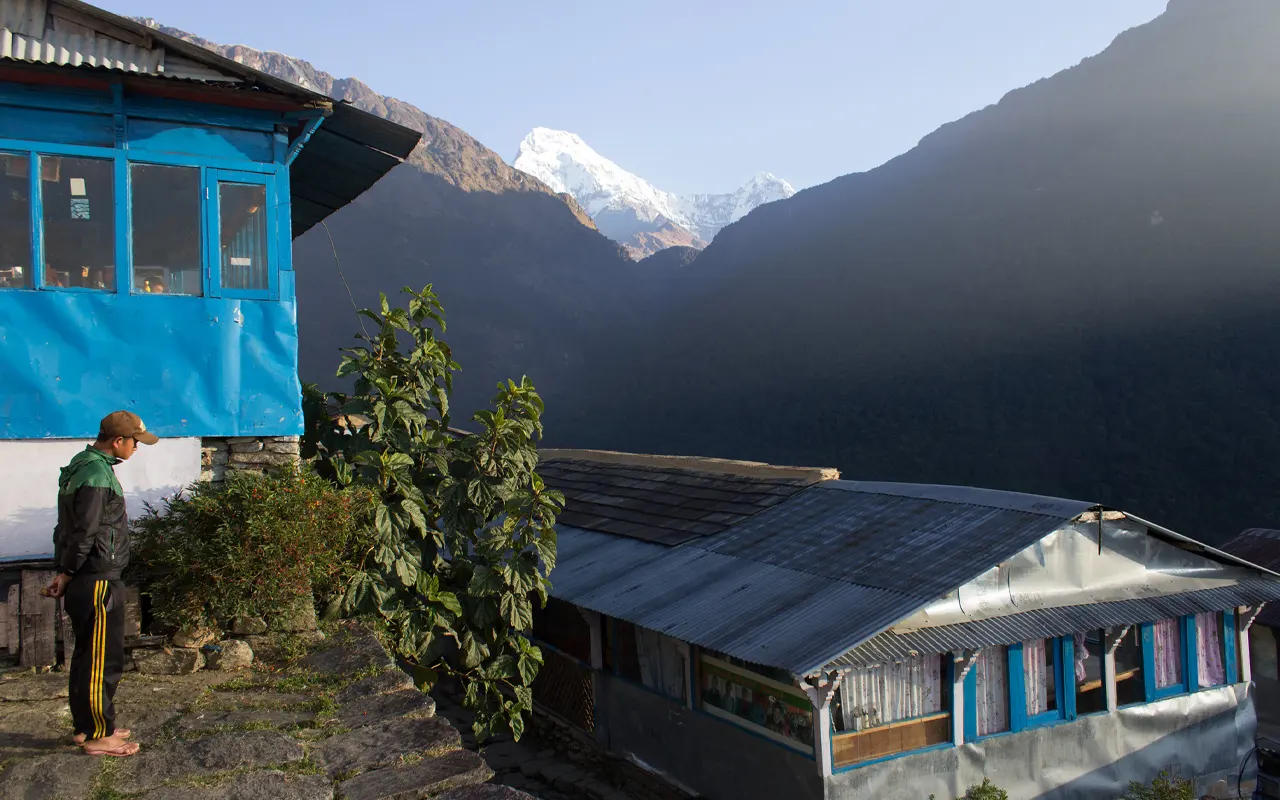
Nepal tea house trek is among the most ideal places to begin your trekking venture. It is a very comfortable, adventurous and cultural blend.
Even the beginners can manage to complete a tea house trek without any problems with proper planning. The trails are well established, and support is available along the way.
Nepal is a secure and friendly destination of trekkers. You will live in the mountain, get to know local people, and have quiet walking days.
This is a perfect place to start in case you are planning to trek the Himalayas. Take your time to prepare, choose the right route, and start your journey with confidence.

