
 Talk to Mr. Saroj
 Plan Your Trip
How to Reach Lukla from Kathmandu: A Complete Guide
When planning the Everest region adventure, there is always a question: how to reach Lukla from Kathmandu? The small town of mountain Lukla is the major gateway location to the trek to Everest Base Camp, and is also an adventure to reach the top of the mountain itself.
The fact that there are no direct roads between Kathmandu and Lukla means that travellers will have the option of an aeroplane, a helicopter ride, or a mix of a long drive and trekking. Both have varying experiences in terms of cost, travelling time, comfort and scenery.
This Lukla Kathmandu guide has been prepared mainly to help the first-time trekker find clear and easy information on how to reach Lukla. Be it Kathmandu to Lukla flight, a helicopter transfer or even an overland journey in Salleri or Phaplu, it will be prudent to know your options so that you can plan better.
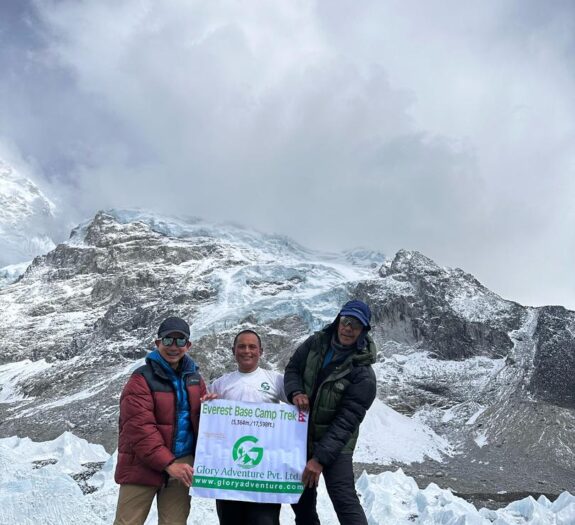

Lukla is at an elevation of 2,860 m (9,383 ft) and is the location of Tenzing-Hillary Airport, which is among the most exciting mountain airstrips in the world. Getting to this far-flung Himalayan town is not only a means of transportation, but it is also a thrilling part of your Everest adventure. You will know how to travel from Kathmandu to Lukla in the most appropriate way, and with some tips, you can begin your trek with a sense of confidence.
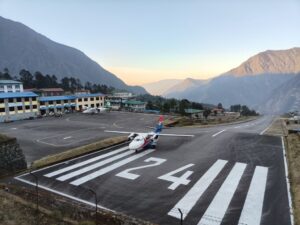
Flying from Kathmandu to Lukla (Direct Flight)
The most common and quickest form of initiating the journey to the Everest Base Camp is to take a Kathmandu to Lukla flight. To the majority of trekkers, it is not just a means of transportation but an exciting experience of the adventure. The duration of the flight is approximately 25-30 minutes by a small twin-engine propeller aircraft, which typically has 15-19 passengers. You will travel across the green hills, deep valleys and snow-covered Himalayan valleys as the plane takes off from Kathmandu. The sceneries are spectacular and memorable on bright mornings.
Lukla Airport, also known as Tenzing-Hillary Airport, is known to be dramatic. The runway has a length of just 527 m (1,729 ft) and is located on a mountain slope whose end is very steep. Due to this, the landing is exciting, particularly for those who are flying in the Himalayas for the first time.
Flights are, however, run by highly qualified pilots who are specifically trained in short landing and take-off situations. Planes never take off unless the weather and visibility are considered to follow the strict safety guidelines, and thousands of trekkers pass this route annually.
There are a few domestic airlines like Tara Air, Summit Air and Sita Air that fly to Lukla airport. Foreigner tickets are typically averaged between USD 180 and 220 one-way, seasonally. Flights are usually taken early in the morning, from 6 to 9 AM, when the weather is most stable.
High seasonal trekking (spring and autumn) sees numerous flights using the Manthali Airport in Ramechhap rather than Kathmandu, and in the low season, flights tend to use Kathmandu as a departure.
Due to the size of these aircraft, baggage restrictions are very rigid. The average weight of hand-carry and checked luggage is 5 and 10 kg, respectively. It is advisable to pack lightly, and the most needed things, such as documents, medicines, and warm clothes, should remain in the carry-on bag.
The major difficulty of flying to Lukla is the weather. Fog, clouds or fierce winds may delay or cancel flights, occasionally as long as a day or longer. Trekkers must never fail to add the extra buffer days to their schedule in order to avoid international connections.
All in all, the flight to Lukla is the most scenic and fastest method of arriving at the destination, but one must be flexible and patient when this memorable experience of the Himalayan flight is concerned.
Peak Season Flight Changes: Kathmandu to Lukla via Ramechhap
If you are planning to trek in the Everest region in peak seasons such as spring (April-May) and autumn (October-November), then your flight to Lukla will not depart from Kathmandu. Rather, most Lukla flights are on Manthali Airport in Ramechhap. This system is used to decrease the number of people at Kathmandu airport, as well as cut down the long delays on flights. This change is a surprise to many trekkers, and therefore, one has to plan.
Ramechhap (Manthali) lies some 132km east of Kathmandu. The drive to the road can take about 4-5 hours, depending on the conditions of the road. The flight to Lukla is also shorter than the drive between Manthali and Kathmandu, as it takes 15-20 minutes. The planes and the airlines do not change; just the departure airport changes.
There are two possible ways that trekkers can manage this journey. The former alternative is travelling to Kathmandu at a very early hour of the day. That is why many people drive by car or van and leave between 1:00 and 2:00 AM so that they can reach Manthali early in the morning. The flights to Lukla are normally made between 6:00 and 9:00 AM, when the weather is good. This alternative will save the price of an extra night at the hotel; however, the nighttime drive may be exhausting and uncomfortable.
The second alternative is to drive to Ramechhap the night before and stay overnight at a location close to the airport. Manthali accommodations are extremely basic, and there are only simple guesthouses, which provide a bed and basic food. Nonetheless, this choice gives a chance to spend a less stressful morning and diminish the stress of travelling.
Manthali Airport has a few facilities. There is a simple terminal, toilets and a simple tea shop. There is very limited Wi-Fi, electricity, and comfort services. Nevertheless, the location with the hills around and the calm environment is a scenic waiting area.
Ramechhap flights tend to be punctual since there is less air traffic in the airport compared to Kathmandu. Nonetheless, the weather in Lukla may lead to delays or cancellations. Prices are comparable to Kathmandu flights, and road transport can increase the cost.
Concisely, when you plan to trek during the high season, consider the Ramechhap trail. After proper planning and time taking, this add-on is yet another Himalayan adventure.
Taking a Helicopter from Kathmandu to Lukla
A helicopter flight between Kathmandu and Lukla is the most convenient and scenic route for trekkers who have restricted time or can choose to spend any amount depending on their financial ability.
Helicopters also provide a direct route without requiring the follow-up of the fixed schedule of the airlines, and more frequently as an alternative in case the regular Lukla flights are delayed or cancelled because of weather. The trip itself is a type of mountain tour, which makes transportation an experience that could not be forgotten.
Lukla and Kathmandu can be connected in a helicopter ride of about 45-60 minutes. The domestic airport area operates with departures, and the helicopters that are regularly used are such models as the AS350 B3, which can have up to five passengers and the pilot. Due to this limited capacity, the flight is intimate and not congested.
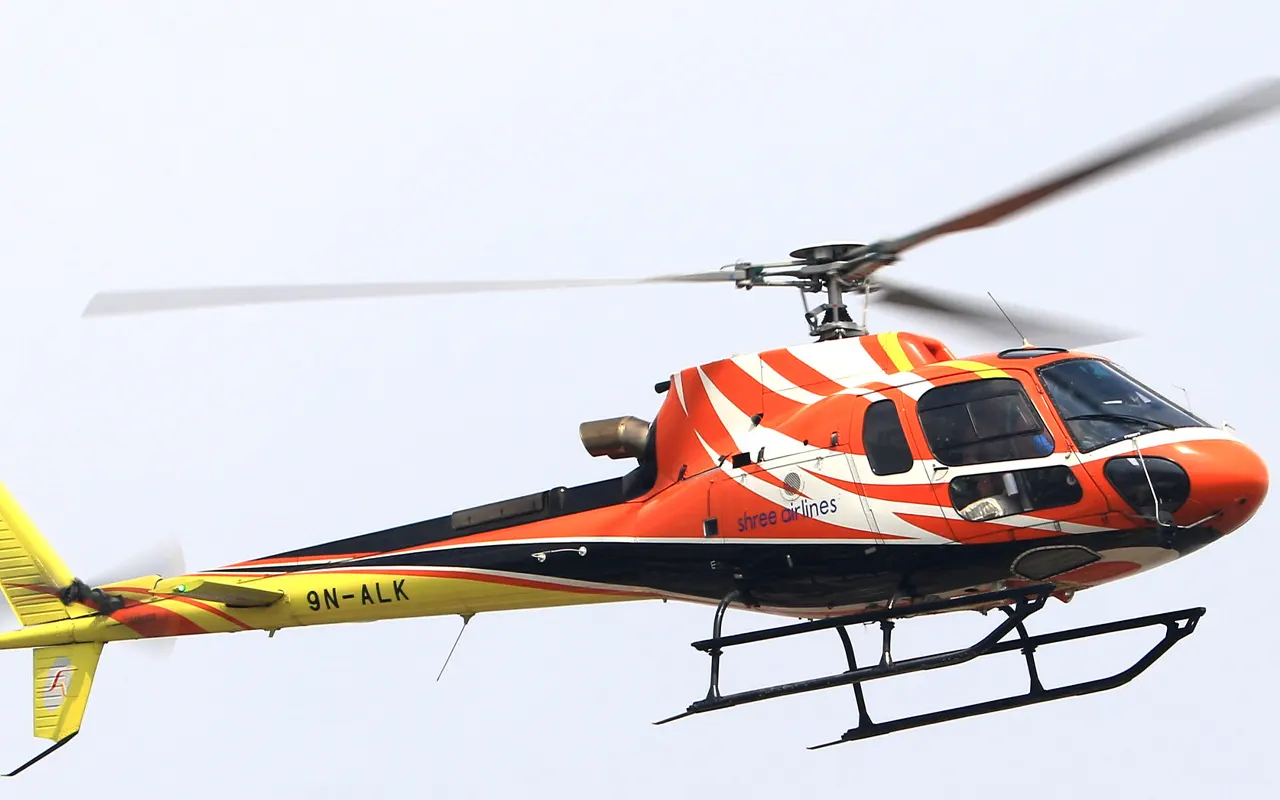
The helicopter flies lower than the aeroplanes, and there is expansive panoramic scenery of hills, rivers and snow-capped Himalayan mountains. The cabin is a little noisy, and headsets are given to make the ride exciting due to the close-up scenery. The helicopters land at the helipad of Lukla close to the main runway.
The main drawback is cost. The cost of a private charter averages USD 2,500-3,000 one way in a whole helicopter. Dividing it among five passengers, the cost will amount to USD 500-600 per head. The rates may go up in unfavourable weather when the number of stranded trekkers who are seeking seats in the helicopters is high.
Trekking agencies, helicopter companies, or Kathmandu travel agencies can be used to make the booking. Shared flights are common in high season. One should be sure that it is either the price per person in a shared flight or the price of the entire helicopter flight.
Helicopters are more flexible than planes. They are able to fly under conditions impossible for aeroplanes. They are, however, weather-dependent and will not fly under unsafe conditions. There are also weight restrictions and restriction of baggage.
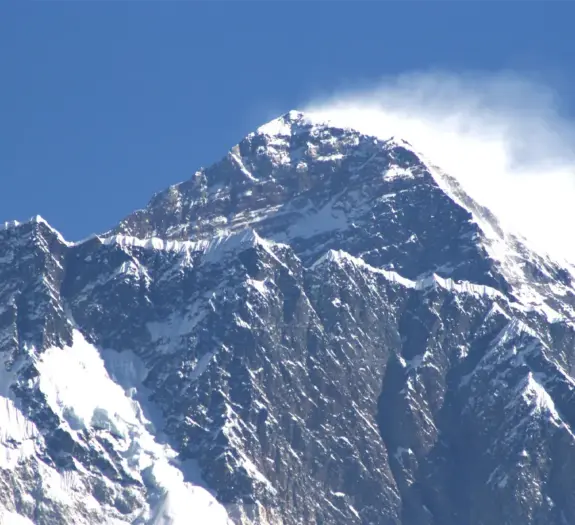
It is the best choice that would cater to passengers with a short time, comfort seekers or trekkers requiring a quick fix following flight cancellations. Although costly, it provides the speed, flexibility, and scenic views of the Himalayas and makes it an unforgettable beginning of the Everest journey.
Overland Journey: Drive and Trek to Lukla (Road Routes)
It is totally possible to get to Lukla without flying, but you will lose speed in favour of time, labor and more of a cultural experience. Before the Lukla Airport, all the Everest expeditions used to approach on foot in the lower hills. The old access routes are alive, and with new country roads going to some distance, a combination of a jeep adventure with a walking adventure has been an option for adventurous tourists.
Drive to Salleri/Phaplu, Then Trek to Lukla
This is the most viable and the most widespread alternative to air travel by land. Salleri and other adjacent Phaplu are located in the lower Solu area at 2,400 m (7,874 ft). They are linked to Kathmandu through road, 270 km and the ride will take 8-10 hours. The initial stretch of the road is tarmac, but the last mountainous areas are rugged, dusty, and winding. The private jeep is comfortable, compared with the bus, but in all events, it is a long and bumpy journey over the beautiful country of rivers, terraced farms and hillside villages.
The trekking path of Salleri or Phaplu is 3-4 days long to Lukla at 2,860 m (9,383 ft). This path goes through villages like Ringmo, Kharikhola, Paiya and Surke. You walk 5-7 hours of hours per day and live in plain teahouses. The path is full of ascents and descents, up to 1,500 m (4,921 ft) and later on again, which is physically exhausting but is good as a slow means of acclimatisation.
This path has less busy trails, the village life is more realistic, and there is less possibility of early altitude sickness. The costs are additional, increased manual labour, and possible road closures caused by landslides or unfavourable conditions.
The Classic Jiri to Lukla Trek
This is the classic Everest route that was taken by early expeditions such as that of Sir Edmund Hillary. Jiri is also connected with Kathmandu by an 8–9-hour drive. This is where one takes 6-7 days to trek to Lukla.
The path is constantly up and down between 1,500 m (4,921 ft) and 3,500 m (11,483 ft), across several ridges, rivers, and forested hills. It is more demanding than the Salleri and yet very picturesque with rhododendron trees, farmlands and small villages that are often visited.
Acclimatisation is good, since you follow a gradual rise. This is a very rich, culturally diverse route, and it runs through different ethnic groups before reaching the Sherpa region. Nevertheless, it introduces almost a week of walking before you can even get to Lukla, and thus it can only be recommended to time-consuming and well-fitted trekkers.
Combination Route (Drive + Fly or Trek Out)
Others strike a balance between trekking and air transport. One of the common strategies is to go to Salleri by jeep, trek 3-4 days to Lukla, and proceed to Everest Base Camp. The trek ends by flying back to Kathmandu from Lukla. This makes flights reduce the dependence on a single direction and yet enjoy the cultural and acclimatisation advantages of walking in.
This option occurs when the flights are cancelled over 2-3 days, trekkers trek down from Lukla to Salleri, and then drive back to Kathmandu. This can be used as an efficient standby if planes are grounded for days due to adverse weather conditions.
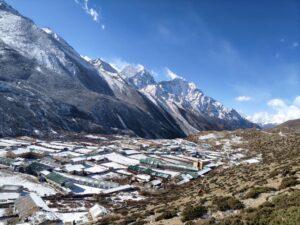
These combination packages are more flexible and less risky, and still provide a more overland experience.
The overland routes imply the absence of any flight anxieties and the enhanced acclimatisation, yet 3-7 additional days, powerful legs, and the ability to withstand bad roads will be required. To the trekkers who prefer to immerse themselves in the local culture, enjoy quieter trails and a slower approach to the mountain, these paths may be much more rewarding than just flying into Lukla.
Pros and Cons of Each Route (Quick Comparison)
One can get to Lukla from Kathmandu in several ways, and each mode will best fit the travelling styles, budgets, and time.
Flight from Kathmandu (Off-Peak Season)
This is the most convenient and quickest way. The flight lasts approximately 30 minutes, and it has unbelievable mountain and mountain views. It conserves power and time so that the trekkers can concentrate on the main trail of Everest.
But flights are so weather-sensitive, and it is normal to have delays. There are strict limits on the amount of baggage which can be carried, flights only leave in the early morning, and this service is typically not available in the main trekking seasons as flights divert to Ramechhap.
Flight via Ramechhap (Peak Season)
Most of the Lukla flights are done in Manthali Airport in Ramechhap in the spring and autumn. The benefit is that there are no delays in the air traffic as compared to Kathmandu, and the flight is shorter.
The disadvantage is the additional 4-5 hours-long road trip between Kathmandu, usually in the middle of the night. Ramechhap facilities are primitive, and flights are weather-dependent. They are priced like Kathmandu departures, and hence the inconvenience is not accompanied by significant savings.
Helicopter Charter
The most flexible are helicopters. They are sometimes able to work in such weather conditions that aeroplanes cannot, and they do not need the Ramechhap transfer. The sceneries are gorgeous, and baggage allowance is typically improved. This one should be chosen in the case of tight schedules or in case of an emergency backup.
The big disadvantage is in price. It is much more costly than fixed-wing flights, particularly on private flights. The number of seats is restricted, and helicopters are not exempted of weather safety restrictions.
Drive + Trek (Phaplu/Salleri Route)
This is an overland choice that does not involve flying. It takes about 8-10 hours of driving to Kathmandu and 3-4 days of trekking to Lukla. The step-by-step increase in altitude also facilitates acclimatisation and prevents early cases of altitude sickness. You also get less busy trails and pure country culture.
But this path entails a few days of strolling before the great journey is even started. It is a bumpy road, trekking is physically exhausting, and landslides may unpleasantly affect the process of travel during monsoons.
Classic Jiri to Lukla Trek
This historic path will provide the greatest cultural saturation and perfect acclimatisation. You walk 6-7 days through Jiri, passing a variety of hills and valleys. It is attractive yet extremely demanding and time consuming and thus only fits trekkers who have a long schedule and are quite fit.
There exists no best route; the correct choice is made by taking into consideration time, comfort, cost and adventure.
Best Time of Year to Travel from Kathmandu to Lukla
The selection of the appropriate season is a big difference in your Lukla adventure. The weather has a direct influence on the dependability of the flights, views of the mountain, and comfort during trekking. Generally, spring (March-May) and autumn (late September-November) are the months that are recommended to visit.
One of the most pleasant seasons is spring (March-May). There are no extreme temperatures at Lukla, with days being mild and nights cool, with an average daytime temperature of about 15 °C and an average nighttime temperature of about freezing.
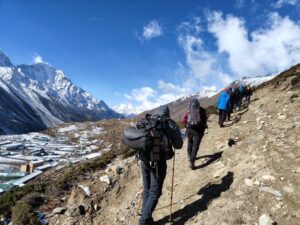
March and April tend to have clear skies, but towards the end of May, there may be increased cloud and pre-monsoon storms. Hillsides are full of colourful rhododendrons, and the walk is therefore very beautiful.
It is also a high trekking season, and hence flights to Lukla are usually taken via Ramechhap as opposed to Kathmandu itself. The most stable weather is in spring.
The least favourable is Summer/Monsoon (June-August). Flights made to Lukla are extremely unpredictable because of heavy rain, heavy clouds and frequent storms. Cancellation and delays may take days.
Trails can be muddy, slippery and covered with leeches; landslides can block roads. Landscapes become green and fertile; however, there is often a low level of visibility. It is the only season that is usually tried by very flexible or experienced trekkers. The advantage is reduced crowds, but disruptions in travelling are frequent.
The most popular season for trekking is the autumn (September-November). Monsoon rains make the air clear, hence the skies are exceptionally crisp, and the views of the mountains in the year are the best. The daytime Lukla temperatures are approximately 15-20 °C, and the nights are cool.
October is the most stable but hectic enough, and hence flights and accommodation have to be booked early. November is still dry but colder, and nights are freezing. Normal flights are also usually made using Ramechhap because of the demand.
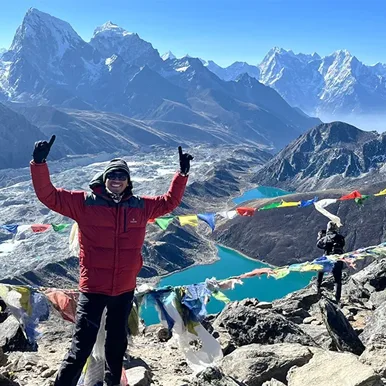
Off-season (December-February) can be rewarding but perhaps not that good. At the beginning of winter, the weather is normally clear, and there are fewer people who visit the treks.
Nevertheless, the temperature becomes much lower, particularly in high altitudes. Lukla is open, though plenty of lodges farther up the trail might not be open. Flights are direct from Kathmandu during this period, though morning fog or occasional snow can be a cause of. Additional warm clothes and a loose schedule are required.
All in all, it is generally known that the best months of a smooth Lukla journey are the months of October and April, with good visibility and stable weather. Early November and late March are also good options that have slightly fewer crowds. Monsoon and winter are more demanding and suitable for accomplished and well-planned travellers.
Final Thoughts
The journey from Kathmandu is in itself an adventure. It may be a small plane into the mountain, it may be a helicopter, maybe days of driving and walking miles of hills, but the trip is usually one of the most memorable parts of the trip. All these choices are unique: one can land on the Lukla notorious runway, another experience is the exchange of stories and local experiences through overland routes, and the final option offers the comfort and aerial scenery in a helicopter.
To a lot of the first-time trekkers, flying is the fastest and easiest option. Nevertheless, it is comforting to know that there is a solution in the event of a weather delay or a shift in schedule. In the Himalayas, it is important that there is flexibility. It can be that flights are changed, roads are rugged, plans revised, but it is these experiences that in most cases become the tales that are discussed over and over again by the traveller.
The primary aim is to arrive at Lukla feeling ready and in a positive mood to make the trek. It is a journey that can be incorporated in the adventure with a lot of planning, having realistic expectations and a little bit of patience.
Whichever way you get there, entering the cool mountain air in Lukla and looking at the path that takes you to Everest is a moment of life to remember. It is then that it all pays off. Travels are safe, and you have fun throughout.

