
 Talk to Mr. Saroj
 English
 Malay
Malay Dutch
Dutch Japanese
 Hindi
Hindi Italian
 Spanish
 French
 German
 Chinese
 Korean
 Arabic
 Hebrew
 Russian
 Portuguese
 Danish
 Czech
Czech Polish
 Swedish
 Plan Your Trip
Ghandruk Village, Nepal – Things to See, Do & Experience
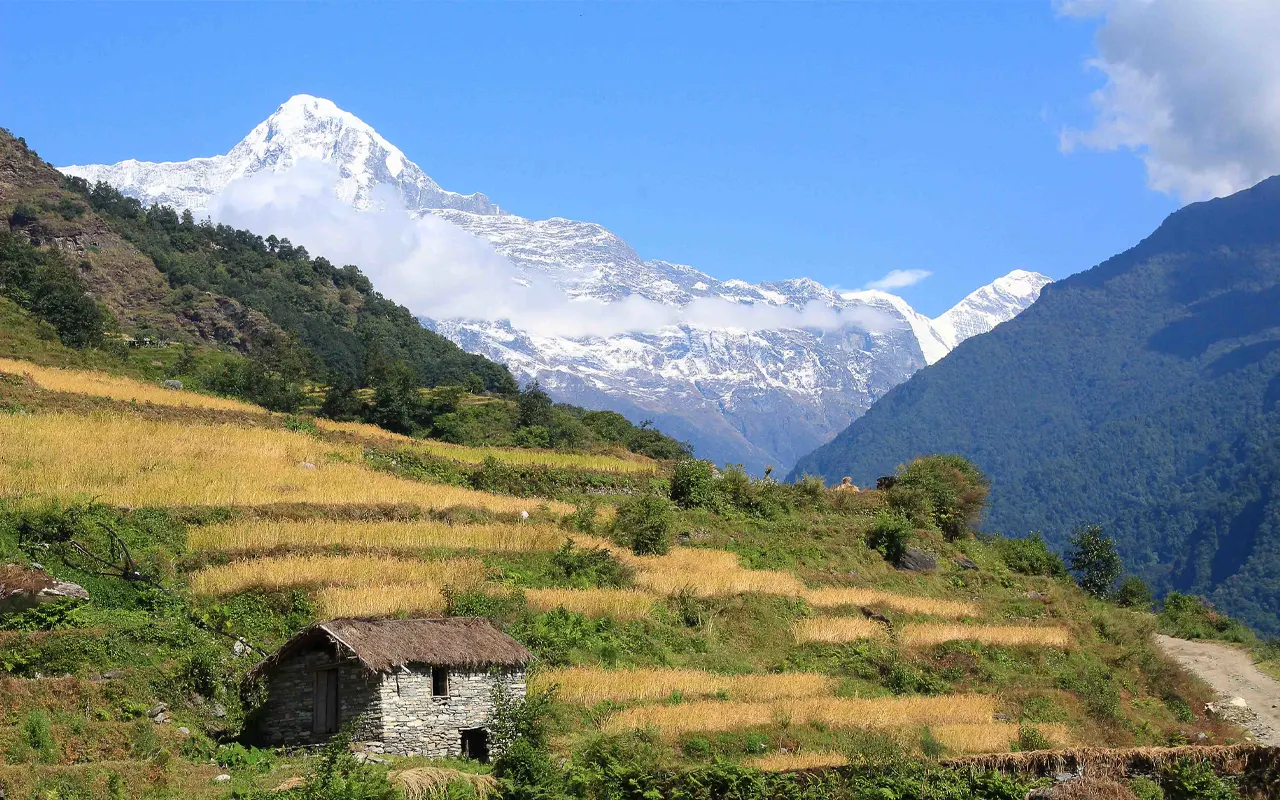
Ghandruk Village, Nepal, is one of the most beautiful mountain villages in the Annapurna region. At approximately 2,000 feet above sea level, this ancient Gurung village displays fantastic scenery of Annapurna South, Machhapuchhre (Fishtail), Hiunchuli, and Gangapurna. Ghandruk Village is an ideal destination because it is surrounded by the green hills and snow-covered peaks that offer the visitor an opportunity to be surrounded by nature, culture, and experience village life.
Ghandruk is characterised by stone houses, narrow lanes, and a hospitable Gurung community. The village offers visitors the experience of the local culture in Nepal. The Old Gurung Museum, the small temples, the terraced farms, and the history of the Gurung community can be seen. Ghandruk Village is visited by many trekkers when undertaking the Annapurna Base Camp trek or the Poon Hill trek.
In addition to trekking, there are a lot of things to enjoy in Ghandruk. Wake up early to see the sunrise on the Himalayas of the Annapurna range, taste Nepali cuisine, such as dal bhat and momos, and spend the night in a homestay. Ghandruk Village, Nepal, is an experience that one will never forget, whether you are an adventure traveler or a cultural explorer.
Location & Getting There
Ghandruk Village is situated in the Kaski District of the Gandaki Province and is located 50-60 km northwest of Pokhara. It is among the most accessible mountain villages in the Annapurna region; hence, it is mainly used in quick tours and trekking arrangements.
The usual route to Ghandruk is by road, via Pokhara. You may use a local jeep, bus, or go without using a vehicle. The overall distance covered on the road is approximately 54-55 km, and the ride takes 3-4 hours, depending on the condition of the road and the season.
The majority of the travelers pass by Nayapul or Kimche. The road between Pokhara and Nayapul is good at an early stage, and then the road takes the path of the valley of Modi Khola and then ascends up through the forest, farms, and small villages up to Ghandruk.
Another option is trekking. During the walks in both the Annapurna base camp trek and the Poon hill trek, many individuals walk to Ghandruk. Trekkers usually take the road transportation from Pokhara to Nayapul (1-1.5 hours) and then walk 1-2 days to the village.
The altitude sickness is not a big issue as Ghandruk is approximately 2,000 meters. Landslides and rain may also cause the road to become rough during the monsoon season (June-August), so schedule some buffer time.
Cultural & Historical Background
Ghandruk is a village in the Annapurna region, which is one of the largest and oldest Gurung villages. Without a doubt, the Gurung people (or as they are also referred to as Tamu) are a native group that is characterized by strong traditions, music, dance, and a proud history.
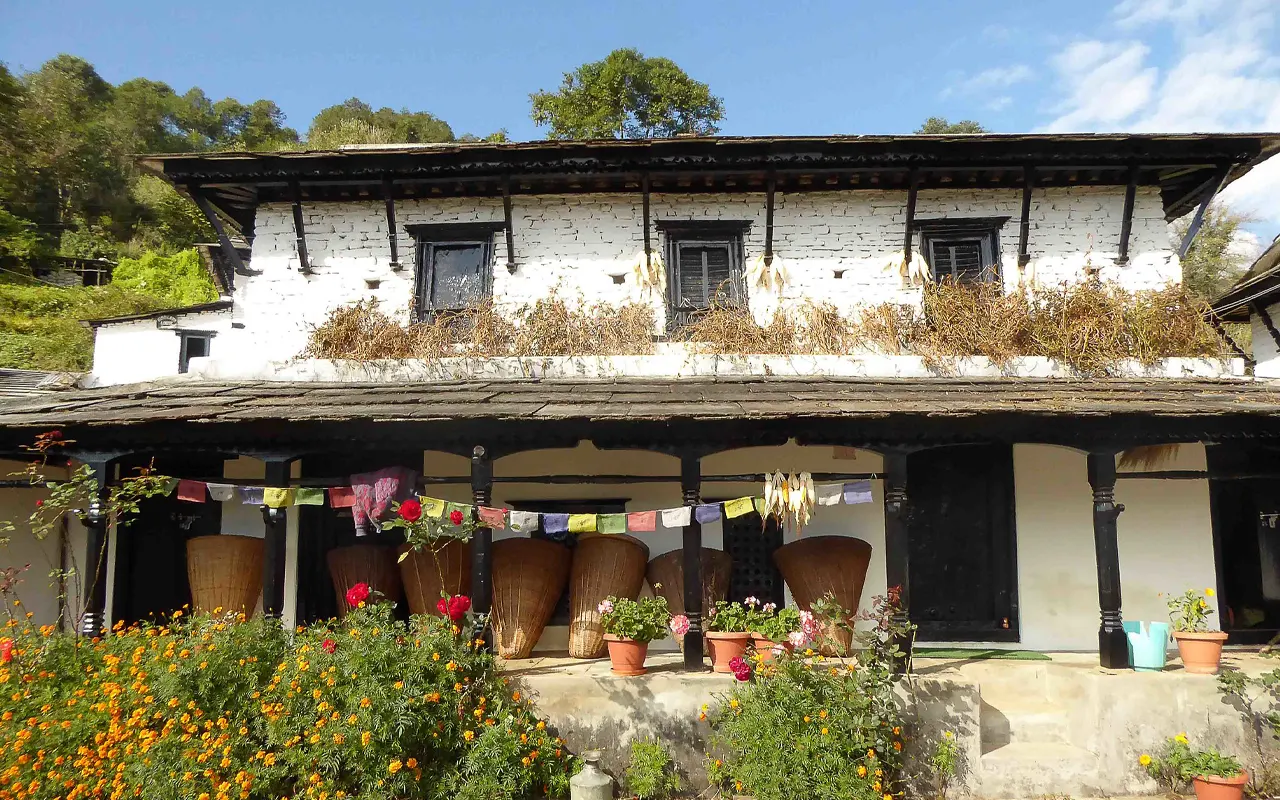
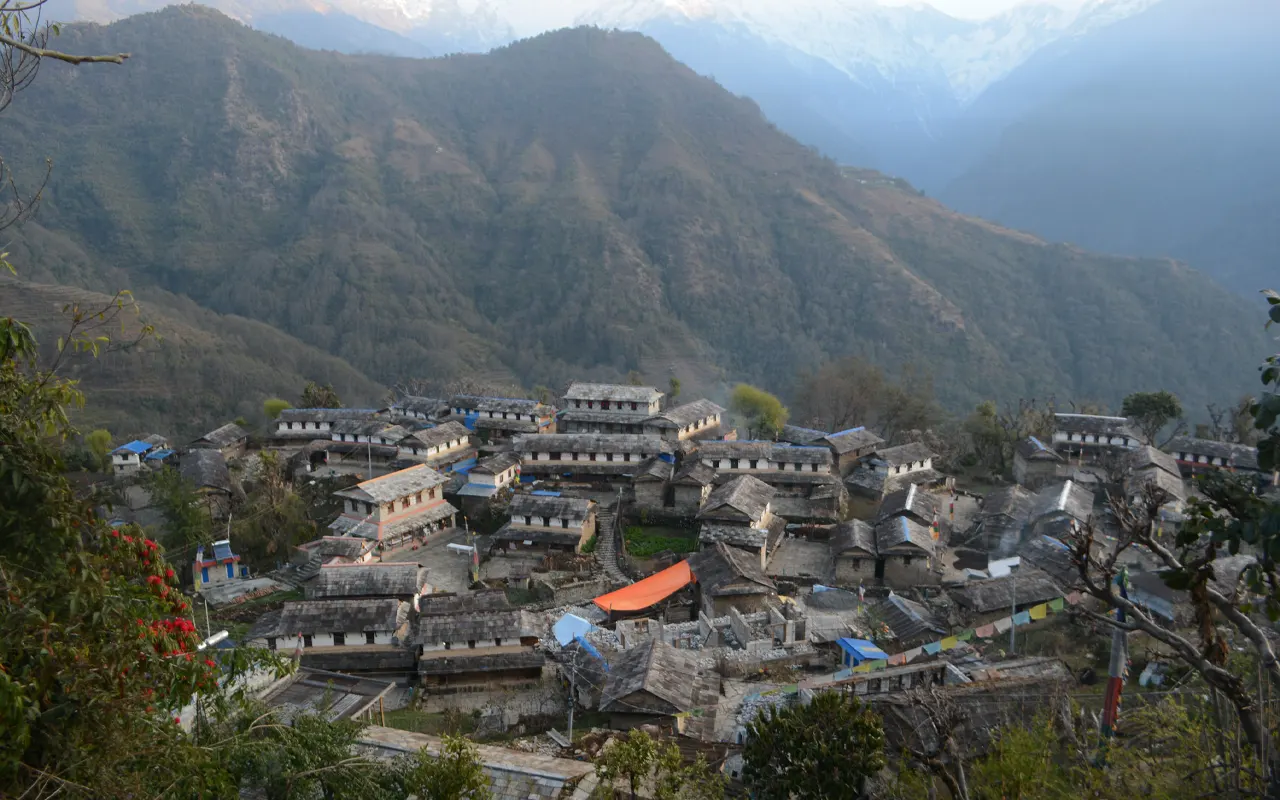
Ghandruk is full of more than 200-year-old houses whose walls are made of stone and windows of wood. You can experience the old-style narrow stone roads, traditional houses, and a relaxing lifestyle in the mountains as you pass by the village.
Most of the families in this area survive on farming. To this day, you can observe terraced rice, millet, buckwheat, potato, and vegetable fields. You can see local women making handicrafts and weaving warm woolen products in handlooms.
Ghandruk also boasts of the Gurkha association. Lots of men in the village fought in Gurkha regiments in other countries, and you can find retired military men giving an eyewitness account in tea shops.
The other significant aspect of the Ghandruk history is conservation. It became a major location in 1986 with the establishment of the Annapurna Conservation Area Project, which preserved nature and local culture. Visitors interested in this section can also visit the Old Gurung Museum, where they can see the traditional tools and other objects of everyday life in the past.
Spectacular Mountain Views
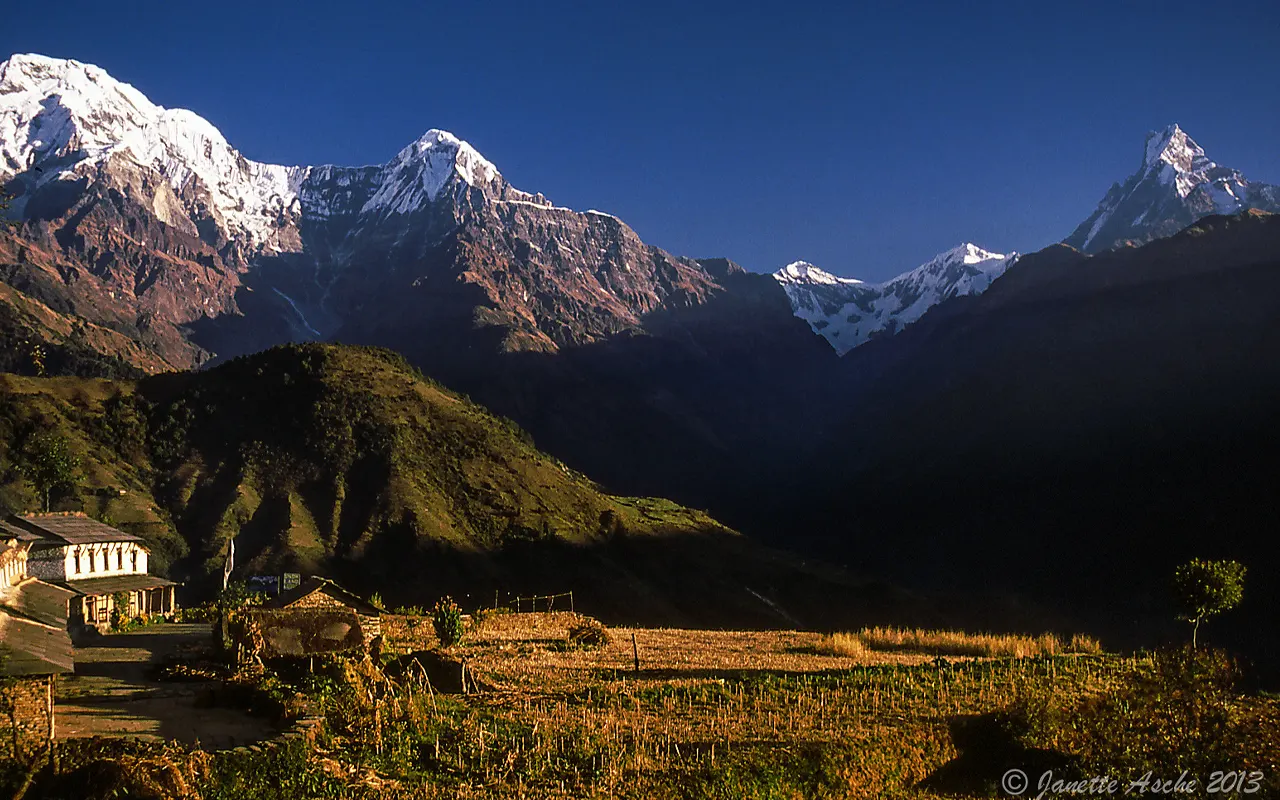
The village of Ghandruk is renowned because of its breathtaking Himalayan views. Some of the most iconic peaks in Nepal can be seen from the village, such as Annapurna South, Machhapuchhre (Fishtail), Hiunchuli, and Gangapurna.
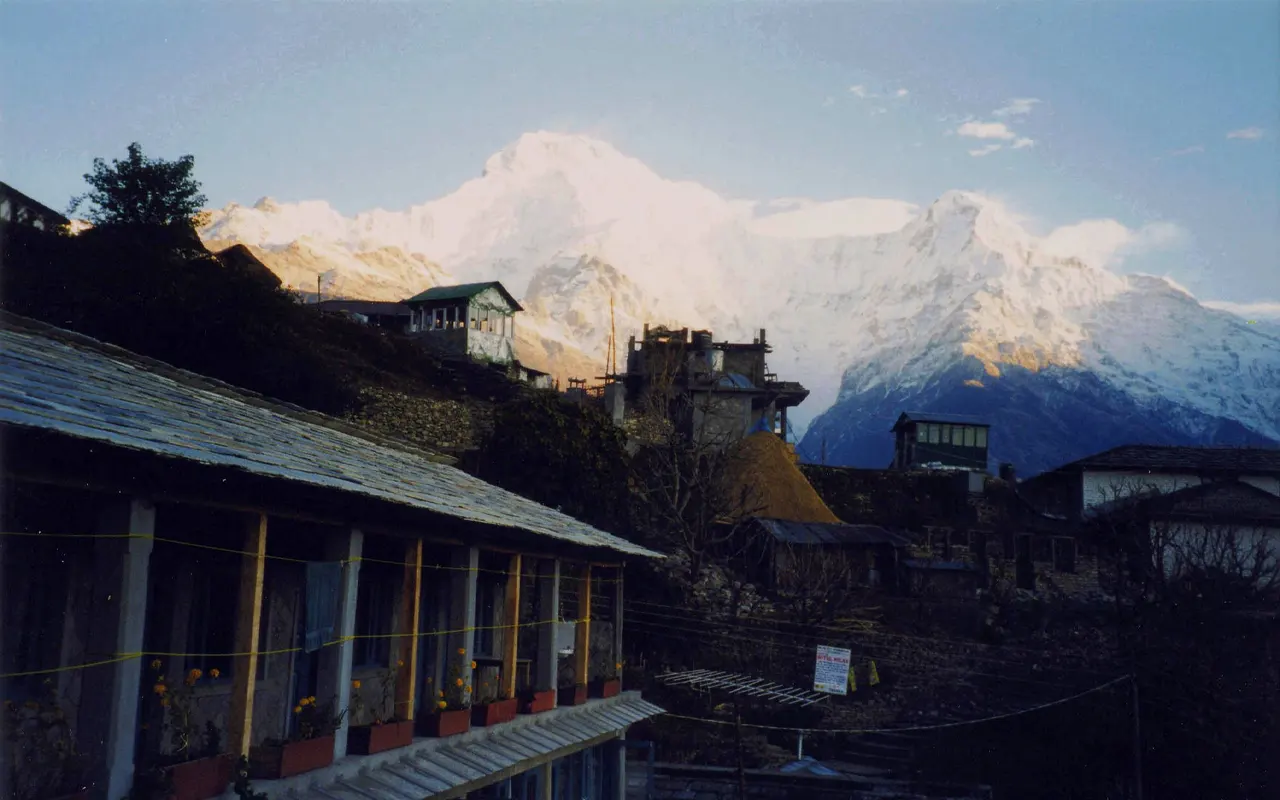
The most appropriate time to be in the mountains is in the early morning and late afternoon. In the morning, the snow peaks are golden and pink, and the picture is really enchanting. During the sunset, the mountains gradually turn to mild colors, and the sky transforms beautifully.
The best thing about Ghandruk is that everyone does not have to walk for hours to view these scenes. There are already numerous homes, lodges, and small trails within the village that face the mountains.
If you wish for a more panoramic view, walk to the upper end of Ghandruk, where the village is at a higher elevation, and the panorama is more evident.
Ghandruk is popular among photographers since the mountains appear to be giant and near yet the village rooftops, forests, and terraced fields are an added beauty to the photographs. Even such simple things as drinking tea on a lodge balcony may be special since the Annapurna range remains right before your eyes.
Gurung Cultural Museums & Temples
Ghandruk is an ideal place to get knowledge of Gurung culture. Museums and temples in the village are small and depict the history, lifestyle, and beliefs of the neighboring people.
The most common is the Old Gurung Museum that is located within a traditional Gurung house. In this museum, there are numerous ancient things that were used in the daily lives of people, including farming implements, bamboo baskets, wooden utensils, brass pots, traditional clothes, jewels, and musical instruments.
The exhibits are not elaborate, yet they enable you to visualize the life of people in the village many years ago. A large number of visitors want to put on traditional Gurung dress and pose to be photographed.
The Ghandruk Cultural Museum is also concentrated on the traditions, festivals, and life of the Gurung community, which is located nearby. You can get to know about local dances, songs, and Rodhi culture, where the young people assemble to sing and dance.
There are also serene temples in Ghandruk. One of these is the Meshram Baraha Temple, which is situated on a hill above the village. It is a serene location, with prayer flags and magnificent mountain views.
The museums and temples are easy to visit since one can walk everywhere. You may also visit the area of the local marketplace called Seuli Bazaar on your way to witness the village life and small shops.
Village Life & Hospitality
Ghandruk is like a living museum since village living is rather basic and traditional. The majority of the houses are made of stone and wood, and most of them have whitewashed walls, carved windows, and flat roofs where crops are dried. The experience of walking through the narrow stone lanes is unique since every angle presents old architecture, small gardens, and mountains.
Among the most pleasant aspects of a trip to Ghandruk, there is the opportunity to meet the locals. Gurung families are friendly and hospitable. You will probably be met with Namaste by locals, and children will probably meet you with interest and grins.
A homestay or a family-owned teahouse will make you feel what it is like to live in the village. The hosts can offer seating close to the fireplace, home-cooked food, and discuss their culture and daily life.
The primary activity here is farming. The village is surrounded by terraced fields, and depending on the time of the year, you might find planting, harvesting, or animals being taken home. The woods around Ghandruk are in blossom in the spring, and the walks are even more beautiful with rhododendrons.
In the evening, you can go to a Rodhi, where the locals sing and dance. Ghandruk Village, Nepal, is the place that is quiet, has clean air, warm hospitality, and it does not seem to be in a hurry or be an overcrowded place.
Trekking & Nature Activities
One of the ideal starting points of the Annapurna region trekking is Ghandruk. The village is located along many well-known trekking trails, such as the Annapurna Base Camp hiking trail and the Poon Hill trail. Ghandruk is therefore termed a gateway village when trekking in the Annapurna region. Although you are not on a lengthy trek, you can still appreciate short hikes and walks around the village, enjoying nature.
The Jhinu Danda hot springs trail is a common day hike out of Ghandruk. The walk lasts a few hours and crosses a suspension bridge of a lengthy stretch across the Modi Khola. During the hike, you may sit down and rest in the warm natural pools under a forest and enjoy the river scenery.
The next alternative that should be easier is walking to the surrounding villages, such as Landruk or Tolka, where you will get to know more of the local happenings and less busy trails.
Birdwatching and forest walks can also be enjoyed by nature lovers, and this can be done in the mornings. Trails are mostly moderate and have stone steps and forest paths; thus, beginning with normal fitness, one can do a lot of routes. There is also mountain biking; however, the roads are rough.
On the whole, trekking and nature activities in Ghandruk are not completely adventure-related; it is a chance to appreciate the calm landscapes, air, and beauty of the Annapurna Himalayas.
Local Cuisine & Hospitality
Local foods in Ghandruk are simple, fresh, and quite filling. The majority of meals are prepared at home or small teahouse kitchens; thus, it has a homey and traditional flavor.
The most popular meal is the dal bhat (rice, lentil soup, and vegetables). One normally takes it twice in a day, and free refills are offered in most locations, which is the reason why trekkers like it. Everything in addition to dal bhat can be accompanied by local pickle, greens, and occasionally chicken, goat, or yak curry.
Popular trekking foods, such as momos (dumplings), thukpa (noodle soup), fried rice, and chow mein, are available as well. In case you need Gurung-style foods, you will find kodo ko roti (buckwheat bread), sikarni (sweet curd), and many more. Here, tea is also a daily experience, particularly milk tea (chiya), ginger tea, and black tea.
Dining in Ghandruk is also a social matter. The majority of lodges have a common dining area where the travelers will sit together, discuss, and talk about their trekking stories. The hosts are hospitable and tend to treat the guests as family members. During the evening, you can have the fire, local music, or even a small cultural dance in certain areas.
Accommodation Options
The accommodation in Ghandruk is primarily family-owned, hence the experience in Ghandruk would be personal and warmly received. You won’t see big hotels here. In their place, there will be teahouses, lodges, guesthouses, and homestays.
The simple teahouses have the basic rooms with twin beds, blankets, and shared bathrooms, which are offered to travelers with low budgets. They are clean and simple, and the rooms can be chilly at night and even colder during winter.
Guesthouses and mid-range lodges, with their own rooms, bathrooms, hot showers, and in some cases electric blankets or heaters, are more comfortable. Some offer Wi-Fi connection in the dining area, charging points, and increased insulation.
The homestay is an excellent option if you desire to be a part of the authentic Gurung village life. You stay in a local family, dine with them, and get to know them better in terms of cultural background and family lifestyle. This alternative is more natural and calmer.
Prices change by season. During the high season of trekking (October-November and even March-May), the rooms are quickly filled, so it is advisable to have a reservation. Accommodation is also busy during festivals, particularly during the month of February.
During the monsoon season, there will be fewer tourists, and thus you might get good prices, but the services might be minimal.
Permits & Fees
Since Ghandruk falls within the Annapurna Conservation Area, tourists require the standard trekking permits before entering the area. The primary two types of permits are the ACAP permit (Annapurna Conservation Area Permit) and the TIMS card (Trekkers information Management System). Such permits contribute to the conservation efforts, trail repairs, and visitor safety.
Both of these permits can be obtained in Pokhara at the Nepal Tourism Board office or by reputable trekking agencies. In most cases, you require your passport and a passport-sized photo.
Ideally, you should get the permits at least a day before your travelling period, as offices are sometimes closed either on weekends or holidays, and queues may take place, especially during high seasons.
Best Time to Visit
Ghandruk can be explored all year round, although certain months are easier and have better scenery of the mountains. Autumn (October-November) is the most popular one. The weather at this time is stable and clear, and the sight of the Annapurna range and Machhapuchhre is clear and well-defined in this season. Days are sunny and nights are cool, which is ideal for hiking and walking around the village.
Another good season is spring (March-May). The flowers of rhododendron make the hills colored, the forest appear new, and the climate is warm. It is also a good time to do photography since the mornings are usually sunny and the village appears busy with trekkers and tourists.
The winter (December-February) is quieter and calmer. It looks directly onto mountain scenery, and at night, the temperatures are cold, and light snowfall occasionally occurs. In case you do not mind cold weather, winter is a good time to make the journey in peace.
The most challenging one is Monsoon (June-August). The downpour can turn the trails slippery and the roads rough, and clouds usually obscure the mountains. Nevertheless, the scenery is very beautiful and green.
When you are going, you should make an additional booking for traveling time and waterproof outfits in case of the monsoon. February is special due to local culture festivals, and rooms can be booked quickly.
Practical Tips & Travel Advice
With a bit of preparation, your Ghandruk trip will be a lot easier and more pleasant. To begin with, bring some cash as the village does not have ATMs, not to mention that many locations do not take cards.
The majority of the population communicates in Nepali, and a few people communicate in simple English, though a few words, such as Namaste and Dhanyabad, would help a lot.
Pack smart. The mornings and evenings are cold even during hot seasons, so be sure to carry with you a light jacket, warm-up clothing, and well-fitting walking shoes. A rain jacket comes in handy, unless in autumn. When you go to the Jhinu hot springs by hiking, take swimwear and a small towel. A headlamp is also handy as the streets in the village may be too dark at night.
To be healthy, the altitude of Ghandruk is neither extreme, thus altitude sickness is unlikely, but it is still safe to drink boiled or purified water. Use purification tablets or a filter bottle, or use boiled water. Carrying simple headache medicine, cold medicine, and stomach medicine is useful.
Many lodges have Wi-Fi, and most of them are in common areas; however, it may be slow. Mobile network tends to be functioning; however, power cuts can occur, hence carry a power bank. Honor local culture: dress simply, take off your shoes in temples and homes, and do not take pictures without permission. Lastly, make bookings in advance during high trekking seasons and festival seasons.
Conclusion
Ghandruk Village, Nepal, is not only a point on a hiking trail. It is a location where natural beauty, culture, and village life are unified somehow in a special manner. As soon as you get there, you are greeted with gorgeous scenery of the Annapurna range, tranquil stone-built houses, and the friendly faces of the Gurung people. Ghandruk provides a full Himalayan experience regardless of your intention of visiting to trek, take photos, learn their culture, or take a rest.
It has a rich history, old museums, and a powerful Gurung background that makes each of the walks in the narrow lanes count. Meanwhile, its position within the Annapurna Conservation Area preserves the environment as well.
Ghandruk village can be visited on a short or a long trekking trip. Your trip can be memorable with the right planning, permits, and timing. Ghandruk Village is a place that should be visited, in case you want to experience the real culture, mountainous scenery, and real hospitality in Nepal.
In most instances, there is no checkpoint at the village entrance of Ghandruk itself; however, the trail may be checked randomly by authorities. As you move on to Annapurna Base Camp or any other trekking paths, you can be requested to present your permits on the route.
No additional village tax or special entry are required in Ghandruk. ATMs are not available in Ghandruk, and it is better to bring enough cash from Pokhara to buy the permits, transport, food, and accommodation. It is also necessary to make sure that permits remain dry and safe, particularly during rainy seasons.
Therefore, the Ghandruk village provides the opportunity to take things slow and savor the little things, such as the sunrise on snowy mountain peaks, the warm plate of dal bhat after a brisk walk, and evening fire discussions.

