
 Talk to Mr. Saroj
 English
 Malay
Malay Dutch
Dutch Japanese
 Hindi
Hindi Italian
 Spanish
 French
 German
 Chinese
 Korean
 Arabic
 Hebrew
 Russian
 Portuguese
 Danish
 Czech
Czech Polish
 Swedish
 Plan Your Trip
Annapurna Base Camp Trek Solo: Complete Guide for Independent Trekkers (2026)
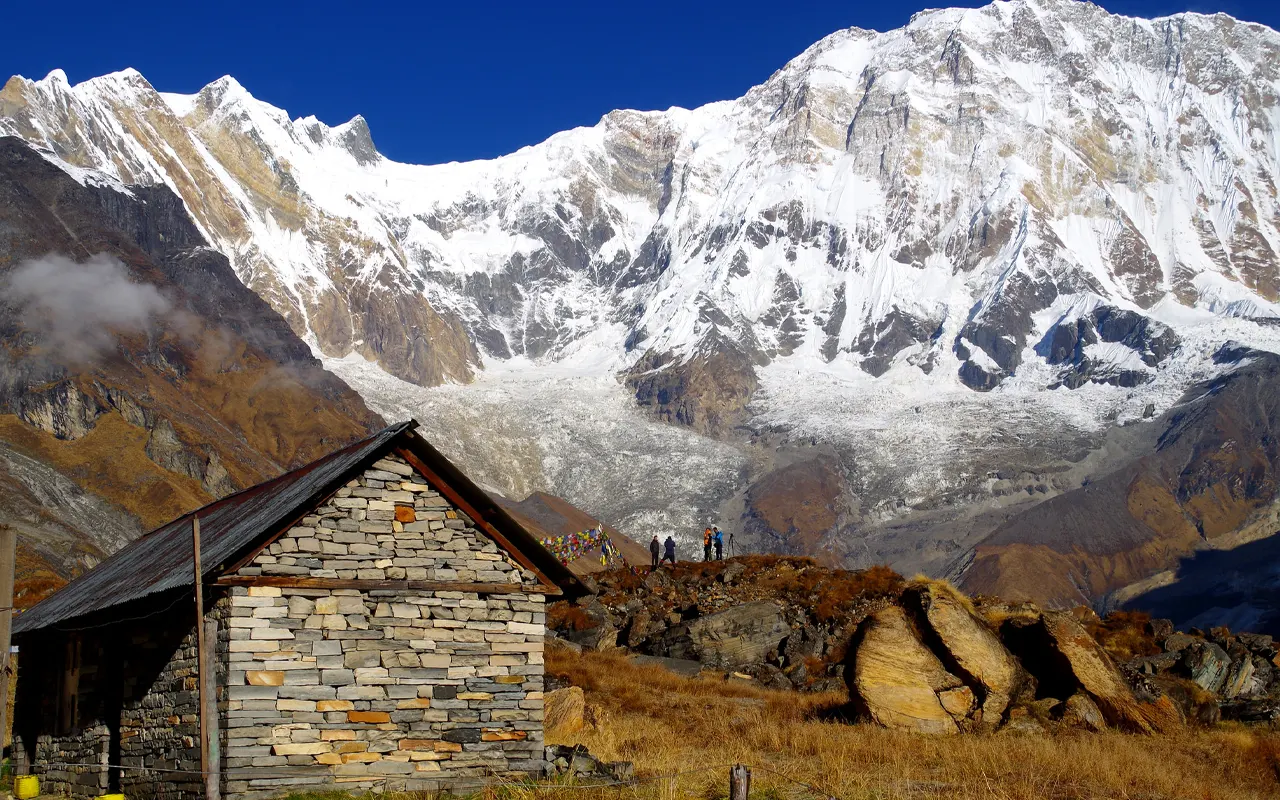
If you dream of walking through quiet mountain villages, green forests, stone steps, and snow-covered peaks at your own pace, the Annapurna Base Camp Trek Solo can be a great choice. This trek is one of the most popular routes in Nepal as it is a complete mountain experience in a manageable amount of time.
The trail takes you into the Annapurna Sanctuary, where you stand at Annapurna Base Camp at around 4,130 meters. You will see a mix of landscapes – from rice fields and rivers to alpine areas and glaciers. The journey is not just about the destination, but also about the small daily moments of the journey.
Doing this trek alone can be an exciting and slightly challenging experience. You get the freedom to choose your own speed, where to stop and how much time to spend. At the same time you must look after your safety, planning and budget yourself.
This guide is written to help you plan your Annapurna Base Camp Trek Solo in a simple and clear way for 2026. Whether you are a first-time trekker, or someone with a bit of experience you will find some useful tips here.
Why Choose Annapurna Base Camp Trek Solo?
Many trekkers have the same questions: Is going solo a good idea? The answer is based on your comfort level but Annapurna Base Camp is one of the better routes to trek independently.
The trail is well marked with many tea houses along the way. You will meet other trekkers every day so you are almost never completely alone. This brings a balance – you have an opportunity to have your own area yet feel connected to the rest of the trail.
The other reason is flexibility. When trekking alone, you have the advantage of waking up early or late, walking rapidly or slowly and making breaks according to your preference. You are not restricted to a group timetable.
You also get more opportunities to interact with local people. Staying in tea houses, conversing with owners, and eating together can make your time more personal.
However, it also means that solo trekking requires you to be more careful. You must check the weather and be aware of the dangers of altitude and calculate your path correctly. The trip may be very easy and pleasant when you are ready.
Permits and Rules for 2026
Before starting your Annapurna Base Camp Trek Solo, you need to arrange the required permits. These are checked on the way, and so it is important to have them with you.
TIMS card (Trekkers’ Information Management System)
This is used to track the trekkers for safety purposes.
ACAP Permit (Annapurna Conservation Area Permit)
This allows you to enter the area of Annapurna.
You can obtain both the permits at Kathmandu or Pokhara. Many solo trekkers prefer Pokhara as a place to start from as it is closer to the starting point.
There have been discussions about rules for solo trekking in Nepal, but as of 2026, Annapurna is still open for independent trekkers. You do not always need a guide for this region, but rules can change, so it is best to check the latest updates before your trip.
In case you are confused about planning, then our group at Glory Adventure could assist you with updated information, permits, and useful tips while still allowing you to keep your trek independent.
Best Time for Annapurna Base Camp Trek Solo
Choosing the right season for your trek can make your trip easier and more comfortable.
- Spring (March to May)
The weather is good and stable, and the forests are full of flowers. The trail is busy but pleasant. - Autumn (September – November)
Clear skies and dry weather make this the most popular season. Visibility is usually good. - Winter (December to February)
Fewer people on the trail, but it can be very cold especially at higher altitude. - Monsoon (June to August)
Heavy rain, slippery paths and leeches make trekking more difficult.
If you are planning your Annapurna Base Camp Trek Solo, spring and autumn are usually the safest choices.
Route Description and Travel Itinerary
The classic route begins from Pokhara and passes through small villages to reach the base camp. Most of the solo trekkers finish the trek in 7 to 11 days.
Here is a simple route idea:
Day 1: Drive from Pokhara to Jhinu or Siwai, trek to Chhomrong
Day 2: Chhomrong to Bamboo
Day 3: Bamboo to Deurali
Day 4: Deurali to Annapurna Base Camp (Via Machapuchare Base Camp)
Day 5: To return to Bamboo or Sinuwa
Day 6: Hike to Jhinu Danda (hot springs)
Day 7: Return to Pokhara
You can change this plan depending on your pace. Some trekkers take rest days, while others trek at a faster pace.
Walking hours are typically between 4 to 7 hours a day. The trail has a large number of stone steps, so it can be tiring even if the distance is not very long.
Accommodation and Food
One of the reasons the Annapurna Base Camp Trek Solo is beginner-friendly is the availability of tea houses. These are small lodges in which you can sleep and eat. The rooms are basic and are usually 2 beds, one blanket, and shared bathrooms.
Food is simple but filling. Usual foods are dal bhat (rice and lentils), noodle, soup, fried rice and pancakes. Dal bhat is a popular choice since it provides energy and it is often free refill. At higher elevations, it gets more expensive as supplies have to be carried up. It is a good idea to have some snacks with you for extra energy during the day.
There is no need to carry a tent or cooking equipment and this make solo trekking light and easier.
Cost Breakdown for the Solo Trekker
Budget is an important part of planning your Annapurna Base Camp Trek Solo. Depending on your kind of style the price might also be different but here is a rough estimate:
- Permits: Around $30–50 total
- Transport (Pokhara to starting point and reverse): $20 -40.
- Accommodation: $5–10 per night
- Food: $15–25 per day
- Additional (charging, hot shower, WiFi): $2 -5 each.
You can also spend an average of about 25-40 dollars and day on the trek.
If you want extra support, you can plan parts of your Annapurna Base Camp Trek Solo with help from Glory Adventure for transport, permits, or advance booking while still trekking at your own pace.
Packing List for Annapurna Base Camp Trek Solo
Packing smart is very important when you are trekking all by yourself. You should only carry what you need but be sure you are ready for changing weather.
- Good trekking shoes (not new but already used)
- Warm jacket (down or insulation)
- Rain jacket
- Comfortable trekking pants
- Thermal layers
- Gloves, hat, and sunglasses
- Water bottle or hydration system
- Basic first aid kit
- Headlamp or flashlight
- Power bank
- Snacks (nuts, energy bars)
- Trekking Poles (Optional but helpful)
- Try to make your backpack light. For most people, carrying 8–12 kg is comfortable.
Tips on How to be Safe as a Trekker
Trekking alone does create a sense of freedom, but also means you have to be more aware of what is going on around you. The Annapurna region is generally safe, however some basic precautions help you to avoid the problems.
- Start your day early
- Try to start walking in the morning so that you will arrive at your next stop before it gets dark.
- Tell someone about your daily plan
- Let your hotel owner or a friend know what route you will take and where you expect to end up each day.
- Stay on the main trail
- The way is clear in most areas. Do not take shortcuts where no signs indicate them.
- Carry enough cash
- There are no ATMs on the trail. Withdraw some money in Pokhara before you start.
- Keep emergency contacts
- Save local rescue numbers and your embassy contact just in case.
Even though you are doing the Annapurna Base Camp Trek Solo, you will meet many trekkers and locals along the way. A brief conversation sometimes helps if you need advice as to the trail ahead.
Understanding Altitude and your Body
Altitude is one of the most important things to know about before beginning your trek. As you ascend the air becomes thinner and your body requires time to acclimate. During the Annapurna Base Camp Trek Solo, you will gain height gradually, but you still need to be careful.
Some of the common symptoms of altitude sickness are headache, nausea, loss of appetite and difficulty in sleeping. These signs should not be ignored. The best thing to do to stay safe is to walk slowly and let your body adjust. At higher altitude drink enough water and avoid alcohol.
If the symptoms get worse, the safest thing to do is to go down. No view is more important than your health. Some trekkers carry medicine with them, such as Diamox, but it is better to consult a doctor before taking it.
Daily Trekking Experience (What to Expect)
Each day on the trail is different. When you start from lower areas such as Jhinu or Siwai, the environment is warm and green. You will pass through villages, cross suspension bridges and pass through farmland.
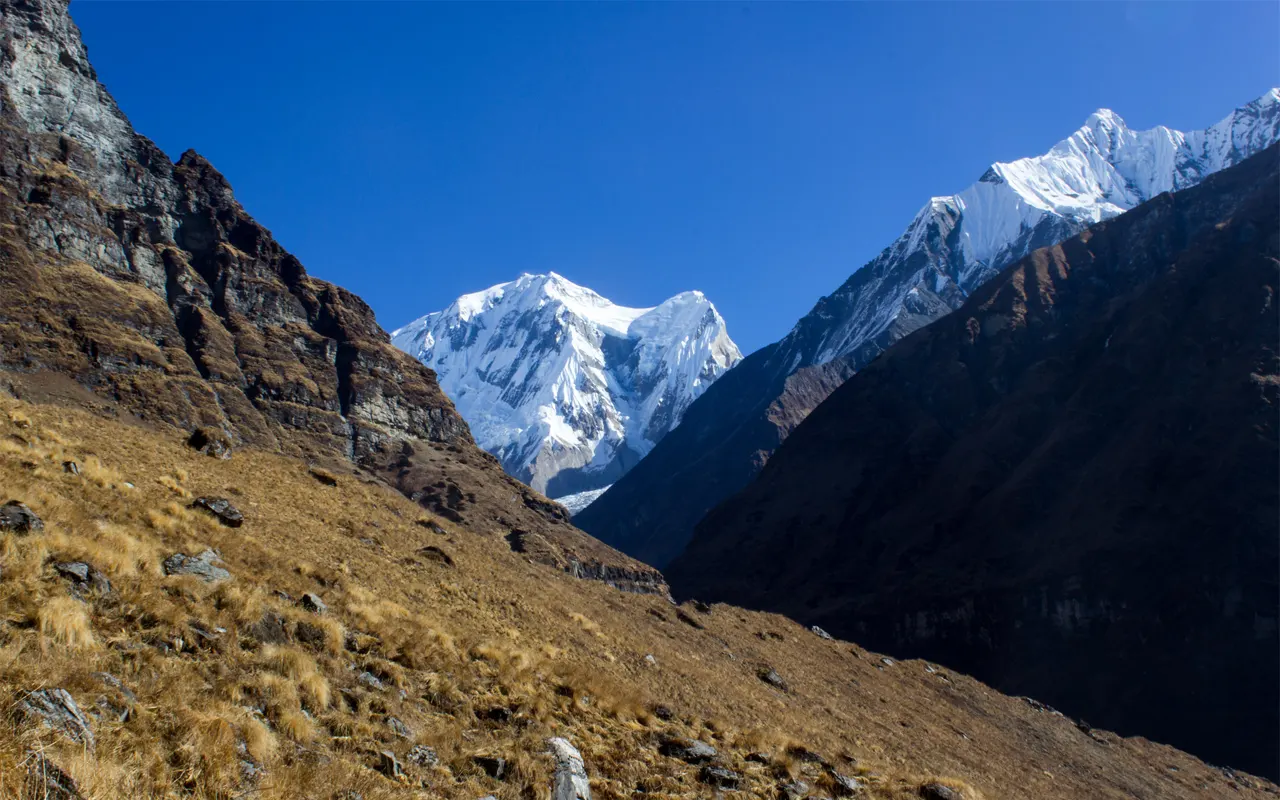
As you ascend, you come across places such as Chhomrong and Bamboo where there is a mix between forest and mountain views. The sound of the rivers and the shade of the trees makes these sections pleasant to walk.
Further up, around Deurali and Machapuchare Base Camp, and the landscape begins to change. Trees become fewer and the surroundings are more open and quiet.
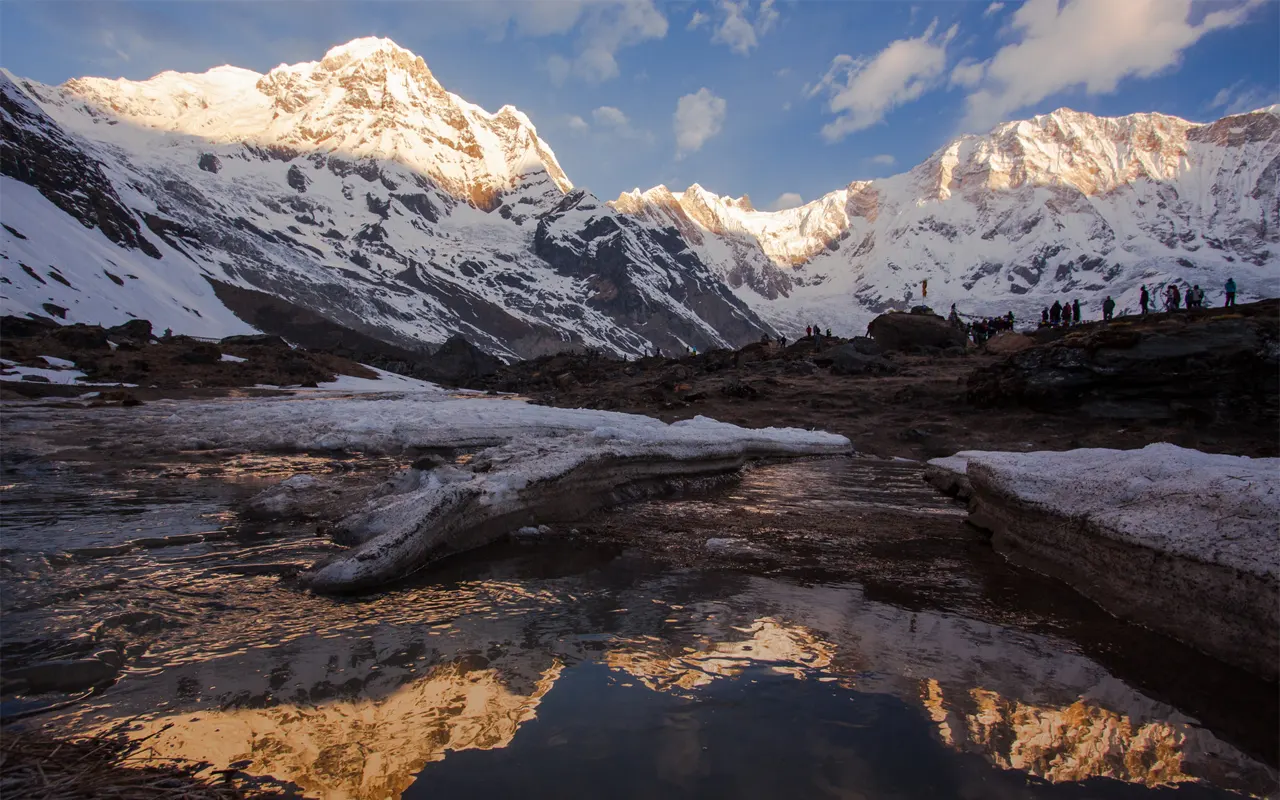
Finally, reaching Annapurna Base Camp is like entering a natural bowl enclosed by high peaks. You can feel a mixed calm, excitement, and relief after the steady climb.
The Annapurna Base Camp Trek Solo lets you spend your time in every location. You will be able to rest longer, walk slowly and do as you please in the journey.
Food, Water, and Staying Energized
Food is a important factor in the experience you get while on the trek. You have to eat well even when you are too tired. Dal bhat is the most common meal and a good choice as it is satisfying and gives lasting energy. Other alternatives include noodles, pasta, soup and eggs.
Water is very important. You should drink a minimum of 2-3 liters a day. You can refill bottles at tea houses but it’s safer to use water purification tablets or filter.
Chocolate, nuts and energy bars can also be brought as snacks during the long walks. Your energy level will remain at the same rate so as to avoid fatigue and have more fun every day since you are doing the Annapurna Base Camp Trek Solo.
Communication and Connectivity
Staying in touch on the trek is possible, but not always reliable. Most tea houses provide WiFi for a nominal fee but the connection can be slow. Mobile networks such as NTC or Ncell are functional in certain parts, especially in low altitudes.
It is a good idea to let your family know before the trek that you may not be in regular contact. You can also be better prepared by having practical consultation on communication, SIM cards and connectivity beforehand through the Glory Adventure.
Cultural Etiquette & Respect
There is more than just mountains in the Annapurna area. It is also the place where there are local communities who have their traditions and lifestyle. You will spend the night in the local tea houses and go through the villages as part of the Annapurna Base Camp Trek Solo. Respect should be demonstrated.
Wear simple clothes, shake hands with a simple namaste and enquire whether you can take their picture or not. Take off your shoes and enter indoors, and obey the house regulations of tea houses. Such little things will leave a good impression on you and on the individuals you come across.
Solo Trekking Mindset
Your mindset is as important as your physical preparation. There may be times when you feel exhausted, lost or even a little lonely. That is part of solo travel. At the same time, you will also have quiet time that is difficult to obtain in everyday life.
Walking alone gives you time to think, observe and connect with your surroundings. You might notice small details such as the sound of the river, the sound of your steps or the changing light in the mountains. Try not to rush the journey. Take breaks, eat your meals and chat to people when you feel like it.
The Annapurna Base Camp Trek Solo is not only about reaching the base camp. It has also to do with how you feel with each step along the way.
When to Consider Support
Even if you’re planning to trek alone, there are times that some support can be helpful. For example, you may want assistance with permits, transport or planning your route. Some trekkers also opt to hire a porter to carry their bag and walk on their own.
These little arrangements can be coordinated with the help of Glory Adventure so that you have more time to spend on the trekking adventure. That way, you can retain your independence and continue to avoid some of the stress of planning.
Final Thoughts
The Annapurna Base Camp Trek Solo is a trip which is simple and meaningful, involving nature, culture and personal experience. It does not involve technical things but it involves preparation, patience and awareness.
This trek can be smooth sailing as long as you pack well, have planned and listened to your body. You will pass through some different landscapes, meet people from the world over, and spend time in places that are far from busy city life.
Take your time, stay safe, and be respectful of the environment and local culture. Every step you take brings you closer, not only to the base camp, but to a deeper travel experience.
Whether you need the best advice on how to prepare and have confidence in your preparation of your Annapurna Base Camp Trek Solo, or you have logistics questions that you need some guidance on, Glory Adventure is ever willing to help you plan and get prepared with confidence.

